OpenNashPodcasts

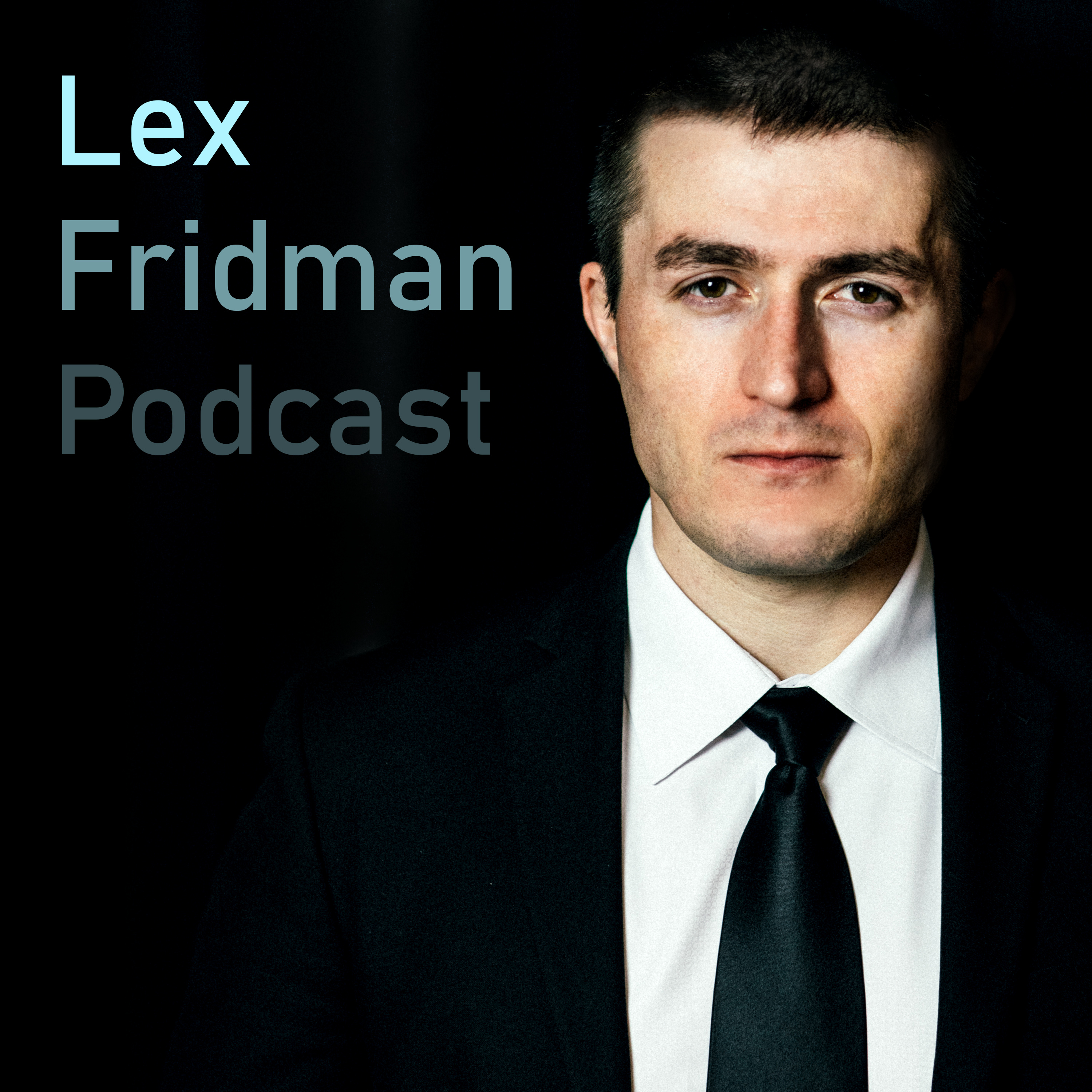
Lex Fridman Podcast

#464 – Dave Smith: Israel, Ukraine, Epstein, Mossad, Conspiracies & Antisemitism

9 Apr 2025 · 3h 26m · Dave Smith, Lex Fridman · 25 quoted facts

▶ Play episodeOriginal source ↗

In brief

Dave Smith, a libertarian comedian, argues that American foreign policy is driven by an empire mindset and a military-industrial complex that manufactures consent for war. He says each intervention breeds more of the hatred it claims to fight. He applies this to the war on terror, Taiwan, Ukraine and Israel-Gaza, and holds that killing innocent people is never justified.

The central tension is moral. Smith treats all war as murder of civilians and blames long-term occupation and NATO expansion for the violence. Fridman agrees that war is hell but argues that stated intent, who fired first, and the ideology of a regime still matter. The talk then moves to antisemitism, Epstein and trust in institutions. It ends with hope that podcasts have broken legacy media's monopoly on narrative.

Key insights

  1. Smith sees terrorism as blowback from intervention

    He cites General McChrystal's 'insurgent math' and says Al Qaeda in the Arabian Peninsula kept growing from 2009 to 2015 despite drone strikes. His mechanism is that each strike creates relatives who join the fight.

  2. Smith says occupation undercuts Israel's democracy claim

    He argues that millions of people under Israeli control since 1967 cannot vote, so he calls the arrangement apartheid rather than democracy. Fridman counters that stated intent to avoid civilian deaths is an ethical difference between Israel and Hamas.

  3. Smith blames NATO expansion but not absolving Putin

    He points to Stoltenberg's account of a late-2021 draft treaty and a William Burns memo as evidence the war was avoidable. He also agrees with Fridman that Putin bears full responsibility for the invasion.

  4. Smith treats Epstein as proof of institutional rot

    He argues that Epstein's rise at Bear Stearns, the light sentence, and the lack of resignations or prosecutions point to intelligence ties. He says this explains collapsing trust in institutions, and Fridman agrees the files should be released.

  5. Long-form podcasts broke legacy media's monopoly

    Smith says the Iraq war was sold by the Times, CNN and Fox in unison, which would be harder today with Rogan and Carlson as outlets. He also says politicians now have to survive three-hour conversations.

Questions

What does Dave Smith mean by 'blowback' and 'insurgent math'?

Blowback is the idea that military action abroad creates enemies who then attack back. 'Insurgent math', a term Smith credits to General McChrystal, means killing one militant and a few civilians can create many new fighters from their relatives.

Why does Smith say Israel is not a democracy?

Smith argues that between five and six million people live under Israeli control without voting rights, so by ordinary standards it is not a democracy. He calls this an apartheid state, and also says he loves Jewish people and some of Israel's society.

Does Smith think Putin is not to blame for the war in Ukraine?

No. He agrees with Fridman that Putin bears full responsibility for invading. He argues that the West provoked the conflict through NATO expansion and ignored chances to avoid it, comparing it to a bar fight where spitting does not justify murder.

What does Smith say about Jeffrey Epstein and intelligence agencies?

Smith says he never claimed definitively that Epstein was Mossad. He thinks Epstein's career is unexplainable without ties to intelligence, possibly to both the CIA and Mossad, and that we may never learn all the details.

Why is Smith hopeful about the future?

He cites Gene Epstein's argument that seemingly impossible changes, like the end of slavery and the Soviet Union, happened quickly. He says the mainstream media has lost its monopoly on propaganda and notes medical advances that saved his son.

Facts

Stated by the speakers. Each quote matches the transcript, which shows what was said, not that it is true.

Dave Smith argues that Ron Paul's 2008 and 2012 presidential campaigns laid the groundwork for Donald Trump to attack George W. Bush's Iraq war at a Republican debate.

“Ron Paul in many ways laid down, he laid the groundwork in his 2008 and 2012 presidential campaigns”

0:14:54 · Dave Smith · Ron Paul · 2016

Dave Smith says New York Times columnist Bret Stephens wrote a piece in 2023, on the 20th anniversary of the Iraq invasion, defending the war without mentioning civilian deaths.

“Bret Stephens, the New York Times, he wrote this piece on the 20th anniversary of the invasion of Iraq, so 2023, to cheerlead the war in Iraq.”

0:21:07 · Dave Smith · Iraq War · 2023

Dave Smith says General Stanley McChrystal, who ran the war in Afghanistan, coined the term 'insurgent math', meaning that killing militants and bystanders creates more insurgents.

“It was General McChrystal, who was the general running the war in Afghanistan.”

0:23:37 · Dave Smith · Insurgent math

Dave Smith says Barack Obama stepped up the then-secret drone bombing campaign in 2009, with Yemen as a major theater.

“at least in 2009 is when Obama really stepped up the drone campaign with the then secret drone bombing campaign.”

0:24:06 · Dave Smith · Drone strikes · 2009

Dave Smith says Al Qaeda in the Arabian Peninsula kept growing from 2009 through 2015 despite US drone strikes in Yemen.

“before the Saudis invaded, so like from 2009 through 2015, AQAP just kept growing.”

0:24:06 · Dave Smith · Al Qaeda · 2009-2015

Dave Smith notes that Benjamin Netanyahu was the longest-serving prime minister in Israeli history and had campaigned as a tough right-winger who would keep Israelis safe.

“Benjamin Netanyahu was the longest serving prime minister in Israeli history and had explicitly been like, I'm the tough right winger”

0:50:36 · Dave Smith · Netanyahu · 2023

Dave Smith asserts that Benjamin Netanyahu allowed Qatari cash to reach Hamas and sent the Mossad to ensure payments continued.

“He was allowing Qatar money to float. Insisting that Qatar money float to them. When the Qatar money dried up, sent the Mossad in to insist that it gets back to him.”

0:51:43 · Dave Smith · Hamas funding

Dave Smith says Israel has maintained a full blockade around Gaza since 2007.

“from 2007 to today, Israel's had a full blockade around the country.”

0:52:38 · Dave Smith · Gaza blockade · 2007

Dave Smith says Israel has controlled the Palestinian territories since a war in 1967 that lasted about a week.

“We're talking about a one week long war or a day short of a week long war in 1967. Israel's had control of them ever since.”

0:53:45 · Dave Smith · Six-Day War · 1967

Dave Smith says Egypt and Israel fought four wars before a land-for-peace deal in the late 1970s, and have not fought since.

“Egypt and Israel went to war four times in a couple decades, they went to war. And then in the late seventies, they made a land for peace deal and they haven't been to war since”

0:59:48 · Dave Smith · Egypt-Israel peace · 1970s

Dave Smith notes that pro-Israel commentators argue Hamas won a plurality in a 2005 election, and he rejects the idea that this strips Gazans of rights today (said Apr 2025).

“they had an election in 2005 and Hamas won a plurality.”

0:49:17 · Dave Smith · Hamas · 2005

Dave Smith says the creation of Israel involved somewhere between 700,000 and 800,000 Arabs being forcibly removed from the area.

“something somewhere between 700 and 800 ,000 Arabs being forcefully evicted out of this area”

1:16:03 · Dave Smith · Palestinian displacement · 1948

Dave Smith says General Wesley Clark stated that a study paid for by Israelis planned for the United States to topple seven countries in five years.

“He literally said it was a study paid for by the Israelis that we were going to topple seven countries in five years.”

1:46:51 · Dave Smith · Wesley Clark

Dave Smith says NATO Secretary General Jens Stoltenberg acknowledged that in late 2021 Vladimir Putin sent NATO a draft agreement asking for written assurance that Ukraine would not join.

“he literally said that in late 2021 that Vladimir Putin actually sent a draft agreement to NATO and that his condition for not invading is like, I will not invade, but you have to put it in writing.”

2:30:37 · Dave Smith · NATO Ukraine · 2021

Dave Smith says William Burns, later CIA director under Joe Biden, wrote the 'Nyet means nyet' memo while ambassador to Russia, warning that Ukrainian NATO entry was a red line.

“When he was ambassador to Russia, he wrote the nyet means nyet.”

2:31:47 · Dave Smith · William Burns memo · 2008

Dave Smith says Thomas Friedman interviewed Cold War strategist George Kennan in 1998, when Kennan opposed NATO expansion as a mistake.

“Thomas Friedman for the New York Times interviewed George Kennan in 1998.”

2:40:42 · Dave Smith · George Kennan · 1998

Lex Fridman states that Vladimir Putin invaded Ukraine on February 24, 2022, and that Putin started the war.

“is that Putin invaded Ukraine in February 24, 2022. And I think he is, at least from my perspective, the person who started the war.”

2:34:42 · Lex Fridman · Ukraine invasion · 2022

Dave Smith says Saudi Arabia invaded Yemen in 2015 with full US backing, and the Houthis kept power through eight years of war.

“where you have the Houthis in Yemen, which Saudi Arabia invaded in 2015 with the full backing of the United States of America.”

2:26:06 · Dave Smith · Yemen war · 2015

Dave Smith says Jeffrey Epstein went from teaching at the Dalton School to becoming a partner at Bear Stearns within two years, which he finds unexplainable without intelligence connections.

“the idea that you have no experience and you're a teacher at Dalton, which is this incredibly elite New York City private school, and then all of a sudden you're at Bear Stearns and within two years you've made partner”

2:10:17 · Dave Smith · Jeffrey Epstein

Lex Fridman cites Alex Acosta's reported statement that Jeffrey Epstein 'belonged to intelligence' as evidence of an intelligence connection.

“I saw the, what is it, Alex Acosta said that, basically mentioned that Epstein is intelligence.”

2:09:33 · Lex Fridman · Epstein case

Dave Smith notes that Ghislaine Maxwell was jailed in the Epstein case and asks whether anyone else has faced consequences.

“Ghislaine Maxwell, okay, she went to jail. It's like, has anybody else?”

3:07:11 · Dave Smith · Epstein case

Dave Smith describes the Project for a New American Century as a neoconservative think tank whose 1990s document spoke of needing a 'Pearl Harbor style event', which 9/11 truthers cite as evidence.

“PNAC, the project for a new American century. And this was the think tank or one of the think tanks of the neoconservatives.”

3:00:54 · Dave Smith · PNAC · 1990s

Dave Smith rebuts the 9/11 insurance conspiracy theory about Larry Silverstein by noting the World Trade Center had already been attacked in 1993.

“You realize that the same guys attempted to knock those towers down in 1993.”

3:02:57 · Dave Smith · 9/11 theories · 1993

Dave Smith says he first appeared on Joe Rogan's podcast around 2016, when he had only about 5,000 followers.

“the first time Rogan had me on his podcast was I believe in 2016 and I had like I might have had like 5 ,000 followers or something like that”

2:55:05 · Dave Smith · Joe Rogan · 2016

Dave Smith says he did not foresee Elon Musk raising $44 billion to buy Twitter, which he credits with reversing online censorship trends.

“I never would have envisioned Elon Musk was going to get $44 billion together and buy Twitter.”

3:20:55 · Dave Smith · Twitter purchase · 2022
Chapters

  1. 0:10:47Why Smith reveres Ron Paul

    Smith describes how Ron Paul's limited-government view at home and abroad shaped his own politics and why he reveres the man.

    “I think Ron Paul is like the greatest living American hero.”
  2. 0:23:37Blowback and the war on terror

    Smith argues terror attacks and endless wars feed on each other, with drone strikes and invasions producing new enemies.

    “he's the one who coined the term insurgent math, 10 minus 2 equals 20”
  3. 0:35:09Taiwan, China and limits of empire

    Smith says America cannot and should not police China's claim on Taiwan, while Fridman raises the importance of TSMC chips.

    “we lose that war every time.”
  4. 0:42:02When, if ever, war is just

    Smith lays out his moral standard that killing innocents is never right and that the burden of proof lies on the war maker.

    “you never have a right to kill innocent people”
  5. 0:48:19October 7th, Gaza and occupation

    The two weigh Hamas atrocities against decades of blockade and occupation, and what a path to peace might look like.

    “it's always evil to target innocent civilians.”
  6. 1:17:50Is Israel a democracy?

    Smith answers the Douglas Murray case by arguing that millions without votes under Israeli control undercut that label.

    “the fact is that's not a democracy. That's an apartheid state.”
  7. 1:42:08Antisemitism, trolls and Netanyahu interview

    They discuss rising online Jew hatred and why Smith urges Fridman to interview Netanyahu again.

    “I see a level of like Jew hatred on Twitter that I've never seen before”
  8. 2:10:17Epstein and trust in institutions

    Smith explains why the Epstein case suggests intelligence ties and why lack of accountability destroys public trust.

    “completely unexplainable outside of being connected to intelligence”
  9. 2:30:37Ukraine, NATO and the path to peace

    Smith argues that NATO expansion provoked Russia while Fridman insists Putin alone bears responsibility for invading.

    “Vladimir Putin actually sent a draft agreement to NATO”
  10. 3:20:55Podcasts and reasons for hope

    Smith closes with the claim that independent media ended the establishment's monopoly on propaganda, which makes him optimistic.

    “I think that the regime has lost their monopoly on propaganda.”

Transcript

0:00:00
Lex Fridman

The following is a conversation with Dave Smith, an outspoken and at times controversial anti-war libertarian, comedian, and podcast host. And now, a quick few second mention of each sponsor. Check them out in the description. It's the best way to support this podcast. We got Call of Duty for Video Game Fun, Tax Network USA for figuring out your tax problems, Notion for collaborating with your mates and integrating AI in the whole process Shopify for selling stuff online and BetterHelp for figuring out the problems of your mind Choose wisely, my friends If you're watching or listening to this on Spotify I decided to start putting the same ad reads for me at the beginning as I do on Apple Podcasts and

0:00:46

the RSS feed since a lot of folks in the survey said that they actually like the random non-sequitur weird, strange, chaotic things I talk about in these ad reads. And I said that they would be happy to skip when they don't feel like listening. I do make it easy to skip with timestamps on screen and in the description. And I'm not adding ads in the middle. So hopefully this whole thing works for you. Let's see.

0:01:14

I do try to make the ad reads interesting and personal, often related to stuff I'm reading or thinking about. But if you skip them, please still check out our sponsors. I'm grateful for them. Sign up. Buy their stuff. Whatever it is. I enjoy it. Maybe you will too. Also, if you want to get in touch with me for whatever reason, go to lexfridman.com slash contact. And now, on to the full ad reads. Let's go. This episode is brought to you by Call of Duty, Warzone, Cue Music, and the return of the iconic Vordansk map.

0:01:50

It is out now. The wait is over. Verdansk is back. This reminds me of how much I like Schwarzenegger movies. I've been talking back and forth with Robert Rodriguez, who is a legendary filmmaker, in part for the action movies he creates, in part for the improvisational genius that he has. Anyway, talking to him, learning about him, thinking about his work and watching his work reminded me how much I love action films. And I think of Call of Duty, given its realism.

0:02:25

As an action movie, I can be a part of, I can be inside of, I can participate in. I can tell the story of the movie with my own actions. You can download Call of Duty Warzone for free and drop into the Vodansk map now, rated M for mature. I don't know why I'm doing the movie announcer voice, but let's keep going with it. This episode is brought to you by Tax Network USA, a new sponsor, an awesome sponsor, a full-service tax firm focused on solving tax problems for individuals and small businesses.

0:02:59

I just did a really, really, really deep dive on theoretical computer science. I shouldn't say with who. One of the most brilliant people I've ever met. Super technical episodes. Super long episode. Anyway, P versus NP came out briefly. It's not their thing, but it is a thing I've thought about for many years. Of course, it's the elephant in the room of theoretical computer science. So I took a lot of courses on complexity and always loved the puzzles of algorithms, of data structures, of proving various things about algorithms.

0:03:33

I love that field. Anyway, I mentioned that because when I think about the United States tax code, what I think about is complexity. and I wonder there'll be a future when AI will be unleashed on that tax code and will be used to simplify it. There's nothing that brings more joy to me than taking a complicated thing that makes a lot of people's lives super painful and simplifying it and therefore helping those people have less pain in their lives.

0:04:11

And I think the U.S. tax code is the source of probably more pain in the United States than anything else. Anyway, you want to have really great people to help you deal with that pain, essentially, to relieve you of that pain, to relieve you of that stress. That burden can be the heaviest of burdens. Anything financial related can just break you. So great professionals that work on taxes are really a gift to the world. Anyway, talk with one of their strategists for free today.

0:04:44

Call 1-800-958-1000 or go to tnusa.com slash lex. This episode is also brought to you by Notion, a note-taking and team collaboration tool. They have been integrating AI better than basically any company I've seen. Always at the cutting edge, always thinking how AI can be actually used to solve practical problems, not for a prototype, not for a demo, not for a thing to post on X, look at the cool thing I did, but actually make you productive at the thing you do at the individual level and at the team collaboration level.

0:05:20

This really is the problem. AI should not just be a thing that makes you dream of the possibilities of what's to come. It should be a thing that just makes your life easier every single day. And despite what people think, it's actually not that easy to integrate AI in this kind way because human intelligence, human ingenuity, the speed at which we're able to figure out a puzzle and know the next hop from the puzzle, you know, the tab tab vibe coding thing, but applied to document collaboration, document development, document summarization, all that kind of stuff.

0:05:58

That's what Notion is incredible at. You could try Notion AI for free when you go to notion.com slash lex, that's all lowercase notion.com slash lex to try the power of Notion AI today. This episode is also brought to you by Shopify, a platform designed for anyone to sell anywhere with a great looking online store. I've recently returned to Nietzsche. And I wonder, what is the Nietzschean concept that explains the will of the entrepreneur? What is that?

0:06:33

Is that trying to reach for power? Is it trying to reach for immortality? Is it trying to find the meaning of existence in the creative act? There is something deeply creative, of course, to the entrepreneurial pursuit. It is fundamentally creative. It feels like pain, right? It feels like risk. It feels like chasing money. It feels like chasing impact or having a positive influence on people's lives. But when you're in it, I think about Johnny Ive, when you're in it at your best, what you're doing is you're creating.

0:07:16

That's probably what Nietzsche would say. It probably is the creative act is the drug, the joy, the will that pulls at the entrepreneurial heart. Sign up for a $1 per month trial period at shopify.com slash lex. All lowercase, go to shopify.com slash lex to take your business to the next level today. This episode is also brought to you by BetterHelp, spelled H-E -L-P, help. hope. Since we mentioned Nietzsche, I must go to maybe another intellect called Jung and the shadow, the archetypes.

0:07:56

I wonder how much of our existence is trying to contend with the uniqueness of the person we see in the mirror and the bin society puts us in. There is something about especially the American spirit that resists categorization. the binning process. And in that tension, I think a lot of dark stuff can emerge. Resentment, regret, depression, the gap between expectation and reality. Added with some neurotransmitter malfunctioning sprinkled on top, boys the human mind wonderful and a terrifying machine that can destroy itself anyway uh better hope is a nice first step to try to avert the coming storm check them out at betterhelp.com slash lex and save on your first month that's betterhelp.com slash lex this is the lex

0:09:08

podcast to support it. Please check out our sponsors in the description. And now, dear friends, here's Dave Smith. You are a longtime libertarian, perhaps an anarcho-capitalist. We can talk about that. Can you explain the different variants, flavors of libertarianism and where you stand

0:09:45
Dave Smith

among those variants? Yeah. So there's almost like anything like with left-wing schools of thought or right-wing schools of thought, there's many different camps and different thinkers. And so within the kind of broader theme of libertarianism, there was a lot of influence from people like Ayn Rand, Milton Friedman, Thomas Sowell. Those were, I think, some of the more mainstream figures. And then there's kind of like the Ron Paul brand of libertarianism, which is kind of distinct from that other camp where they're much more of an emphasis on foreign policy.

0:10:18

All of them kind of fall into the radical minarchist points of view. And then there's Rothbardian anarcho-capitalist. Then there's also like David Friedman, who's an anarcho-capitalist, but from a completely different perspective than Murray Rothbard, I would probably be most, I'm most closely like with the Rothbard school, which is very similar to Ron Paul. Um, but even maybe a little bit further in that, you know, the very little bit of government that Ron Paul might support.

0:10:47

You've been a big fan of Ron Paul. Can you explain what you admire about him? A big fan is an understatement. I think Ron Paul is like the greatest living American hero. Um, I, I, I revere him on the level of, of the founding fathers, Thomas Jefferson or George Washington. Number one, I mean, all of the major issues that he, he was correct in his understanding of them, his diagnosis of what caused these problems and his solutions.

0:11:17

And in hindsight, there's just like a million different examples of where almost everybody today would agree, even though his ideas were very controversial at the time, be like, oh, my God, if we had just listened to Ron Paul about that, we'd be so much better off. But I think there's something almost deeper than that about why. So why Ron Paul inspires so much love from so many people is. OK, so number one, the guy, he was a champion of these views for decades when there was no payoff for it at all, where he was just kind of alone in the woods being, you know, they used to call him Dr.

0:11:56

No, because, well, he was a medical doctor. And then he was he would be the lone no vote in Congress like all the time, like on the bills that the entire Congress bipartisan agreement, everything is and there's one vote against it, you know, and that he would be that guy. He clearly kept doing what he was doing simply because he believed it was right, not because there was any benefit for him. In fact, he dealt with a lot of headaches for the views that he had.

0:12:22

And then he was just a genuine person of integrity. You know, he's the only congressman who I've ever heard this about. And like DC insiders, people on the Hill will say this. He was the only congressman of my lifetime who the lobbyists simply stopped visiting. He was the only one who they just stopped going to his office because they were just like, there's just no getting through to this guy. He was just not playing politics. like that.

0:12:47

And he was, you know, you, you imagine what it must've been like from like the lobbyist perspective when they first tried to go there, you know, and they'd be like, all right, listen, we really need you to, you know, vote yes on this or that. And he was like, the constitution doesn't authorize us to do that. And they're like, what? Like who, who in this town even talks like that, you know? And so there was just, he's also just, I've, I've met him, uh, many times at this point.

0:13:09

And he is just genuinely, he's like one of those guys who's just from like an older, better generation. Just he's the sweetest guy, but he's like, uh, but he's not a pushover. Like he was a tough guy in his day and he was an athlete and he was in the air force and is married to the same woman for, I think over 60 years at this point has like a big, beautiful family. He was a country doctor.

0:13:34

He was a baby doctor who delivered thousands of babies. Like he's just, it is, he's like this kind of classic American figure. And, you know, I just think, you know, at the risk of falling into like hero worship or something like that, I do think he's a genuinely great man. And I think great men are to be revered. Yeah. As you said, there's integrity

0:13:59
Lex Fridman

there. Can you speak to the ideas that Ron Paul represents? Like you said, some of the things he's been right about. Maybe can you speak about the economics, the Fed and maybe war and being

0:14:08
Dave Smith

anti-military intervention. Well, I think it all came from kind of the same central thesis, which is that the highest political value ought to be liberty. And that the government, by its very nature, is an instrument of force and tyranny. And that therefore, the more government you have, the less liberty you have. I think he also was way ahead of his time in really calling out the corruption in D.C. And I think that's one of the things that's kind of, it's a common through line between the Federal Reserve and government spending and, of course, this crazy war industry that our country has.

0:14:54

So there's a lot of components to that, but essentially Ron Paul was talking about draining the swamp way before it was like this dominant mass message. And I think Ron Paul in many ways laid down, he laid the groundwork in his 2008 and 2012 presidential campaigns for not saying that he leads to Donald Trump, but he laid the groundwork for Donald Trump to be able to get up at the South Carolina Republican primary debate and look at Jeb Bush and say, your brother lied us into war.

0:15:29

and you know what I mean? And, and, and to have the Republicans agree with him, you know, the same, these were a lot of the same people who had voted for George W. Bush twice and supported the war and even mocked their liberal, you know, fellow countrymen for not being on board with it. And, and a lot of that was the work that Ron Paul did and people waking up to, um, the, how, how messed up all these wars were.

0:15:53

And I think that at least from there, there were a couple of major things for me. Okay. at the time. So I was like a, I was a young man when I first found Ron Paul. I was in a 2007 was when I first saw him and then started obsessively reading all of his books. And so I, I was young. I I'm born in 83. So what would that mean? 23, 24. Uh, when I first found him, so I was a young guy.

0:16:15

And at least for me at the time, there were like kind of two categories in my, you know, naive mind where, okay, there were like the liberals who supported big government at home, but were skeptical about, you know, big government abroad or they're skeptical about wars. And then there were the conservatives who said that they supported small government, limited government at home, but we're always on the side of whatever the next war is. And at least for me, and I think for a lot of people of my generation, Ron Paul was the first guy who came along and said like, no, I'm for limited government here and abroad.

0:16:53

And it was kind of like a portal where you could like access a different perspective on the world. And then once you saw that, you were like, wait, that's actually what makes sense. It makes, it doesn't make sense to like, what are, what is it exactly that like, um, all the Ronald Reagan and George W. Bush and, and even like Milton Friedman and guys like that and Thomas soul. And the, it's like, you want a constitutionally limited world empire.

0:17:18

Like, that's what you guys stand for. Cause that doesn't, that doesn't fit together at all. And so why is it that we took, we were taking this as a given. And then of course, the more you, you look into it, you realize that like, okay, they're, those two things do make sense together. And then also that kind of like the, in the initial wave of like the original progressives, you know, look, people like Woodrow Wilson or FDR.

0:17:40

These were people who were pushing big government at home and big government abroad. And that actually made much more sense as a cohesive worldview. And to oppose that would be the Ron Paul worldview. And then the other thing for me, and this was actually, this was my introduction to Ron Paul. And this too, to me was like kind of a portal in a way it was, it was a way, at least in my naive, not fully functioned brain or fully developed brain at 24 years old or whatever, it was a way for me to kind of get like, like I tapped into something that was outside the empire.

0:18:15

And I had, I had heard a lot, you know, I was already against George W. Bush and I didn't like the war. I had already figured out, you know, I think this, I think this war in Iraq is bullshit. And I think that we were lied into it. And so I kind of got that. And then there were, there were liberals and left-wingers who I knew, I grew up in New York City, so I was very familiar with the left-wing perspective, and who are critical of George W.

0:18:39

Bush and for fighting the war and, you know, signing the Patriot Act into law and things like that. But I had never really heard anybody break it down the way Ron Paul did when he was, when he basically was like, look, there's a reason why these terrorists hate us, and it's not what they're telling you. They don't hate us for our freedom. It's not as if, I remember the way Pat Buchanan put it, which I always loved, was he goes, he said, Dick Cheney makes it sound like Osama bin Laden stumbled on, like, in the deserts of Afghanistan.

0:19:10

He stumbled onto a copy of our Bill of Rights somewhere. And he was like, oh, my God, they're free to look at this speedy trial. Are you kidding me? Like, this is like, what is going on here? They can own guns and their women can wear mini skirts. And that just made people so angry that they were ready to, you know, like, suicide bomb themselves. Like that makes no sense at all. And then Ron Paul was just like, no, look, here's the thing.

0:19:35

If we think we can just go around the world killing people, propping up dictatorships, putting our military bases in the Muslims holy land and not engender hatred from that, then we do that at our own peril. And I thought that was, it was such an interesting kind of, you know, it had always been, I'm an 80s and 90s kid. And to me, it was always kind of a given that like America's number one, we're the force for good in the world.

0:20:01

And it was like an interesting introduction to the idea that there are people outside of that who are dominated by that, who don't care for it very much. and like that that's what 9-11 was actually about and for me you know i was living in new york city i was 18 i think when 9-11 happened and that was like the moment of my childhood it was a huge thing to live through i mean we were attacked this seemed like something that could only happen in a history book that didn't happen to america in the 90s 2001 was basically the 90s um and uh and it was just like oh finally it clicked it was like that makes sense

0:20:39

is the first time i had ever heard, like an explanation and an understanding of this whole thing that we're involved in now, from 9-11 to the terror wars, that actually just made perfect sense.

0:20:50
Lex Fridman

Yeah. We should also say that there's some degree of truth that the battle is not just militaristic, it's also cultural. And then many of those parts of the world don't want other people's values forced onto them.

0:21:07
Dave Smith

But the way that George W. Bush and Dick Cheney and every right-wing host in America and Sean Hannity and Bill O 'Reilly and like everybody, what they were saying is that they hate that we're free. Whereas it was much closer to saying like, they don't like us imposing on them. Even like all the hardcore neocons, Bret Stephens, the New York Times, he wrote this piece on the 20th anniversary of the invasion of Iraq, so 2023, to cheerlead the war in Iraq.

0:21:37

And he goes through the whole piece, and there's not one mention of the million people who died in the war. You know, he literally just goes, the pieces just measure life under Saddam Hussein versus life under the Shiite parliamentary system that they have now. Which one's better? And he's arguing this one's better. Therefore, it was worth it. But there's like no mention. It's like, okay, but what about the 20 plus million people who were displaced? What about the million people who were killed?

0:22:04

What about all the millions of people who were injured? What about the tens of thousands of our soldiers who have blown their brains out in the aftermath of the thing? Like, it's like so, so many times this true and with government policy in general, people talk about like the end result that they want, but you're like, yeah, but what about the process by which you get there and how much hatred, you know, could you, I mean, like I, you know, it's, it's not that hard for me to like put myself in, in other people's shoes.

0:22:29

And like, I have two little kids and a wife. And if anybody were to ever try to argue to me that they have to be the eggs that get broken to make some bigger omelet, like it's okay. Like, you know, we're ultimately going to impose something on your society that's better than what you have right there. It sure does suck that your wife and kids got to be the one who get taken out. I mean, I'm as I'm just saying this to myself, and this is not real.

0:22:55

This is just a thought experiment I'm making up. I'm already pretty close to being a terrorist. Like my next thought is kind of like, well, okay, well, I hope you're going to like it when you watch your family die in front of you. You know, no, I'm not, hopefully, even if that happened to me, I wouldn't go kill that guy's family. Like maybe I'd just go after him or something, but I could understand. And I think most people who have kids could understand go going to a level of like the, the most evil, dark place you could imagine.

0:23:24

If something ever, everyone ever threatened or actually did something to your kids.

0:23:29
Lex Fridman

Yeah, we have to remember the thing that's difficult to measure that you just mentioned, which is the hate that's created by every bomb that's dropped.

0:23:37
Dave Smith

It was General McChrystal, who was the general running the war in Afghanistan. He wasn't Ron Paul, you know what I mean? He was a sir, yes, sir, how do we fight and win this war general? And he's the one who coined the term insurgent math, 10 minus 2 equals 20. It's like the more you, the more you keep, I was just reading, I was rereading about this the other day, um, because of the, uh, you know, Trump's been bombing, uh, the Houthis in Yemen.

0:24:06

And, you know, it was like when, when we first, I think it was in, in, at least in 2009 is when Obama really stepped up the drone campaign with the then secret drone bombing campaign. And the Yemen was one of the major theaters. And even back then when it really was just a, It was a war on terrorism. Like the main targets were always Al Qaeda in the Arabian Peninsula and their presence in Yemen. Even then, like so before the Saudis invaded, so like from 2009 through 2015, AQAP just kept growing.

0:24:39

It was doing all these targeted bombing campaigns and they call them targeted. 96% of the people are innocent who get killed, but they call them targeted drone bombings. And they and Al Qaeda in the Arabian Peninsula just kept getting bigger and bigger because, you know, it's like, yeah, every time you go in there, it's like, okay, you took out one target and then you took out three little girls and, you know, a few, and every one of those little girls had brothers and uncles and fathers and, you know, and, and all of them just signed up to join the fight now.

0:25:08

Cause you know, and, and I found Ron Paul was the first one who really made this click for me, but it's in a way, and I'm not like, I'm not a leftist. I'm not an egalitarian. I'm not a cultural relativist. I'm not saying that all cultures are the same or that we all look at the world the same way. There's enormous differences between all of us. And I personally think some are better than others, but there are things that unite all of us.

0:25:32

And in a weird way, it's, I remember one time I was arguing with a Democrat guy on a S E cup show. I used to be a contributor on her show and we were arguing and it was after, it was after a terrorist attack here in New York, a fairly minor one. It was like a guy like, I think he hit someone with his car and then jumped out with a gun and then the cops lit him up and killed him.

0:25:53

Um, this is like back in 2017, I think. And he, he claimed to be ISIS inspired. I don't, I don't remember if there was like a direct connection or not, but they were at the time they were like, doesn't this mean we got to step up the war in Iraq or in Syria where ISIS is stronghold is. And I remember the guy saying to me, he goes, uh, you know, I went off on how these wars have been disasters.

0:26:15

And he goes, yeah, but Dave, what you're saying here is we're supposed to do nothing like this just happened. And now we're supposed to do nothing. And so like, even though this guy had a suit and tie on and we're in a cable news studio and we're in a first world country, we're in the United States of America. And we're having that. The basic thing that he's saying is like, what do you say? You're saying we're not going to go kill some motherfuckers.

0:26:36

You know, like, I mean, he's, he was just putting it as like, do something, but what's something. Something is dropping bombs on human beings, you know, when like, yeah, some innocent people are going to die. But OK, but it's the same thing. It's the same after 9-11. We're like, we got to go fucking invade some countries right now. That's the same impulse. It's like they killed some of our people. You think we're not going to show them who the real killers are?

0:26:58

You think there's a chance that you could come here and and that is like the most human instinct ever. It's like some other tribe just came in here and killed some people in our tribe. So what do you want to do about that? Well, I don't know. It's not going to take me too long to figure out. We're gonna go kill a bunch of people in their tribe. And I do think that like that is I think that's the major motivating factor for both sides of the Israel-Palestine conflict.

0:27:21

I think that's the major motivator for both sides of the war on terror conflict. And it's like that's it's in a way when you look at it like that, there's something even though it's so dark and tragic, there's something almost beautiful about it where you're like, oh, we're all caught in this same cycle.

0:27:36
Lex Fridman

cycle. Yeah, it's deeply human, the warring between tribes, but especially in the recent years, but more and more through human history, there's almost like a third party, which is this military industrial complex, which is making money from the two tribes. So if you just have two tribes, one, I've been reading a lot about Genghis Khan. This is why Genghis Khan banned this it was very common in uh in mongolia before jengiz khan to steal people's wives like you're my wife now right and he he realized that that creates a lot of conflict yeah it sure does that seems natural and human that kind of conflict but when whenever you third party rolls in and starts making money on the whole

0:28:20

thing and then driving that forward then the escalation of the conflict comes with this whole machine that makes de-escalation really difficult.

0:28:30
Dave Smith

Yeah. The military industrial complex in America, it's so big and it's so sophisticated. And it's so, so it's not just that there's, you know, um, you know, there's this, there's the intelligence agencies, there's the weapons manufacturers, then there's the like people in the media who are either directly or indirectly just parroting, you know what I mean? All of their talking points. And so it's not just that you can kind of like, like you make money when there's a conflict, but you have this entire apparatus to like create the conflict and then create the public sentiment for that.

0:29:08

And then we're, and it's interesting. We're, we're in an interesting place. Cause we're kind of in this like new frontier of now where shows like this can happen. And there's a lot of them and a lot of them are humongous like yours. Um, but for so long, it, this just didn't exist. And it was just like, Oh, like for so long, it was the case that like the New York times and NBC and CBS and ABC and the Washington post and the associated press, I guess they could just move the nation.

0:29:42

I mean, if they wanted to be like, Hey, there is the idea that forget even like after 9-11, the idea that in 1990, 1991, that there was any organic movement from the American people going, you know, we really got to see about the Saddam Hussein guy. You know, uh, the, uh, dictator in Iraq is having a slant drilling dispute with the, uh, Amir of Kuwait. We really got to do something about that. Like that is not something that organically came from any, that was not like a few soccer moms hanging out, you know, watching their kids game being like, I really do think, I think in a couple of years, we're going to have to send these boys over

0:30:20

to Iraq to get like, that's not, they just from the top down, were able to create this feeling that like, Hey, there's a new Adolf Hitler on the rise over here in Iraq. We got to go see about this. There are these poor people in Kuwait. We have to do that. You know, like there's, they were able to create this desire for war. Um, that was, it's really incredible when you think about it, because there's for I think for the most part in human history, you would have had to have some type of plausible threat, some type of plausible reality to convince people that we actually have to go to war in order to deal with this.

0:31:02

Whereas like, you know, the United the idea that in 1991, the United States of America would feel threatened by Iraq was just ridiculous. And yet they were able to do it.

0:31:12
Lex Fridman

Well, so to push back a little bit, throughout human history, there was also a thing, you look at the Roman Empire, where just the cultural values are different, where military conquest was seen as a good thing. So like, we just almost assume in the United States, war has been framed in the defensive sense, like where offensive war, we're not doing that anymore.

0:31:36
Dave Smith

You make a fair point. It's certainly true that throughout human history, there's been, um, there's been like overt, um, empire building and wars of conquest and things like that. But I guess I'm just saying at least even there, you would have some type of cell of like why we're going to go take these resources and why that will be good for us. Whereas the idea that Kuwait just needed to be defended by the Americans, it seems so hard to convince anybody, and yet they were able to do it.

0:32:10

If you read neocon writing in the 90s, it was very interesting, because they would tell the truth a lot more. Essentially, I think, the Soviet Union had just collapsed. It was what Charles Krattenhammer dubbed the unipolar moment. There was excitement. There was a feeling of invincibility. And also the neocons weren't in power after 92, really. I mean, they were in the George H.W. Bush administration. But after 92, they really weren't. So they're just writing at these think tanks.

0:32:44

And it just didn't seem as, you know, like they weren't as guarded. There weren't like these accusations of you're a war criminal or something like that. But what he said, what Jonah Goldberg agreed with was that every, I think the statement was every 10 years or so, America's got to find a puny little country and put them up against the wall just to let the rest of the world know that we mean business. And that was actually their mentality.

0:33:08
Lex Fridman

I'm sure there's people that agree with that. I happen to disagree with that. But the drums of war are beating a little bit over Taiwan and China.

0:33:16
Dave Smith

More than a little bit, yeah.

0:33:17
Lex Fridman

But there I can't even see a justification of a just war. What is the long-term benefit to society if you do military intervention?

0:33:25
Dave Smith

Well, I also think this, and I've been saying this for a while, but I do think there is this like, there's like this empire mentality that Americans have got to shake off, like as if it's even a question of whether we should allow it or not. Like, are we in a position to allow or not allow that? Why do we? It's almost like if you were, you know, like, I don't I hope China doesn't invade Taiwan.

0:33:52

I hope Taiwan remains as free as possible. I hope China becomes free. I root for freedom and prosperity for everyone, you know, but I also root for like everybody to have a healthy marriage. But if you were like, if you were talking to me and you were like, hey, the guy down the street is cheating on his wife, like, I don't think we can allow this. I'd immediately be like, that's really not my place. And then on top of that, I also have no power.

0:34:17

I have no authority over what they do in their marriage. Like I have to be concerned with my marriage and the idea that like, imagine if there were the political will to, uh, invade Mexico. Like if DC decided we're taking Mexico city, like that's what, that's going to be part of America now and we're taking it by force. And then China was like, we're not sure if we can allow this. I think immediately most Americans would be like, allow?

0:34:45

Like, how the fuck do you think you're going to stop us from taking Mexico City? What are you going to do, China? You're going to send your Navy ships over here to fight us off the coast of Mexico? Good luck with that. And at least from my understanding, in almost all the war games that they've run, if we did militarily, even if it doesn't come to nuclear weapons being used, in which case the whole world gets blown up.

0:35:09

But even if we go to militarily try to stop China from invading Taiwan and no one, everyone agrees to not use nukes and we just fight a conventional war, we lose that war every time.

0:35:21
Lex Fridman

I think what you said applies to a lot of the wars we've been involved in. But China and Taiwan is a little bit different because because of TSMC. Right. Because there's an economic dependence.

0:35:31
Dave Smith

If that was the concern, then the response would be we need some type of Manhattan project. And I'm not supporting a government project here, but there would be we need some type of Manhattan project to say we're going to make these things here. We can't. And look, I was running that experiment before saying, like, what if we all pinky promise not to use nuclear weapons or something like that? But that's not the reality of the situation.

0:35:52

The more reality, look, even in Ukraine, everybody, the biggest talks, the biggest pushers of this policy and Joe Biden's policy to fund Ukraine. No one's suggesting we send in the 82nd Airborne, which is really the only thing that could repel the Russians right now and restore, you know, Ukrainian, the original sovereignty of the Ukrainian borders. but no one's suggesting we send in the 82nd airborne because we all know, well, we can't have a direct war with Russia.

0:36:20

That's the end of the world. And same thing with China. So, you know, I'm not saying microchips or whatever aren't important, but there's, we can find other ways to, Taiwan is not magical. Like we can produce these things in other places. No.

0:36:35
Lex Fridman

So you have the humility to say that you don't really know much about the situation. It sounds ridiculous to say, but there's something magical about not Taiwan, but DSMC. It's incredibly difficult to manage the supply chain and manufacture at such a low cost that they are. And to add to that, China has been signaling about the one China policy. But you're absolutely right that you shouldn't be doing the Washington thing of beating the drums of war.

0:36:59

It's like completely the counterproductive thing. You should actually try to find partnerships with China, build friendships and cooperation. Like India is doing a good job of this. Like build friendships. This is the 21st century. Yeah. This conflict, this Cold War thinking is going to be destructive to the economy, destructive to humanity, to the flourishing of the individual nations of the world. There's just nothing positive except making money for the military.

0:37:26
Dave Smith

Well, yeah. And it was totally destructive during the original Cold War, too, and almost led to nuclear war on a couple of different occasions. But look, I would just say, and I really I'm no defender of the Chinese regime. I hate communism and fascism, whatever they are, some hybrid mix of the two. They're paying you, aren't they? No, fuck them. By the way, a lot of people speculate online, but I'm not getting any of these checks, man, and I'd really like them to start coming in.

0:37:53

But even when you say China's asserting the one China policy, but the one China policy is the policy of the United States of America and has been for 50 years now. Right. So it's not I think what's happening there a lot of times is that essentially, even though officially the one China policy is the policy of the United States of America, all of these American politicians and and, you know, different figureheads across powerful centers in America are saying that China doesn't have the right to go into Taiwan.

0:38:28

on. And then China's in the position of being like, well, hey, wait a minute. No, that's not actually the policy. We maintain this one China policy, but we allow them to kind of do what they want to do. And, you know, the the most obvious example of this was when Joe Biden actually said like, oh, we wouldn't allow that. And we would militarily intervene if they went into China. And then and this was so bizarre. Then the White House, whoever that was, came out to correct the president of the United States and say, no, the policy of the White House is the one China policy, which look, I mean, again, I think the whole point of this is that the

0:39:09

reason why whoever the hell was able to overrule Joe Biden and his administration, I don't know who that is. But the whole point is that if you say and this is why there is some wisdom in America accepting the one China policy is that if you tell China that we recognize Taiwan's independence and that they're not a part of China, that might be the type of thing that would make China invade and say, no, we're not accepting that.

0:39:38

And so at least right now, it's like kind of like, okay, here's look, this is the reality. It's something that you kind of run up against with the war in Ukraine a lot and with the situation in China and Taiwan is that there are constraints placed on us by reality. It's not all just how would you like the world to be? How would you like it to work? Obviously, I think we would all like that bigger countries don't invade smaller countries and bigger countries don't bully smaller countries around.

0:40:08

That is not the way of the world. We are a big country that is the biggest bully in the world. So we're in no position to let. But what We're kind of in the position is just like, you're like, hey, we'd sure love if you don't do that. You know, you can do it and you can get away with it, but we would sure love it if you don't. And so the goal would be to do everything we can to make sure that doesn't happen.

0:40:30

When Vladimir Putin starts talking about like, hey, if you keep pushing the idea of Ukraine joining your military alliance, I'm going to invade that country. The goal there or the move there would be to be like, OK, we'll stop talking about that. Is there something else that we can agree on? Is there a way that you will promise you won't do anything to them? And we'll promise we won't bring them in our military. That's the goal.

0:40:53

You don't just go, no, fuck you, we're doing it anyway, over and over and over again until they do the thing.

0:41:00
Lex Fridman

I think we got to this discussion from the military-industrial complex and military intervention and Ron Paul before that. If you could rewind a little bit, is there any amount, according to you and according to various flavors of libertarianism, is there any amount of military intervention that's justified that's okay?

0:41:22
Dave Smith

Um, well, I would say, okay, so at least to me, in terms of like pure libertarian theory, or just in terms of like what I think is right or wrong, like there is such thing as a just war. Um, the most obvious, uh, example of that would be like, you're invaded by a military and fighting them off. Um, so in, in that sense, also like, even if you want to, if you want to kind of isolate from everything else, uh, from, you know, all of the awful us policy toward Russia, post Soviet union to all of the, you know, NATO expansion and color coded revolutions and all of these things.

0:42:02

If you want to, you know, Vladimir Putin invades Ukraine. I do think the Ukrainians have a right to fight and protect their land. Like there's an aggressive, there's an aggressor there and you have a right to defend yourself. So certainly in that sense, I think the American Revolution was a just war. I think there are, you know, there can be just wars. In terms of pure libertarian theory, I think I would say that, look, you never have a right to kill innocent people.

0:42:35

That's never morally okay. Now, there could be a scenario, just like this is true in life in general, right? Like there's lots of things that you don't have the right to do, but you could come up with some scenario where you might be in a position where you have to do it because there were all of these extenuating circumstances. You could think of something where, you remember the Saw movies, where they used to, these crazy horror scenarios.

0:43:01

But it's like, okay, so there's a person, an evil bad guy has buried a key inside this person. And you have to kill that person in order to get the key, in order to unlock these 20 people to let them out of a cage. Now, look, you still don't have a right to kill people. It's horrible and wrong. And what you did there was still evil. but if you were taken to trial over it, you could probably explain to a judge and a jury, be like, I know, but the situation I was in was either these 20 people were gonna die or this one person was gonna die and under that situation, I chose to save the 20.

0:43:35

So like, in other words, by perfect theory, no, you never have the right to kill innocent people. There could be a scenario where you were like, look, we had to take this military action and some innocent people did die and it's so tragic and awful that we had to do this, but we are certain that many more people would have died had we not done this. Now, in that case, I would look at that as like, number one, it's much like killing the one person to save the 20.

0:44:05

It's still wrong. It's still an immoral thing that you were forced into doing. It's not justified. I would say that the overwhelming onus should have to be on you to demonstrate that you absolutely needed to do that. And that's how I feel about all these wars. You know, it's not like, you know, I think that like, let's just say, like if you could make World War II, like you could reduce it down to the simplest caricature of what World War II is and say there's no Joseph Stalin.

0:44:36

We're not even partnering with him. Like there was a good guy in Russia who we were partnering with and the British empire had never done anything wrong. They were just nothing but good guys. And of course, FDR was nothing but a good guy. And Hitler was even worse than the real Hitler. You know what I mean? And in order to stop them, we had to go on this bombing campaign and we only got Nazis. We only killed the bad guys and we were able to take out the Third Reich.

0:44:58

But one eight year old girl died. And you did this thing that stopped the whole world from falling into subjugation. So I think almost everybody would agree. Jesus, man, you have to do that. OK, this is you have to do that because the whole world is going to be subjugated. There's nothing but good guys here. The Nazis are so evil and there's one. I still would say that every single time World War II came up, we should all just be somber and we should all just think about that little eight year old girl who died and what a horrible thing it is that we had to do that, you know?

0:45:29

And so that like when there are these campaigns where like, you know, like where tens of millions of people are killed, the fact that anybody's ever like spiking the football or this kind of like rah, rah, we were the good ones. And then also when you add in all those other complicated factors like that, this wasn't the scenario at all. Um, but I do. So, so I guess essentially I'd say, no, you don't ever have a right to kill innocent people.

0:45:54

It's never self-defense to be killing innocent people. I mean, short of like, you know, some type of scenario where like, you know, if you're holding a baby and coming at me shooting and I shoot back at you and okay, I was acting in self-defense and it happened to kill a baby, but I'm, I'm talking about like what the scenarios where you're dropping bombs on cities. it's never justified. And the overwhelming onus should be on you to demonstrate that you absolutely have to do it.

0:46:21

And that that should be the standard. Because there's so many other standards that I see thrown out that I just think make no moral sense at all. You know, people will argue about like in Gaza, they'll argue about the civilian to combatant ratio, video, which I like that to me doesn't really, that's not what counts. That's not the measure that's important. Um, and also no one knows what the numbers are. They are all just kind of like pretend to, uh, and then the other thing will be, um, that people who says someone just recently argued with me about, they'll say like, uh, well, Hamas has to go.

0:46:55

That's the starting point. Hamas has to go. And I'm like, no, I don't think you get to say that. Cause the truth is that, look, you can make an argument that Hamas has to go. Sure. You can make an argument that the the Likudniks have to go. You can make an argument that Kim Jong-un has to go, or that Xi has to go, or that Putin has to go, or that Zelensky has to go, or certainly I would make an argument that Joe Biden had to go.

0:47:15

But just because a government has to go, that doesn't mean you could just go kill all their people.

0:47:20
Lex Fridman

Yeah, that should not be the starting point, like the assumption, the axiom of the discussion.

0:47:24
Dave Smith

The question is, is there no other option than doing it this way? It's like, okay, like October 7th happened. We can all agree this was like a horrific tragedy. and, you know, an indefensible act of terrorism. Like, okay, is it guaranteed that another one of those is going to happen tomorrow? Or was this the biggest security failure in, you know, Israeli history? Okay, well, if it's the biggest security failure, let's just say not even going down the inside job rabbit hole or anything like that, but just saying it's a giant security failure, okay, then put a bunch more men at that fence, first of all.

0:48:00

And now you got to talk about how can you achieve your goal while inflicting the minimum amount of devastation on innocent people. Let's talk about it since you brought it up. October 7th.

0:48:13
Lex Fridman

So what exactly do you think about the October 7th attack by Hamas on Israel?

0:48:19
Dave Smith

Well, I mean, like what I just said, that it was horrible. And, you know, it's always by the same logic that I'm giving you now, it's always evil to target innocent civilians. I don't believe, you know, civilians can be held responsible for the crimes of their government. This was, by the way, the Osama bin Laden logic, which I think would also be the logic of like Bill Clinton or George W. Bush or Barack Obama. But Osama bin Laden very explicitly said when he was asked, well, are you just going to target like U.S.

0:48:52

military sites or are you targeting U.S. civilians? It was an interview in the 90s before 9-11. And he goes, no, civilians are fair game too, because you guys have regular elections and you guys vote for your government and therefore you're responsible for the crimes that they commit. Now, I think that's the logic of a fanatic like Osama bin Laden. And that's not the logic that any of us should follow. It doesn't make any sense.

0:49:17

And it's not true that people are responsible for the crimes of their government. I think that that same argument is used quite a bit by people on the pro-Israeli side when they say like, oh, they had an election in 2005 and Hamas won a plurality. Therefore, 20 years later, they have no rights. I think that's insane. So, okay. So Hamas had no right to go after civilians. You know, it's horrible. And you see, you know, these, you know, teenagers being killed and the people, you know, you see the images of people who were held hostage for all this time.

0:49:56

So it's like your heart breaks for those people. It's truly tragic. Um, I, I do think that it was in many ways an indictment of so many different things, you know, like October 7th happening was an indictment of, um, the entire occupation slash siege of, of Gaza and the West bank, you know, for that matter. Um, it was, I think, um, should have probably forever destroyed the legacy of Benjamin Netanyahu. Um, who is, you know, I mean, this isn't like George W.

0:50:36

Bush, you know, was, I mean, he was on the job for almost a year when nine 11 happened, but it was still kind of new, you know, like it was still kind of in his first year of being president. Benjamin Netanyahu was the longest serving prime minister in Israeli history and had explicitly been like, I'm the tough right winger who's going to be tough on these Palestinians, who's going to like move away from the idea of coming to a two state solution because this is what we need to keep us safe.

0:51:05

Like the justification is like, I'm going to be hard on these motherfuckers because that's because I know what it takes to keep us safe. And that culminates in the worst massacre in Israeli history. um and then i mean the other big one is that i mean and it's not like a i wouldn't even say an open secret at this point it's just out in the open and he had this strategy of propping up for years and so he had this strategy of propping up hamas um for a myriad of reasons um but a major part of it was that look man as long as there's terrorists in power there there's never going to be any pressure on us to give

0:51:43

the palestinians a state because look when you tell me i got to negotiate with them. He was allowing Qatar money to float. Insisting that Qatar money float to them. When the Qatar money dried up, sent the Mossad in to insist that it gets back to him. Hundreds of millions of dollars, briefcases in cash. And he said in his own words that the reason for doing this was to keep to his words were prop up Hamas, bolster Hamas, to keep them in power so that the West Bank and the Gazans were divided, and that the international community, as well as the liberal Jewish community in Israel, wouldn't be able to put pressure on them to make a deal.

0:52:24
Lex Fridman

But what are the options? So if he doesn't allow the money in, it also looks really bad for him. Because if he's not allowing the money in, that means he's not allowing the quote-unquote aid in to help the Palestinians.

0:52:38
Dave Smith

Yeah, but Lex, I mean, the dynamic here, right, is from 2007 to today, Israel's had a full blockade around the country. They won't let potatoes in, they won't let sugar in, and the justification is because they're dual use. You know, they can be used to make rockets as well as they can be used to, you know, feed starving children. So we can't let that in because it's dual use. But cash to Hamas, does that not have dual usage?

0:53:18

Like, is there nothing else that they can? So, yeah, it's like, yes, when you have a full blockade around the country, you take on certain responsibilities. And I think this is, you know, this is the essence of really the whole struggle here, which is very tough, I think, for the pro-Israel side to grapple with. But the bottom line is that Israel hasn't occupied Palestine for like a few months after a war or even a couple of years after a war while they're figuring out what we're going to do with them.

0:53:45

It's been over 60 years. We're talking about a one week long war or a day short of a week long war in 1967. Israel's had control of them ever since. And much like in the same way that like if you kidnap someone and you lock them in your basement and you don't feed them, you murdered that person. So in other words, uh, um, stated differently, you're not allowed to kidnap people and lock them in your basement.

0:54:11

But once you do, you take on a responsibility to feed those people. You know what I mean? Like you can't, you're not allowed to keep someone and not feed them. That is a worse charge than just keeping them. And so yet, anyway, I guess my point is the solution to that. If, if you go like, well, I'm a bad guy. If I fund Tomas, I'm a bad guy. if I don't let the aid in was to let the reputable international aid organizations bring aid in to the people of Gaza.

0:54:39

Don't have don't don't pressure the Qataris to send in briefcases full of cash. Allow internationally recognized, reputable human rights organizations who are lining up trying to do it. Stop turning them away and let them in. And and and this is just it's so long past due. I mean, like, it's just, I'm not, like, defending Arab terrorism. I think it's really, it's a tragedy that the Arabs embraced terrorism. I don't think it's unique to them. And, in fact, you know, I think it was the Zionist militias who introduced terrorism to that part of the world.

0:55:19

But there was also, like, look, terrorism persists because it works. And this is true with state terrorism and with non-state terrorism. You know, it's like terrorism has often worked for people. The I think the thing like early I think early Yasser Arafat, I know, is very influenced by the Algerians who, you know, successfully kicked the French out at embracing terrorism. and it was almost like the major miscalculation of the, the, those Palestinian Arabs who did embrace terrorism was that this isn't the French, this isn't the French hanging out in some colony with their home country back home where maybe a few acts of violence could work enough to, you know, your, the liberal population back home is like, oh,

0:56:08

I really didn't like the response to that terrorism. We killed so many people. Forget it. This is too much of a headache. Let's get out of here. The Zionist settlers were there to stay. They weren't going anywhere. They weren't going back to Eastern Europe. You know what I mean? They weren't, they were just that. And so it's a tragedy that this whole thing went the way it did. But you always, whenever you're talking about like a conflict like this, the person who has the, or the party who has the power is the one who needs to make concessions, you know, and the, it's just indefensible that the status quo of the Palestinian people having no rights, literally no rights, being

0:56:49

ruled by a government that they do not get to vote for or against, no right to do commerce with the outside world, no freedom of travel, no freedom of movement, no basic property rights, you can be kicked out of your home at any time, no right to a fair trial, no right to a lawyer, no right to a jury of your peers. I mean, the fact that that has been the status quo since 1967 is just indefensible.

0:57:13

And if, and, and then in the context that that has been the status quo, I guess I'm just not, even though I'm against it, it's kind of like when you're just lecturing about the way in which they resist this, I think it's very tough to be on a strong

0:57:29
Lex Fridman

moral footing, you know? Yeah. You have to, you have to really empathize with, uh, decades of suffering in the region. I suppose my question was grounded in, um, how can the Israeli government, how can the world help the Palestinian people flourish? So you suggested allowing reputable aid organizations in. But, you know, that's kind of almost patching, just helping humans who are suffering. But that's not how you have a nation flourish. You have to build up the infrastructure.

0:58:07

You have to build up a culture of the education system, the democratic processes of electing and regular elections so that the people are represented. And you have to form partnerships, friendships, normalization of relations with the Arab world, with Israel. You can travel back and forth and lessen the chokehold, like the security chokehold that you could say is justified in a militaristic situation. But why is it a military situation? The question is, where do we go from here?

0:58:48

We'll talk about Netanyahu some more. He's very criticized inside Israel as well. Yeah, for sure. Maybe less so after October 7th, because, you know, again, in the same way you can empathize with the Palestinian people, you can empathize with Israelis, where October 7th touched, just like it is for Americans with 9-11, it touched some kind of primal thing of fear of like, holy shit.

0:59:19
Dave Smith

The same thing I said before, like I could also very easily go if my if one of my kids was like at that rave or something like that and just got gunned down or kidnapped by I could understand being like level the whole goddamn place. And I'm sure I would feel that way if that was one of my kids, you know. So, yeah, no, that's that's exactly right. I mean, there's lots of examples in the world of, you know, like France and Germany are right next to each other and Ireland and England are right next to each other.

0:59:48

and they're just totally living in harmony right now. Like there is just no, the thought of them going to war is like inconceivable right now. I'm not saying it could never happen in the future, but it seems pretty hard to imagine. And that being the case would have been very hard to imagine for a very long time. You know, like there, I mean, there's some serious levels of brutality between those two societies. And even more directly involved, uh, you know, Egypt and Israel went to war four times in a couple decades, they went to war.

1:00:22

And then in the late seventies, they made a land for peace deal and they haven't been to war since, you know? And like, I do at least try to hold out that, like, that is pot, you know, it's not like Egypt is, you're not going to say they don't have an issue with radical Islam in Egypt. You know what I mean? Like there's, that's not the answer. It's just that they made a land for peace deal.

1:00:42

And once there wasn't, you know, once that wasn't, that was solved, it was kind of easier to avoid the war. And I do like to think that there, there could be a solution to the, the Israel Palestine question, but the, it's going to have to, it's going to have to involve Israel taking their boot off of the Palestinians neck. And I know that that's scary. And I understand that there are like legitimate concerns about that. There's, um, it was a great Thomas Jefferson quote about slavery, which was, we have the wolf by the tail and we can neither afford to hold on to him nor risk letting him go, which is like, you could see where that would have been

1:01:27

like a real concern of people like right toward the end of slavery or, you know, whatever in the early 1800s, say the first half of the 19th century, where you'd be like, okay, okay, okay, we recognize this is wrong now, but we've had these millions of people enslaved for all these years. If we let them go, they're going to fucking kill us. And what are you saying? They're citizens now, meaning the second amendment applies to them, meaning that the guy who I enslaved now can get a gun.

1:01:55

You know what? And so, okay, there are the, but I think in hindsight, looking back at it, we would all just go, yeah, but you can't enslave people. So like whatever risks come with the next phase of this, unfortunately, you know, like you're going to have to just deal with that and, and move. You have to start with abolishing slavery.

1:02:15
Lex Fridman

And it is good to also remember in the hopeful message you send, like at any day you can make a deal. That's one of the frustrating things I had with a, I hosted a debate on Israel and I was like, it just felt hopeless. And a lot of people I talked to, it feels hopeless, but like I have a lot of, I may maybe naively see a lot of possibilities of peace there. I see, for example, normalization of relations with Saudi Arabia and Israel, and then Saudi Arabia taking some ownership over Gaza.

1:02:43

Something like that. Some interesting, where a big major player in that region takes ownership and steps as the middleman.

1:02:54
Dave Smith

Yeah, I agree with you, and you're 100 % right that, and even before October 7th, I think many steps had been taken away from, you know, the peace process and the feeling of that. I mean, really, I think since the second intifada is when like the appetite for peace, I think, in Israel was greatly diminished there. But to your point, I mean. It's going to take really painful concessions on all sides in order to get there.

1:03:24

And I think that the the. Personally, I think. And I don't know if I say this for the not necessarily like the Arab world. Um, but at least the nation states, like their governments, I think are, are pretty much there. Like, like Saudi Arabia and UAE and Jordan and Egypt. Like if the Israelis, they're almost like, look, these are American sock puppets, you know, for the most part. Right. And so their, their thing is that like, okay, 100 % of my population is completely opposed to what Israel is doing to Palestine right now.

1:04:04

And they just hate that Israel, that the nation was created at all, that all the Arabs were kicked out of what is, you know, very important land to them religiously. And and so the governments there are like, look, we want to continue to have U.S. tax dollars flooding in here. We'd love to make a deal with Israel, but like you got to stop doing this to the Palestinians. So my own people don't, you know, rise up against me.

1:04:29

So I think as long as the Israelis were like, fine, we'll do a two state solution or something like that. I think Saudi Arabia couldn't wait to broker. In fact, they proposed a two state solution just a few years ago. I mean, they're they would love to be a part of that and normalize relations amongst the Palestinians. like, which again, I think this, I think this had been accepted multiple times, at least by their leadership. It's like, yeah, you're going to have to accept that.

1:04:55

Like you lost in 48, you're going to have to accept that you lost in 47. You're going to have to accept that the state of Israel does exist. And you're going to have to accept that. Like the right of return is not going to literally mean that everybody can go back to where they were. And what Israel is going to have to concede is that it was awfully fucked up that they kicked a lot of people out of their land and that the whole, um, a land for people for a people without land was never true.

1:05:24

That was just a slogan that made, that felt good to avoid what you guys actually did. And the fact that it was inexcusable that you guys occupied these people for 60 years. And that has to end

1:05:34
Lex Fridman

immediately. I interviewed Douglas Murray recently. He just wrote a book on Israel and Hamas called on democracies and death cults. He makes what I think is a strong pro-Israel case focusing on Hamas as an evil organization, evil for its corrupt leadership, who's essentially stealing money from the Palestinian people and allocating the money that is there towards terrorist militaristic operations versus like building up Gaza. Can you still man the case for and then against this perspective, sort of centering we've been talking about the people about uh centering around hamas which is like this extremist religious organization uh the perspective being like they need to be as you mentioned before eliminated before any progress can be made um okay so if

1:06:29

i were so steel man

1:06:31
Dave Smith

Douglas Murray's case, I would say, well, I guess the case is right. Look, Hamas is a fanatical death cult, essentially, which I do think is a fair description of them. There is no question that they have pursued a path that was just devastating to their own people. and there's no question they have not spent the resources they have on their priority has not been uplifting their own people their priority has been i think essentially antagonizing israel into this overreaction so that they can turn world opinion against israel i think they've been very effective at doing that um and and okay again i think the argument would come back to something like, and the people kind of voted for this in

1:07:26

2005, and we sure do see a lot of people cheering when Hamas is doing some pretty horrific stuff. And so, hey, you got that on one side, and you have a country that's much more similar to Western societies on the other side.

1:07:43
Lex Fridman

If we can just linger on that, Steelman, what do you make of the celebrations in Gaza after October 7th?

1:07:50
Dave Smith

I think it's sickening and incredibly disturbing. Um, I just, I guess the way I look at it, I always, uh, and maybe there is a degree of like naivete to this, or perhaps it's just that I just don't want to allow myself to go down a certain path because I think it leads to such dark outcomes. But I just always, uh, I always try to be kind of like against the government for the people, against the powerful sympathetic to the powerless.

1:08:20

I think that, look, it's sickening. You see big crowds cheering on people who have been in captivity for, I think, some of them for over a year and a half. Um, I also thought when Nikki Haley and other Israeli politicians are signing the bombs before they're launched into Gaza, I found that sickening. Um, I think there's all types, I think like mission accomplished banners and flying on jet. I mean, I think all of the, I think having Bob Hope specials at the end of the Persian Gulf war was sickening.

1:08:55

I just think all of it is like horrific. Um, I just, I look at it and I try to say to myself, okay, we had one nine 11 in this country and we all like collectively, we lost our minds as a society. You know, um, we were ready to go bomb whoever the hell our politicians told us to bomb. And we didn't care how many people it killed. And we killed a lot more than, than a lot more than Israel or Hamas has killed doing it.

1:09:23

Um, and I try to, I try to think to myself, okay, imagine being trapped in what is, you know, people can call it whatever they want to. I do think Pat Buchanan and these guys were right to call it a concentration camp, but you're trapped in a five mile by 25 mile area where you cannot leave. You are stuck there. You don't have an airport because the Israelis bombed it. You don't have a seaport because they won't allow you.

1:09:50

You have no access to trade with the outside world and you're not suffering through a nine 11. You're suffering through 1,009 11s. Your whole life is bad. These people, the, the people in Gaza are their entire life has been being refugees. You know what I mean? Their entire life, there there's generations of people have been in this status now. And so, you know, if my society lost its mind after one nine 11, I just have a tough time, judging the people who came up in this environment.

1:10:22

But there's no question it is. I mean, it's profoundly disturbing.

1:10:26
Lex Fridman

But I wonder how much of the indoctrination has really made the software of their mind permanently anti-peace. Like, extremify them. And that, you know, it doesn't justify anything, but it's more concerning for the prospects of peace.

1:10:50
Dave Smith

Well, I'd say I get your point. I guess it's an interesting question that I don't know if any of us know exactly the answer to, but I would say that even after, what was it, 80 years of the Soviet Union, there were real debates back then about the new communist man and whether the minds had been so warped of people that they would never even want, they would never even care about these things like liberty or national identity or independence.

1:11:20

And, and then yet at the end, it was all still there. You know, it was, it was very repressed and it went underground and people weren't allowed to talk about it, but they all still had it. Um, and in fact, I was just listening the other day to this Murray Rothbard, uh, speech from like the early nineties. And he was talking about how there was something where there was like a, like a camera crew interviewed, like a Chinese family under real-deal Chinese communism.

1:11:48

I believe it was before Mao Zedong died. And they were just saying all this crazy shit to the camera. They were like, would you rather your sons are healthy and live good lives, or would you rather they suffer but be loyal obedience to the state? And they were like, we would rather they be obedient to the state, and blah, blah, blah, and all these things. And Murray Rothbard was saying he saw this interview, and he was talking to his friend.

1:12:13

He was like, oh my God, this is horrible. Like it's hopeless. These people's minds have been warped. And then he was talking to his friend who's like a China expert who had been there a lot. And he was like, no, they're not. That's what they say when the cameras are around. As soon as the cameras go like that. So anyway, I'm just making the point there that like there is like, look, even in the situation with Israel and Gaza, specifically Gaza, not even the West Bank, when you could look at it, when the peace talks were going on, support for Hamas plummeted.

1:12:41

When the peace talks fell apart, support for Hamas went way back up. You know, every time there's an aggressive military campaign, support for Hamas goes back up. So, I just think that, like, I'm more hopeful than not. That, like, you could get to a place where, like, but it requires, like, you have to... Like, if you do understand the Ron Paul point about blowback, the General McChrystal point about insurgent math, that you just realize that it's like, You're like, you're fighting in a way that produces more of the thing that you're fighting.

1:13:17

And so the first step is to stop doing that. Like, your cure is making the patient more sick. So stop doing that, and then let's see if maybe we could heal.

1:13:27
Lex Fridman

What about the case against the Douglas Murray case of the death cults, and that a fundamental part of this process, Hamas, needs to be eliminated?

1:13:37
Dave Smith

Well, I mean, first of all, I would just say that, and I'm not saying this as a fan of democracy. I'm not like a big believer in democracy. I believe in liberty. And I think democracy is often not in line with liberty. The Chinese government paid you to say that as well? That was all I had to get out. I get to say that what I want the rest of the podcast. But just that I had.

1:14:03

No, well, I don't. Well, no, I mean, my beef with the Chinese government would not be that they don't hold regular elections. My beef with them would be that they silence speech, that they put people in camps and things like that, the surveillance, that stuff. Um, I think, look, when you call Israel a democracy, which I guess is right in the title of his book, um, and I, you know, full disclosure, I haven't read the book, but I have, I have listened to some of his thoughts on this stuff.

1:14:31

I think you run up against a real problem, which is that the creation of the state of Israel, even though he tried to walk away from those comments as Norm Finkelstein called out Benny Morris for writing in his book 1948, which is a great book. His words were the Zionist project always knew it was going to involve transfer. That was Benny Morris's words. Now, when Finkelstein was grilling him on this, on your podcast, he kind of said like, yeah, but that doesn't mean ethnic cleansing.

1:14:59

That could be voluntary transfer that, you know what I mean? But the point is the Zionist settlers, and they spoke about this openly, they all knew they had a major problem, which is like, well, you can't create a Jewish state if it's like 50-50, which is, and in all of Israel, it was much less than 50-50. But even in like the Israeli portion of the partition recommendation, it was very close to 50-50. Now you can't really have a Jewish state with a 50-50 voter base because now you're just kind of in a breeding war for the next generation and, or, you know, like, or like who turns out the vote any more than we could hope

1:15:36

it would be the prospect right now of making America an official Republican state or an official Democrat state. Well, how are you going to do that, man? It's like 50-50 between the two. And so I think what Benny Morris was saying was that they always knew some of these Arabs are going to have to get moved out of here so that we could have more of something, which ultimately where they got to like an 80-20, which is pretty much what Israel's maintained the whole time.

1:16:03

Now, Benny Morris could quarrel about whether that necessarily meant voluntary, but when it happened, it wasn't voluntary. Okay. So like when it actually happened in effect, it involved a massive amount, something somewhere between 700 and 800 ,000 Arabs being forcefully evicted out of this area. Now, that's one thing, you know, a lot of nations are started on some things like that. I suppose if you just did that and then you were left with your 80-20 split and you go, but we have elections from here on out.

1:16:29

I guess you could claim it's a democracy. still seems like kind of gaming the democratic system a little bit. You know what I mean? Like, like if I just, if I just deported 80 % of Democrats and then say, look, Republicans win every election, you might be like, yeah, dude, but you didn't exactly get there democratically. You got there through force, but forget that. I'll let that one go and just say, I'll call you a democracy.

1:16:49

If you just kept being a democracy like that, moving forward, the real problem is the occupation that starts in 1967. Because look, when you've occupied an area since 1967, you can't even really call it an occupation anymore. It's an annexation. You know, you took these lands. You have control that you are what the definition of the government is. And you could call Hamas the government all you want to, but they're not the sovereigns. They're not the final decision makers.

1:17:20

Israel's the final decision maker. Hamas does not meaningfully in any way decide the biggest questions about Gaza. I'm talking before this war, not even pre-October 7th. And so the problem Israel has in order to call themselves a democracy is that there's somewhere between five and six million people, less now because they've killed a lot of them, but there's somewhere between five and six million people who live under Israeli control who do not have voting rights.

1:17:50

And I just, by any other, like, reasonable, commonly held standard of democracy, we would not call that a democracy. I mean, like, I'm not, again, I'm not even saying this to try to be inflammatory or try to pick on the Israelis. There's things about Israeli society I like. I don't hate the people there. I'm Jewish. I love Jewish people. It's not, but the fact is that's not a democracy. That's an apartheid state. Like, and that's just, I'm not even trying to be inflammatory when I say this.

1:18:18

It's just literally describing what's in front of you. If we in America right now said black people no longer get to vote and black people can only live in these few neighborhoods, we don't get to call ourselves a democracy anymore. then, you know, and like, I'm not even coming at this from a pro-democracy point of view. I'm just saying, like, if your defense of them is like, well, we're a democracy, which seems to be the case so much.

1:18:39

Well, no, you're really not. You're really not. As long as you got millions of people who have no say in their own government, like then you're really not a democracy. And so, again, so you could frame it as democracy versus death cult was his language for Hamas. It's like, all right, you know, it's a little bit difficult to accuse another group of being a death cult when the group you're supporting has killed so many more people than them.

1:19:06

Now, I'm not saying that's the only metric. Like, there's other things that are factors, too. But the fact is that, like, you have, I mean, I don't know to look over the numbers for the whole history of the conflict, but the amount killed by the Israelis on the Palestinian side versus the amount killed by the Palestinians is 20 to 1 in Israel's, you know, killing more people, maybe more than that. I don't exactly, you know, I'd have to look at the numbers.

1:19:30

But Israel's killed far, far, far more Palestinians than Palestinians have ever killed Israelis. And so it just it rings a little hollow to me to just call them a death cult. Like we're the democracy, even though none of, you know, there's millions of people who can't vote over, you know, who rules them. But they're the death cult. I mean, look, they kill people in a more primitive, barbaric way, I guess you could say. You know, there's something a little bit cleaner about like, you know, when it's done by a government and it's collateral damage and it was done with sophisticated weaponry, you know, okay.

1:20:04

Still innocent people on the end of those bombs.

1:20:07
Lex Fridman

Absolutely. But there is, I think, a powerful ethical difference when you mentioned about the eight-year-old girl, right? if you're in your stated goals of the war is to do everything you can to avoid the death of that girl versus saying you know we love death more than we love life and israelis democracy are not

1:20:29
Dave Smith

our pro-life for for life there's a little i mean okay i don't i don't 100 disagree with you but i think if i would say like the degree to which that matters you know like at a murder trial after somebody's been convicted and before sentencing, sometimes the judge will allow them to give a statement. And like, if their statement is like, I'm very sorry for what I did, and I'm so sorry to the family and this or that or that, like that might be like life without parole rather than the death penalty.

1:21:01

You know what I mean? Like it might make that bit of difference in that. And if you get up there and you're like, Hey, I'm happy for what I did. Screw the family, blow that, that might make a judge who was going to give you life without parole, give you the death penalty or something like it's like that type of margin around the edge. Let's say like you're a really bad guy and I want to kill you and you're at home with a bunch of women and children.

1:21:24

And I know there's women and children there. Like I know for a fact that if I blow up this building, it's going to kill all those babies. But you know what I, what I would be charged with is murder in the first degree. And the fact that I went in there and said like, well, listen, hold on. it's a shame that I had to kill those babies. I really just wanted to kill that one guy. I wish the babies weren't there.

1:21:47

And they'll be like, yeah, but you knew they were there and you did it anyway. You get murder in the first degree. Maybe it would make some little difference tinkering around with the sentencing at the end of it, but it doesn't like in kind change what the crime is there. And so I just think at a certain point when you're, if you're doing something like, you know, look, I'll say maybe with a little bit of an edge, you know, let's say Barack Obama wants to drone bomb, you know, this place to kill a terrorist.

1:22:15

And he thinks he can do it without killing any innocent civilians, does it. And then it ends up killing some innocent civilians. That's one thing. But once you've done it over and over and over again, and every single time it kills innocent civilians, and then there's a wedding and you order a drone bomb strike on a wedding. Like, no, you murdered those people. That's murder in the first degree. Like I just don't. And so yes, like, you know, like whether you say out loud, oh, it sure is a shame that we got to kill all these kids when you're doing it over and over and you know, the action you're taking is going to kill more kids.

1:22:51

I just don't think like it's, yeah, it's a little bit different, but really not that much. It's still pretty much. And then also when you mix in with that, The fact that like, you know, I mean, if you go and I'm not taking an opinion on the word genocide, I don't even like to get into that conversation. I feel like it just derails it anyway. What Israel is doing, whether you think it's a genocide or not, it's certainly not what most people envision when they hear the word genocide.

1:23:13

Um, but you know, if you could look at South Africa's case that they promoted at the international court of justice, the whole thing is just quotes from Israeli leaders. And so, and I'm just saying like, by the way, it's not like they're always saying, oh, it sure is a shame that we had to kill that eight year old girl. They like half the time they say that when they're talking to the international community. And then the other half the time they seem to basically be saying there's no such thing as an innocent eight year old girl.

1:23:37

And so I just, I guess I just don't find that argument to be very compelling, especially when the thing has been going on for so long.

1:23:45
Lex Fridman

There is some disagreement I have with you there. I think the thing you're implying is whenever they state it, it's not quite genuine to some degree.

1:23:56
Dave Smith

No, I'm saying it might be. It might be genuine by some people. I'm not saying it's necessarily not. I'm saying that when there's a lot of people who are saying the opposite, it doesn't seem like it's consistently genuine from the entire Israeli leadership class. And that even if it is genuine, when some people say it, that that's that's kind of not enough to get away from the fact that it's, you know, when when Tucker was on Pierce Morgan, he said the thing he goes, you know, I don't like my tax dollars being used to intentionally kill children.

1:24:26

And a lot of people really objected to that word intentionally, because I think so many of the defenders of Israel fall behind this like, no, no, no, that's not intentional. We're just trying to kill Hamas. But again, like I said, we would never accept that standard in like a domestic murder case. It's like, no, like the thing is that if you know there are kids there and you know they're going to die, then that's intent.

1:24:49
Lex Fridman

I think I agree with you fundamentally because war is hell and that's why I'm against war. But there is a difference. So I think we're mixing in a lot of things. I think you're fundamentally against war. And that's why to you it really doesn't matter. It is murder. It's just murder. And we shouldn't do murder. And there's a lot of democracies with colorful flags that justify murder because they're trying very hard not to kill civilians. And then when you say you look at the reality of the Obama administration, the entirety of the war in Iraq and Afghanistan, you're murdering civilians.

1:25:33

Yes, you're trying to kill bad guys, but you're murdering civilians. That said, on an ethical consideration on which kind of ideals, ideologies you can build a society after the war, one that even on the surface level states that the value of every life, of every civilian life is equal and high in value, that's a good society. that's the concern with extremist ideology that uh that basically is very difficult to build a flourishing society on but then the argument against that is the one you said which is like yeah well hamas is really supported now because of the war right but by the way i don't

1:26:21
Dave Smith

disagree with the first part of your statement there i just don't think it's in conflict with what I'm stating. It's like, look, I understand, first of all, that like, um, there is a difference between the way you're going to say prosecute crime domestically within your own country and the way you can prosecute crime or whatever, a war between two different countries, right? Like maybe it's, it's not exactly the same. You don't have cops that you can just send in.

1:26:46

You can't arrest somebody and put them on trial. It's not the same. So like, fine, you could say, but the point I'm making is more like, I'm just saying how we would think about these things in a domestic setting. We're talking about like morality here and morality by its very nature is something that rises above, you know, the, um, it rises above logistics. It rises above like nationalities or governments or borders or any of those things, like what's right or wrong.

1:27:14

Like if it's, if it's wrong to rape somebody in New Jersey, it's also wrong to rape somebody in central Africa. Like Like it does. And so I'm just saying you're committing the same act that we would consider murder in the first degree here. And then just to go one step further, I think particularly. Like part of the reasons why people have different attitudes about the way two nations fight, like what we think of as war versus what we think as as like, say, like a policing issue, like we would never accept the idea that like, you know, if if.

1:27:49

whatever, the logic that's used in wars, used in World War II, even used in Iraq and Afghanistan, especially used in the war in Gaza, if there was a bad guy, even a guy who had done something like October 7th, which we have school shooters and things like that here, if there was an active duty school shooter and he's in a school shooting people and we know he's already killed like 25 people, blow up the school. Hey, he's using them as human shields.

1:28:13

No, it's not our fault. You see, Listen, those deaths, those deaths, Lex, while tragic, were the school shooter's fault because he used all these people as human shields. We would never for a goddamn second, if those were our kids in there, we'd never accept that excuse by what? Yeah, that guy was bad. You still had an obligation to do something else. That was never accepted. Now, that we may look at things differently in the context of a war, but also, by the way, I'm not sure I completely do, but typically speaking, when people think of wars, they're thinking of this government versus this government, this military versus this military.

1:28:50

That's not the situation here. You know, so like while Israel is saying, hey, they're using human shields, it's also like, and that is true, I think, to some degree. I think the Israelis overplay it a little bit, but there have been, I think, clear instances where Hamas is using human shields. But it's kind of a flip side of a different point. And like the other point is like, oh, well, why aren't they using their army or their air force or their navy?

1:29:16

Oh, right, because they don't have any of those. Oh, that's right. So you're fighting a war against a people that don't have a government because you've denied them their right to have one. And so that's, that's the thing where I do think if you've occupied the place since 1967, you almost now take on an obligation that you kind of have to almost conduct this as a police matter. You know, you're not allowed to just, cause otherwise, cause now we are getting awfully close to the scenario that we just laid out.

1:29:45

We're like, oh, there's a school shooter, blow up the school.

1:29:48
Lex Fridman

It's difficult to have a discussion about ethics when you're talking about war. It's really at the core of it. All war is immoral.

1:29:58
Dave Smith

Yeah. I mean, by its very definition, it's innocent people dying almost always. Right.

1:30:02
Lex Fridman

Like it's difficult to pick which is the just war. And even World War II, because of the complexities that you mentioned is difficult. Yeah. Because it's Stalin.

1:30:12
Dave Smith

Well, as my buddy, Darryl Cooper demonstrated, I think we can have a reasonable civil discussion about these things without anybody blowing their lid. We can all just talk. No, but like, I mean, look, there's so many. World War Two is just, it's the third rail like nothing else. I really World War Two and the civil rights movement, I think, are the like third rails of American politics that if you like if you have any type of view that is not the the approved authorized view of how these events went, you're in a lot of trouble.

1:30:50

Well, if you wanted to compare Hitler to Stalin's body count at that time, Stalin was already a genocidal maniac and Hitler had not gone genocidal yet. So there is a weird dynamic that now, in hindsight, it looks a little bit better because you go, yeah, but he went so genocidal at the end there, you know, but like, that's a weird decision at the time to ally with, with Joseph Stalin. when he had already done the worst things that Joseph Stalin had done, or at least a lot of the worst things he had done.

1:31:20

I guess there were a lot more in the war as well, but.

1:31:23
Lex Fridman

I was curious though, you didn't mention Mao. It's that funding again, because he did even worse than Stalin.

1:31:29
Dave Smith

So is that the second thing? I'm not sure that's officially known. Do we actually know that Mao killed anybody? I mean, all right, I'll come, I'll say it. Here we go, I'm gonna blow my funding. Bad guy, that Mao Zedong. Do not care for him.

1:31:41
Lex Fridman

I think the Chinese government officially says, they have like an actual percentage that he was 70 % correct.

1:31:48
Dave Smith

Is that true? They actually broke it down to that 70 %? But the 30 % was being the worst mass murderer in human history? That's such a communist thing to do. Yeah, we measured it. We measured it and perfectly scientifically figured it out.

1:32:01
Lex Fridman

Since you mentioned Darryl Cooper, you're friends with him. Can you tell me about him and tell me about the whole saga about where he got attacked after the talker interview?

1:32:10
Dave Smith

Yeah. So, well, Daryl, I was just a big fan. And still, I'm really just a big fan of him. We chatted a few times and I interviewed him on my podcast. And I consider us friends. Martyr Maid Podcast is his show and it's just phenomenal. I found out about him from my guy is Scott Horton, who is a very close friend of mine. And I think the best person on war in the country. He's just a genius.

1:32:47

He runs the Libertarian Institute, and he's also been the editor at Antiwar.com for many years now. So he first told me about Daryl and that I what I knew of Daryl was just that he did a podcast with Jocko. And so like they did their show together and I listened to a couple episodes of it and really enjoyed it. And then it was Scott who was like, dude, you got to check out his podcast. Martyr Made.

1:33:12

It's like the best history podcast you got. And I ended up listening to his. The first thing I listened to of his was the fear and loathing in the new Jerusalem. him. He's done a few things on Twitter where he's kind of like shit posting and stuff like that. But when you listen to his work, like when he lays down, like I'm going to put together this, this thing, I'm going to take years to put together like a long presentation on the history of this conflict or the history of this.

1:33:35

He is, has like the utmost responsibility in the way that he tells the story and the way he presents it. I cannot understand how anyone would listen to his work and come away with the feeling that this guy is any type of like Jew hater or Nazi apologist or anything like that. It's just not who he is. What Daryl said on Tucker's show was that he goes, you know, I'll say this to be provocative sometimes to kind of rib my buddy Jocko, who's like Anglo-Saxon.

1:34:04

So this kind of gets to him. He goes, and I'm being a bit hyperbolic when I say this, but I'll sometimes say that Winston Churchill was the chief villain of World War II. Now, he didn't commit the most atrocities. He wasn't like the worst person there, but he was a guy who was hell bent on kind of this thing becoming what it ultimately became. Whereas like it, this might've just been an invasion of Poland. This may not have been this whole cascade of like the worst thing that ever happened in human history.

1:34:29

Now, the retelling of that is always people go, he said Churchill was the chief villain of the war, but it's like, no, not exactly. Like he, you know what I mean? What he, he's making a point. And I think he's, he's putting out right now, um, long series on World War II. He just put the prologue to it out, which was excellent, by the way. And I really just have, you know, listen, if after it's out, maybe I'll come back and regret saying this, but I don't think I will.

1:34:56

I really have like trust that Daryl will handle this like responsibly. And in fact, I think that he might be and not because he's like involved at like this is his angle or what he's attempting to do. I think just that he's going to tell the truth and the truth will take you where it takes you. I think he's actually going to probably serve a function of bringing a lot of those types kind of back to reality and bring them back to being like, like he, if you think he's going to be excusing the atrocities of the Nazis in this thing, I just don't, I don't think you're going to be happy with the end product if that's what you

1:35:33

are coming into it for. Okay.

1:35:35
Lex Fridman

One thing I want to say is I think calling Daryl a Nazi, a Nazi sympathizer is just wrong. And it does a lot of damage. I think he has a lot of value to his podcast. I think we're like, there's several things to sort of make very clear. I think as a really interesting guy, I'm sure I'll talk to him in the future. But I just want to lay on the table that I think what he's saying about Churchill is just dead wrong.

1:35:59

I think legitimately that statement, removing the trolling from it, is a revisionist history statement that I think is wrong. The invasion of the Soviet Union would have happened no matter what. And possibly, which I'm actually learning a lot more, Stalin could have gone the other way as well. That was going to be a global war, no matter what. Churchill, the role of Churchill we can debate. And I still don't think he was a main instigator of that expansion there.

1:36:27

There's a lot of historical documentation of that.

1:36:29
Dave Smith

Well, look, that's a fair debate to have. And it'd be interesting to see you two kind of talk about that or may not even debate it but just like have a conversation about that

1:36:37
Lex Fridman

i think the broader point you're making is a lot of i mean there's just a lot of trivialization of the world war ii that happens in the west uh in the united states especially and that's used by neocons by oh yeah by warmongers to sort of oh i constantly i mean i've never i don't think

1:36:56
Dave Smith

i've done a bunch of like uh israel palestine debates i don't think i've ever done one where World War II wasn't invoked and where that wasn't like the, well, I mean, Dresden, Hiroshima Nagasaki, so you're going to tell me it's not okay. And immediately just, if you just look at it like that, like, let's say the official narrative is 100 % true in World War II. Let's even say every aspect of the official narrative is really true.

1:37:20

Like the lesson of World War II is that we should have gone to war sooner, which is essentially right. Like the dominant mainstream narrative that Chamberlain is the failure. That was the problem. the appeasement. Churchill was the solution. If only Chamberlain had been Churchill, or if only we had gone to war with Germany and, you know, whatever, in 1933, we would have just, it would have been better. Okay, let's say all of that's true. It still doesn't follow from that, that therefore in every situation, appeasement is wrong and aggression is good.

1:37:51

It doesn't follow from that that that's the only lesson of history, and that now it's just okay to slaughter civilians. Like, it's okay to go to total war against a civilian population because this one time it was necessary. Like it's and the idea that Bobby Kennedy said this to me again, somebody who I really do love and admire in many ways. And I'm glad he's the health secretary. I remember him saying this, evoking the Nazis and making a comparison between Hamas and the Nazis.

1:38:16

And you're like, dude, Hamas doesn't even control Gaza, really. The Nazis had most of Europe at one point. This is just not an apples to apples conversation. This is not you can't even compare the two in terms of what type of menace or threat they are to the world. I mean, like, sure, maybe if Hamas had a lot of power, they'd use it in a bad way. But like, that's true with like some homeless guy on the street, too.

1:38:40

But he doesn't have that power. So like, what are we talking about here? And so the way I do think that the way the World War II narrative is weaponized has been, even if World War II itself was necessary and just the way that that's been weaponized over the years has led to just like countless catastrophes. And like, you know, and it's always there's always it's not just like, you know, I mean, I guess it's just in some ways there might be something positive about the fact that everybody's always called Hitler if they're bad.

1:39:12

You know what I mean? But we we make Hitler the, you know, the face of what is evil eternally or something. He really does play the role of the devil in our society in a strange way. um but there is like you know saddam was the next hitler and qaddafi was the next hitler and brashad was the next trump trump is hitler hamas is hitler except the problem is that like none of them are hitler none of them are even close it's just totally different yeah and uh the amount of

1:39:43
Lex Fridman

power is really important like it matters how much destructive power you have within you the capabilities but like every every major superpower with nuclear weapons has the potential to be that

1:39:54
Dave Smith

destructive it's it's just unproductive and yet the only ones who ever have dropped them are us yeah i was arguing with one guy on a podcast uh and he said that he goes you can't allow dictators to have nuclear weapons because they might use them and i was like but but we are the only ones who ever used them and he goes ah come on that's naive or something like wait what why shouldn't that be pointed out?

1:40:17

And I don't know. I mean, I'd prefer Iran not get nuclear weapons. I, you know, I think we're pushing them to probably want to pursue that. And I also think there's been a lot of propaganda about the nuclear program in Iran. I know, at least since the 90s, according to Netanyahu, they've been five years away.

1:40:39
Lex Fridman

Yeah, I think there's a lot of warmongering going on about all parts of the world, Iran, especially i do i have a lot of friends in iran from iran it's one of the most beautiful cultures in the world like this just super super power of intellect and culture and it's really sad and disappointing that the regime is basically suppressing that culture yeah you have to always remember like uh there's parts of the world where the the people are beautiful and we don't get to see it because of the suppression the lack of freedom yeah no absolutely so all that said there does seem to be a lot of hatred of jews on x yeah uh how much of it do

1:41:22

you think is actual hate of jews and how much of it is just trolls and grifters and uh conspiracy nerds just, you know, cosplaying as Nazis?

1:41:36
Dave Smith

It's really hard to tell. I mean, I don't know. I don't know how you even figure it out. And I think this is one of the problems with outrage culture. It's kind of one of the unintended consequences of it is that now you just have no way of knowing who's saying this just to get a rise out of you or who really sincerely means it or who's some version of both, then there's also, it's like there's so many weird dynamics because there's no question, like I see it all the time.

1:42:08

I mean, I see a level of like Jew hatred on Twitter that I've never seen before in my own replies and other people's things. And that's interesting. Like, first off, you're like, okay, what's going on here? Interesting sociological phenomenon, yeah. Right, you know, yeah, concerning and troubling and all of that stuff. But then you also see people who will be asking like completely legitimate questions or making completely legitimate points that are called anti-Semitic. And then that I think does not help the dynamic at all, because now you're almost like, oh, there's number one, you just kind of you make the word meaningless.

1:42:46

You take away the disincentive for anybody else to actually be a Jew hater. Um, I mean, I think there's a lot going on. You know, one of the things is that for young white men in America today, they've lived through the years of, of real insane progressive wokeism. And so, you know, which is something like my, like I'm 42. It's just a different thing for me. Like I come from a different culture in a different time.

1:43:13

That is just simply was not the case that when I was a teenager or when I was in college or when I was in my early 20s, that the school, the faculty, the politicians, Hollywood, all of them embraced racialism. You know, they all said we're playing identity politics and it is OK to dice people up along these racial lines and have that first and foremost in your mind, you know, and there is this weird feeling over this last year.

1:43:41

And now with Trump being reelected that, like, we snapped our fingers and woke ism went away or something like that. But these guys still came up in this in this era. And there was it was always the case that like one of the the dangerous elements of playing this game was like, well, you think you're going to play this and that like young straight white men aren't going to start playing this game, too? Why the hell would they not?

1:44:06

Like, why? Why would they just accept? We'll just sit here while everybody else is allowed to have a racial identity and a grievance about it. And yet we'll be the one group. Yeah, you could just stomp all over us. We're the bad guys. And that's part of the reason why I always opposed the woke insanity. I mean, first and foremost, just because I think it's wrong. I think it's wrong to like be shitty to people based on their racial group.

1:44:29

And that includes white people, too. But then also, you're like, you don't see that this is going to result in something bad. So there's there's that. But I mean, I, you know, clearly, and it was weird to me is that I guess it's because a lot of the people who are the most upset about the anti-Semitism also happen to be supporting Israel. Like there's a big correlation between that. But clearly, that's a huge factor in this.

1:44:54

Like, it's not a coincidence that all of this rose up while Israel is just conducting this brutal campaign with our weapons and money. And so I always think with these things, whether it's with Putin or with Al Qaeda or with whoever, and I'm not saying like the guy who posts like Jew Haiti stuff on Twitter is the same as them. I'm just saying in all of these situations, you always kind of got to separate like what are legitimate grievances and what are like, okay, that's you're wrong on that.

1:45:22

And you shouldn't be doing that. You know, like, so it's, it's pretty easy for me to like, if I listened to like the Putin interview with Tucker, I thought his whole 30 minute opening thing was like horrible and just like kind of stupid, especially when you're talking to Tucker Carlson, you know, this is like for an American audience, you know, how much that does not resonate with Americans being like, we have a historic claim over another, our entire society is founded on.

1:45:48

We think that's bullshit. Like that's the entire history of our stuff is like, nah, it doesn't matter. Sorry. Like, literally read the Declaration of Independence. It just refutes everything Vladimir Putin said in the first 30 minutes. Like, our view of the world is that God wants us to be free. And we get to overthrow governments if they're infringing on our rights. So that was stupid. But then when he's talking about, like, NATO enlargement and bringing Ukraine into the American military alliance, you're like, okay, he's got a legitimate point there.

1:46:15

We would not allow one of our neighbors to be brought into China or Russia's military alliance. And so likewise, when it comes to those guys, I do think that like you almost look, it is, it is just true. It is the case that America has fought many wars over the last seven years with Israel playing a very influential role in us fighting those wars. and, you know, these were, uh, this was like a scheme that was cooked up by the neoconservatives and the Likudniks in Israel that we would go through this path.

1:46:51

But there's been confirmed by four star general Wesley Clark. He literally said it was a study paid for by the Israelis that we were going to topple seven countries in five years. And we didn't get there in five years, but we've been made attempts to topple all of those countries since then. You know, you see Trump's bombing the Houthis because they're pissed off about Israel's treatment of the Palestinians. And so they're trying to shut down their straits or whatever.

1:47:14

And it's like, so we're just bombing another group on behalf of Israel. And if you really are concerned about the rise of Jew hatred, I would say like, look, it's much like, you know, sometimes people argue where, you know, the thing I said in the beginning about the terrorists don't hate us for our freedom. They hate us because we're over there. And people would say, that's just what Osama bin Laden says. He just says he hates us for our military, but he really just hates us because he's an Islamist and we're free people or whatever.

1:47:40

And he'd be like, okay, well, even if that's what's in his heart, that sure is his recruiting shtick. That sure is how he gets other people to blow themselves up. And so even if you want to say, which might very well be the case, that some of these people just hate Jews and it wouldn't matter if Israel was at war with Gaza or not. It's like, okay, but that sure is their recruiting shtick. That sure is how they get other people to go look at what these Jews are doing in our foreign policy.

1:48:02

So I would, I don't know. There's a lot going on. Um, I do think, I think racialism of all different forms is stupid and wrong. It always just leads to sloppy thinking and bad results. It's always kind of ugly. And then weirdly, it also always ends up hurting the person. Like, it's not good for you. It's not good for your soul. Um, so I don't like seeing that stuff. But then I also think, you know, like I was saying before about there's like this hierarchy of outrages that you got to have in order to think and act.

1:48:36

You have to kind of put these together. And, you know, I just hear a little bit. It's something that I'm, you know, despite being described as a self-hating Jew, I am really not. I love Jewish people. I love Jewish culture. I've benefited a lot from it. It's it's in many ways made me the person I am. And I think made I think it's influenced some of the best parts of me. But there is like a whininess and a hysteria about this stuff that I think is just like not healthy.

1:49:04

I think it's not good. I've told many Jewish friends and family this privately, but it's like the way I look at it is like, I'm an American. This has been a wonderful country to be Jewish. Jews are doing exceptionally well in this country. We are 2 % of the population or so, and we are thriving by any metric. and if mean stuff on Twitter is our great burden to bear, I don't think we should be talking about it like we're in the middle of Nazi Germany or something like that.

1:49:36

So I do think people get hysterical about it.

1:49:39
Lex Fridman

In a way, that's completely not productive. But to me, I think of the Jew-hating nerds and trolls on Twitter as just the other side of the woke leftist. I kind of get that, yeah. It's almost like a response, like you were saying. It's just that the woke weren't censored and the response to the woke was censored. And now that on X, they're less censored or not censored, you just get to see it. And they're both annoying.

1:50:09

I agree with that. They don't really help the discussion on Israel. They don't help the discussion on anything. In fact, one of the reasons I stay away from that discussion of Israel, which I think is nuanced and really complicated in the way that we've been discussing. In order to have an intellectual exploration of ideas, you have to be able to misstep and try ideas for size. And if I'm going to be punished severely by these, I'm okay being criticized.

1:50:36

But when there's low brain takes that are just lying about me en masse, it gets a huge amount of engagement. Just because you're thinking out loud and reading history, it's just annoying. And by the way, I'm really interested about World War II, probably in the way that Dan Carlin and Darryl Cooper are interested, because it's such an interesting stage on which human nature was explored in all its forms, the geopolitics of it. Everybody on that stage was complicated.

1:51:11

Also, there's a lot of fascinating military tactics and strategy and military technology, plus the nuclear bomb, all of that. That's like a moment in human history. Listen, I love Genghis Khan, Roman Empire, Alexander the Great. Those are all interesting studies of human history, of military tactics, of brutality, of human nature, all of that. That's why I want to be able to discuss that. It's fascinating that humans are able to do that kind of thing. What causes them to do it?

1:51:41

What were the dynamics involved? The propaganda on all sides? Could it have been avoided or not? you know plus stalin is part of this picture yeah it's like what the fuck what like you don't get characters this you don't get care after the nuclear bomb you're just not going to get characters like that you're not going to get a global war of that kind it might be a different one maybe a cyber war or maybe a war in space but we're not going to get this kind of war ever again that was the last the biggest and the last global war we're going to get so i want to be able to like mouth off and explore and yeah argue

1:52:15

with Darryl Cooper bought churchill and say stupid shit in the process and daryl says stupid shit in the process too and like together come up to the so anyway the the trolls on the left and the right just make everything worse and it's annoying

1:52:26
Dave Smith

no i i agree with that and i'm sure like i'm i'm sure i'm not without my own bias in this because I like, but from my own like self-interested perspective, I'm not saying like this is the main reason to be annoyed with them or anything like that. But I, what I personally get is all types of like self-hating Jew, Nazi apologist, all this literally just because I criticize the way Israel's conducting this war. So I think that's like insane.

1:52:57

But then I also feel like, and I'm not, Liz, I don't want to be clear and disclaim this. I'm not saying this is the worst thing about people who are Jew haters on Twitter, but just from a personal perspective, I'm like, guys, you are not helping me, man. It's like, I'll get people in my comments who I think are trying to catch my back, who just don't know I'm Jewish. And they're like, I'll say something critical of Israel, and then someone will argue with me, and they'll be like, oh, look, a Jew came in here to defend Israel.

1:53:25

And I'm like, dude, first of all, do you, you're like, literally, you might as well be working for Mossad. You literally make the entire, you make the movement who's criticizing Israel look terrible, dude. Like you are literally the enemy that they would like to have. And so it's it there's a very weird dynamic in the Israel-Palestine conflict where all of there's so many of the loons on both sides who almost seem like they're secretly working for the other side.

1:53:57

Like if you see the Palestinian protests and they're chanting death to America and all this stuff, you're like, what are you doing? Are you trying to make people more sympathetic to Israel? Because if Rabbi Shmuley was working for Adolf Hitler or something like that, it would all make perfect sense. You're like, oh, I get it. You sent this guy out to make everyone hate Jewish people. And then with the Jew-hating post, too, it just feeds right into the opposition side of how to caricature.

1:54:35

It's like, oh, so their game is they'll smear everybody who's a critic of Israel as being a Jew-hater. So your answer is to just really be a Jew-hater. Like, all right, I don't think that's helping.

1:54:46
Lex Fridman

So maybe this is a good time to ask for your advice because these folks are the reason why I'm hesitant. So I've interviewed several world leaders recently. It's looking likely that I'll interview Vladimir Putin and several other similar level major world leaders. I've previously interviewed Benjamin Netanyahu for an hour One of the biggest regrets I have about that interview is it was only an hour I realized that, I mean I learned a lot But I think he's a really important historical figure And I think it's impossible to have an effective conversation with him that's shorter than three hours So it looks like he's interested now to do round two with me for three or more hours.

1:55:40

And I've personally, so this is a bit of a therapy session, but I've personally been leaning against doing it. And I hate that I'm leaning against doing it because the reason I'm leaning against doing it is because the very people you're talking about, because I just don't want them to, on either side, pro-Israel, pro-Po, it doesn't really matter, but the chanting sheep of Animal Farm, Jew-hating or otherwise, just make your life, they follow you around everywhere online and make it difficult to think.

1:56:16

I think whenever I come across these crowds, the woke left or the whatever you call the Jew-haters, the woke right, let's call them, they just like decrease the quality of my thoughts for the rest of the day like I feel dumber it's like Rogan talks about when he hears a bad comedian he feels like nothing is funny anymore this is what I feel like when I read their thoughts it's like I can't I'm gonna go read a book now cause I need to like recover

1:56:48
Dave Smith

my brain it's a dangerous kind of poison to let in your mind because then you're like it's like hey I can't be thinking about you when I'm doing what I want to do like I can't be thinking about what your reaction to this is going to be the way I always thought about it was like when I get like you know hate online which I'm you know always get um it's always just kind of like I look at it like this like I got um I got a great family and a great career and I really love what I do.

1:57:21

I make really good money at what I do. And I go, I do shows all the time. I get crowds of people who love what I do. I get a lot of people who listen to my podcast who love what I do. And it's like, so if I get all that and then the price that comes along with that, is there some people who are talk shit online? It's like, that's a very, that's a very good price to pay for all of this.

1:57:42

Like, it's just, and I just like, I just kind of made a decision at a certain point that it's like, I'm just going to accept that that's the price of business here. That's what it costs. And then, okay, fine. And then sometimes I try to have fun with it or mock them or whatever to go back. But to me now, again, I, I can never tell you what to do because this is a, it's a very personal price that you have to pay.

1:58:04

And it's a very weird psychological dynamic. I mean, it's just not, it's almost something like that. We, we were not evolved to deal with and is very artificial. And it's very, you know, like if you're if there's a group of like thousands of people who hate your guts and are furious at you, we're almost like hardwired to be like, well, I'm going to be killed now. Like, that's the next thing that happens. You know, you're not supposed to get to know what just someone in Arkansas thinks about you right now, you know.

1:58:33

but so that's a very personal like decision to make but i kind of feel like guys like me and you have already made the decision that we're in the arena and we're going to deal with that that price and so i just from my perspective i'm like yeah but how could you turn down getting three hours with netanyahu like that would just be so interesting and i'm not even saying you know, like I hate the guy, but I'm not saying you should interview him like you hate the guy, or I'm not saying you even have to like grill it.

1:59:06

But just if you get three hours with somebody, something interesting is going to be revealed there. There'll be a benefit to that. It'll be interesting to just see him talk that way. There's also something about, as we kind of saw with, with Trump doing the podcasts and even with JD Vance doing some of the podcasts, There is something really interesting about this format, the long form podcast, where it just gets people to let down their guard and reveal themselves a little bit more.

1:59:36

Like it is. It's not just the time factor. Like that's a big one. It's a huge, huge one. But it's like there's something about like if me and you were just like. if you we were having this conversation right now but in back of us was like a cable news you know background of red and blue and sparks and a ticker at the bottom of the show and then you just start interviewing someone it's just a different thing whereas this you just kind of like fall into conversation mode and i'd be interested to see him fall into that putin too like i just

2:00:07
Lex Fridman

think it's great first of all thank you for the encouragement um but to push back on the complexity of a little bit i think everything you said about your life is also true about my life except family i want to have a family you son of a bitch you bragging uh on the podcast side i can have a lot of incredible conversations some of my favorites talking to programmers or video game designers or to you about Netanyahu versus talking to a world leader is a very specific thing and people don't understand that, for example, you and I can mouth off.

2:00:43

We can be super supportive of Netanyahu, super critical in a way that you can't do in front of the guy. Yeah, that's true. If you want to reveal something about that person, there's a different skill involved there in order to reveal how they think, who they are as a human being. you have to, just like we said with Dara Cooper, you have to humanize the person to a degree in order to let their mind flourish in front of you in order for them to break, to let down the barriers that they've put up.

2:01:15

And Benjamin Netanyahu has put up a lot of barriers. Internally in Israel, he gets attacked insanely. There's a Game of Thrones constantly going on. And this guy has maintained power for a very long time. So he's very good at putting up those barriers. plus you know globally gets attacked a lot so the task there is difficult and so each one is a puzzle and you have to make a decision do you want to take this on as a project which might become a lifelong project because of the consequences and you don't need to it's it's

2:01:48
Dave Smith

there's a calculation there i'm not saying it's not so like self-evident that there is a correct and incorrect answer. And I do think that we've probably all had things like certain type of ventures in life where you're like, all right, no, I don't want to do that. But then you have to have a moment and be like, well, why is it you don't want it? Oh, is it just because it's going to be a lot of work?

2:02:08

Is it just because you're scared of it? Is it just because this? And those typically are not good reasons to not do something like, you know what I mean? And then now there might be, there is a reasonable, I think, point that you made in there where it's like, Like when it is a different game to interview a world leader, that is a very different thing. Like talking to some comedian about his thoughts on all this stuff is a very different thing than talking to a world leader and especially one who's conducting a brutal war as you're talking to them.

2:02:35

And I don't know exactly what the way to navigate that is. I agree with you. It's not just to be like hostile and be like, I've got you here for three hours. I'm going to grill the shit. It's like probably not the best way to do it. there's probably to like have a conversation to talk to the guy probably try to get some important questions in but also give him a chance to breathe and be a person um i just from my but again it's a very personal thing for me i just do think that i like i'm going i hope you do it

2:03:07
Lex Fridman

because i'd love to see that podcast well see this is why it's part of the reason i asked you is because i get a dave smith endorsement on the um there you go so that when this completely ruined exactly at least there's another guy who thought there's a chance it might be a good idea because i don't know i see that's the cool thing about the things we do you've been through a lot of battles you you walked into a lot of tough debates and it's like you don't know this could

2:03:32
Dave Smith

be the conversation that like ends you i know i well i'll say that i think that's one of the things that i love about doing debates um and there is something about that where it's i i do kind of feel this like I'm a little bit of like an adrenaline junkie. I mean, not like really, you know, I don't like skydive or do stuff like that, but like doing standup is kind of like, you know, there's always something about that.

2:03:56

That's like, you're risking a lot by doing it. You're like, you feel alive, you know, like not, and not like the way you do when you first start, but there is something about that. And there's something about, well, first of all, I just kind of, I feel there's kind of two things. Like number one, I feel like I'm obligated and I wouldn't say this for you, but I think this is true for me. I think I'm obligated to do like at least several debates a year.

2:04:21

Um, and I think that, I think that if I'm going to go on shows like your show and Rogan show and, and Tucker's show and, you know, Candace or whoever else, you know, Patrick but David and Tim pool, and I go on these big shows for long form things and I'm sitting there and I'm being like, okay, it's like this, like, and this is, and I think it's like this and that, then if I'm going to do that, I kind of have an obligation to like test myself against someone being like, no, it's not like that.

2:04:46

And then, you know, like showing that I think I can stand up to these, these kinds of challenges. So I feel like I'm kind of obligated, but then I do like, there is a feeling to it where you're like, Hey man, like this is not, my career is not a joke. Like And like, I am kind of taking my career in my hands every time I go do one of these debates. Like if I just get smoked and this guy just totally beats me up, it's like, I don't know.

2:05:15

I don't know. How are you? How's anyone going to look at me again after that? You'd be like, oh, you acted like you had such a good point. And then this guy just totally destroyed your point. So, but that then kind of motivates me to be like, okay, I got to really be on point. I got to really make sure I've done my homework. I got to make sure my argument's really tight. I got to think about this thing from all ends.

2:05:37

And then on the other level, it's like, if someone can do that to me, then kind of that's the way the movie is supposed to end. You know, like if you if I if there is some hole in my argument that I'm just not thinking of and then someone else can point it out to me and I got no response to it, then I kind of deserve to be humiliated publicly for that. So, all right. I don't know.

2:05:57

That's it's kind of exciting in a way. Because the movie ends at some point. Well, that's true. unless you and your genius friends can figure out how to, you know, give us eternal life or

2:06:06
Lex Fridman

something. I don't think I want to live. I don't think I want to live forever. I think, I think flirting with that idea too much is dangerous. This kind of a transhumanism kind of idea. Yeah. It's, it's, it's, it's not a good way of thinking. Of course I do, um, want to heal diseases and extend human life, especially high quality of human life. But yeah.

2:06:30
Dave Smith

If we could live, if we could be in like much better shape and much healthier and like extend life by a few decades, I think that would be great. But I agree with you. I think there's supposed to be an expiration date on it. I think we're supposed to, we're supposed to, um, there's something about like, uh, scarcity being a necessary component in a lot of different fields. You know what I mean? Where it's like, uh, the life itself having a finite amount of time on it, I think makes it more precious.

2:07:01
Lex Fridman

Yeah. At the individual level. And then at the societal level, it just does seem like death is the way you get new ideas. It's like people kind of solidify their ideas and are unwilling to change their mind. And the only way you get new ideas. Right. The next generation has to take them over. Yeah. You have to keep churning. All right. Speaking of the trolls and Israel, I got to ask you about this. Let's talk about Jeffrey Epstein.

2:07:28

I recently got attacked because of a couple of conversations I had with Tim Dillon three and four years ago. I love Tim Dillon. He's hilarious.

2:07:38
Dave Smith

I love Tim too. I've known Tim for many years. Love that guy. Yeah.

2:07:44
Lex Fridman

So we, I bring up Jeffrey Epstein often because there's a fascinating study of evil to me, whichever angle you take on it. And I think they're partially to talk shit, but I showed some skepticism that he's connected to Mossad. So to me, there's three, and I've evolved on that since then. by the way, I'm not actually sure it's Mossad. It could be any intelligence agency. It could be CIA. But I was wondering if you could educate me.

2:08:15

I did a little research on this last night. I looked into it a little more. And then I saw that you said he's definitely Mossad.

2:08:21
Dave Smith

Well, I don't know if I'd say, I didn't say he was definitely Mossad. I don't know my exact, I mean, I made one kind of jokey post, as is the case with almost any intelligence operation. Look, I don't want to like poo-poo anybody's hopes here because I guess like the JFK files just got released and supposedly the rest of the Epstein files are coming out. And there's a lot of, there's a major yearning right now to get to the end of the movie where we find out everything that happened, you know, and I think it's great that people have that desire and I hope more and more does come out.

2:08:58

I think the truth is that with any intelligence operations, we're probably never gonna know all of the details of exactly what happened.

2:09:06
Lex Fridman

The funny thing about intelligence agencies, and I've been regularly accused of being CIA, FSB, or Mossad, depending on the group that's attacking me. But I think it's a fascinating topic, and it's very difficult to know somebody's intelligence. But if you have any nuance, I want to discuss the nuances, then the comment is going to be that guy for sure is Mossad. If we're talking about Mossad or so on. But yeah, that's one of the things I didn't know.

2:09:33

And I saw the, what is it, Alex Acosta said that, basically mentioned that Epstein is intelligence. That to me is like, okay, that's a piece of evidence. That's a really valuable piece of evidence that he's intelligence. And that was very, not just intelligence, but Mossad. Because before that, I thought it might be CIA, because I kind of heard rumors about it.

2:09:55
Dave Smith

It's quite possible that he was working with elements of both. I mean, as I think is often the case. I also think that's something that people get a little bit wrong, like when they think like, okay, this guy was CIA or this guy was Mossad. And then there's also, I think there's the possibility that there are rogue elements within those organizations. Like this is not necessarily coming from the director or what, you know, I don't know.

2:10:17

But you look at the guy, the way his career trajectory tracks is completely unexplainable outside of being connected to intelligence. It's not just the one or two people saying that he's intelligence. It's the idea that you have no experience and you're a teacher at Dalton, which is this incredibly elite New York City private school, and then all of a sudden you're at Bear Stearns and within two years you've made partner and you've made You're worth hundreds of millions of dollars and nobody knows where you made your money from.

2:10:51

This just doesn't happen. And then you're just in you're just inserted into this world with all of the most like highest level political leaders and cultural figures and stuff. But the thing that's amazing about the Jeffrey Epstein story is that it's like the level of evil and the level of corruption that it exposes no matter what the answer is. Like, no matter what the answer is, it's you're going to you're going to tell me that there was a pedophile ring in our country that involved.

2:11:23

I mean, listen, dude, if you had said this shit before it came out, this would have been the wildest conspiracy theory. But a pedophile ring that involves the most powerful people in the United States of America and in the world, to some degree, touching the royal family, the Clintons, like all these people. And that this was known and covered up and then allowed to continue. I mean, like the, there's a blackmail operation that relies on raping American children.

2:11:55

And, and like, if this is, uh, you know, whether it's CIA or Mossad doesn't make one less, you know, it's equally horrible. But then there's like these elements where like, you're like, okay. Okay, so when he first got arrested and then he was given a slap on the wrist and then the prosecutor says, well, I was told by the intelligence community that he's intelligence and to go easy on him. It's like, okay, okay. And you didn't resign in disgust that day?

2:12:27

You know what I mean? Like, I don't think that's too much to ask for. You know, there was the ABC reporter who said that she had the whole story. She's on the hot mic saying she had the whole story. And then the network told her to squash it. It's like, and you stayed working there? Like, that's, I'm sorry. Like, I'm not asking for, I'm not saying like, we're all imperfect and none of us are heroes, but like you're in a news network and you uncovered a child raping ring that implicated the most powerful people in our society.

2:12:54

and your news network told you we will not run this story because of our relationship with the royal family and you did not resign in disgust that day and take this story to every single independent, you know, outlet that would maybe publish it. I'm sorry. It's like the thing, it's so damning to the entire apparatus that we did not see, at the very least, see mass resignations over this. Forget even like at the very least expect that it would have been prosecuted and shut down.

2:13:26

And then, you know, still to this day, you know, even it's like, I think Tucker Carlson just said this recently, but like, and I guess it's a little bit of a weird area when you're filming people raping children, but where are the tapes? Why is everyone talking about the flight logs and the files? Where are the tapes? This guy was clearly taping people to blackmail them. Where are those? I don't know what the legal process of this is, But like, because I think technically it's child porn.

2:13:54

So like, yeah, OK, you can't just like distribute it out and let everybody watch it. But isn't there a way that like somebody has to sit down and watch it and see who is implicated in this and see who would like I just don't. And there seems to be there's even I think there's a lot of LARPing with this administration going on right now on this topic. But does anybody really expect that we're actually going to get to the bottom of this?

2:14:15

Because I don't. And that in itself just tells you what a sham this whole goddamn system is. One of the things that's so amazing about the Jeffrey Epstein story, right? I mean, you have all of that. And then, of course, the end of it, which is just like, wait a minute. Wait, what? Hold on. He's in like the most secure, like prison. And then he gets the cameras go out and the correctional officers don't fill out the log and he's found dead.

2:14:41

I mean, it's the like it's just. But when you look at it in totality, there's just like no getting around the huge indictment it is of this entire like everything. And I mean, even the fact that even the Trump administration, when Pam Bondi goes, we're going to release all of this information, we've only redacted what needs to be redacted for national security. The meme. Like, why does anything need to be redacted for national security? Like, I'm sorry, you're telling me there's a pedophile ring and we can't tell you everything about it for national security.

2:15:13

Why would that be related to national security? I mean, there's just it's like and I do think there's something and it's very interesting because, you know, like, we talked briefly, was that on air before we were talking about Sam Harris kind of like criticized me a little bit for not having the credentials to talk about some of this stuff, which, you know, like I even said, okay, he's got a point. But it's like one of the things that like guys like Sam Harris will talk about a lot is that like, look, we need trust in institutions.

2:15:41

And this is his big thing where he goes, you know, these people like Joe Rogan and Dave Smith are just tearing down the institutions. And while I recognize that's an issue, I also think we need trust in these institutions. Well, it's like, yeah, but what? Yeah. Well, if you talk in that tone, then it means you're not being emotional and you're only being logical and rational, which is like, I actually don't think is appropriate when you're talking about a child rapist ring, but whatever.

2:16:01

Um, that's my take on it, but it's like, okay, so where, where are these institutions I'm supposed to trust, man? You're telling me there's a pedophile ring that is at least in some degree associated with national security. Like what the, and how could you possibly have this story? Like, if you did care about, um, the trust in institutions, then you should be even louder than me talking about like, you gotta tell the truth on this story.

2:16:26

Otherwise we'll never have trust in these institutions. I'm the same. Actually, I believe

2:16:29
Lex Fridman

in institutions. Like I, I think they have out. So this is where you and I probably disagree on the libertarian side. I think it's, I think institutions, if they're run efficiently can, right. Who's the utopian now? That's right. I mean, there is a utopian notion to it for sure. because it's very possible that bureaucracies always destroy the productivity and the effectiveness

2:16:50
Dave Smith

of institutions. It's possible. It's a Lord Atkin kind of power corrupt type deal.

2:16:54
Lex Fridman

And you're absolutely right. If you believe in institutions, you should want to release everything about Epstein. You should want to be transparent as much as possible. But the one thing I'm, and it is very suspicious. So I'm more and more becoming convinced that there's some intelligence agency connected to it but i also want to like setting that aside just comment on one thing where again it's super entertaining but people say about me that i came out of nowhere and that's proof that i'm intelligence so first of all there is a track record of where i came from quote unquote it's just people are too lazy and there is something sexy about like just saying fucking massad oh he's denying it

2:17:42

fucking massad yeah by the way the massad thing is a new thing it used to be uh fsb and cia uh what do i want to say about that oh yeah i've uh been gradually growing in popularity over the past 10 years i've been doing uh interviews lectures podcasts and they've been just it's actually very gradual and i don't know what

2:18:07
Dave Smith

there's a difference there's something i know i've experienced this too right like there's such a difference in perspective because like if somebody like if somebody just found me and they just found out who i am and they go this guy's brand new and he's doing like all these shows but you're like yeah well i don't know dude not from my perspective i'm not brand new like dude i've been doing i've been doing stand-up comedy for 19 years and i've been podcasting for like 15 years and you're like and then when it like starts taking off everybody's like oh this guy just came out of nowhere.

2:18:35

And you're like, I mean, all right, I wish I wish I had been aware that it was all this quick. But look, a lot of this stuff with so much of this, too, it's just laziness and people searching for confirmation bias and people searching for a simpler story because that's easier. So if you're if they believe that Epstein was Mossad and there's a clip of you where you're like, I don't know about that. Then they go, see, he's Mossad, too.

2:19:00

And now that fits perfectly into my little story. I don't know. The truth is that it's quite possible that people just aren't convinced. However, given enough time, Tim Dillon is always right about everything. That's true. So you got to, eventually you'll have to admit that he got it right.

2:19:16
Lex Fridman

And, you know, not to say the cliche cheesy thing, but it is true that the comedians sometimes say the obvious thing that people are a little resistant to say that ends up being true. Now we just landed some more credibility to Tim Dillon's insanity. Great. Now, I do want to comment on, there's the other aspect of me that came out of nowhere, fine. But I do get to talk to world leaders, which I have to really admit, I don't understand why.

2:19:47

So the experience I've had is you basically gain a reputation. Like I talked to a lot of scientists early on. You gain a reputation like this is, this is an interesting person to talk to, and that travels. And then over time, you just, you get fans. And world leaders are humans too. Like they listen to this stuff. And sometimes it's their family that listens. Yeah, oftentimes, right, like their kids, it seems to be a big one.

2:20:18

And so that's just how it happens. And so you sent an email, hey, you want to talk? And then their team or them directly, in several cases, they just respond, yeah. And then that's it. It's as simple as that. And they're human beings. And I think a lot of them, as human beings, are exhausted by journalists. By shitty journalists, I should say. And it's hard for them to know which is the good journalist. By good, there's the cynical view that they want somebody who's just going to spot propaganda aligned with their propaganda.

2:20:53

No, they just want a good faith person in front of them. now like and i should also say that there no single world leader has told me which questions to ask there's no uh there's this meme about my conversation with modi that's like scripted

2:21:07
Dave Smith

nope there was zero oversight i have full control well it's also like there's i mean obviously one of the major dynamics which is just like one of the um most interesting kind of themes in the world, I think right now, but it's particularly true in America, is that like the corporate media is just shrinking and shrinking and shrinking. And this whatever this is, which is so weird that we still all call them podcasts because that's just not the right name for them at all.

2:21:41

And none of us have had an iPod in quite a long time. And like, I don't know. It's just such a like the first thing person came up with it. It's a cast on an iPod. It's a podcast. And we all still use that term, even though it's but whatever these these shows on the Internet have the audience. And so that's a big factor, just that it's like, oh, this is where you can go to the audience.

2:21:59

And then I would say and I don't know exactly like I have no idea. I should say the motivations inside any individual's heads. But I would say, like, in the case of Vladimir Putin, he is completely blacked out in American media. And to the point that even RT has been blocked out, they never play any of his speeches. They never allow you to hear, like, look, this is what this guy's perspective is. It's very interesting in the same way that they kind of all flipped out when Osama bin Laden's letter to America went viral on TikTok.

2:22:31

And, you know, then all the talks of banning TikTok increased and stuff. So for him, say, like when he did the Tucker interview or if he does an interview with you, well, that's a way for him to do an end around and allow his perspective to be heard, which I personally think is like obviously a good thing. Like if you're going to go in a war and we're kind of at a war with Russia right now, you should know what is the other guy's perspective is not that you should take it as gospel.

2:22:57

But and then from Netanyahu's perspective, I would imagine, you know, they Israel has a lot of control in a lot of different areas, but they have been losing the Internet battle very, very badly. And it's a major problem for Israel. I mean, I don't know. I still think I think, you know, very strange way. Everybody seems to be underestimating how grave the implications of all of this are. But Israel, the view of Israel from the world is never going to be the same what it was before.

2:23:31

And the generational divide on it is so stark. Like everybody, you know, 40 and under, who very quickly, you know, the time goes by quickly, pretty soon. That's, you know, the 40 and over crowd gets aged out pretty quickly. And this is just, it's never going to be the perception of Israel that my parents' generation had ever again because of this war. And, you know, I'm sure to some degree, at least Netanyahu is like, feels like he has to try to get his perspective into that Internet conversation area.

2:24:04

And so I think a lot of different people, you know, obviously it was Donald Trump's it's in a way it's kind of shocking. And I guess kind of Bobby Kennedy, when he was running for president and Vivek Ramaswamy, when he was running for president, they kind of were doing some of it even before Donald Trump was. But it is kind of crazy in a way that it took this long for politicians to figure out that it's like, oh, well, I guess we got to go where the audience is.

2:24:29

That's the point of doing shows. Right. I mean, like, would you rather do a show, you know, like with a million people or with 10 million people? It's like, well, OK, you guys do CNN all the time. Why wouldn't you do Joe Rogan's podcast? It's just a bigger audience. And those people get to vote, too.

2:24:45
Lex Fridman

You reminded me with Netanyahu that one of the goals I have with the podcast is to have the kind of conversation that a historian would find useful 20 years from now, which is tough to do because you're going to get punished for it. Because it's mostly I want to reveal as much information as possible without the signaling, without the, you just want to know who was this person.

2:25:11
Dave Smith

Yeah, no, I think that's exactly right. And I think this was kind of what Daryl was saying. I think that the part of the awful thing of always using World War II as the next example for the next war is that it's almost like you're never, this is, you know, they hate us for our freedom or Vladimir Putin's just mad and he wants to reconstitute the Soviet Union. And it's like you they always insist that we can never treat our enemies as people and be like, this is a real person with real grievances.

2:25:41

And even they might be a fanatic also. Like, I'm not saying they're not, but it's just like that there are these like human qualities to it. And it's always like, you know, whatever, even when they were going before they did the Obama and Hillary Clinton did the regime change war in Libya. it was like all this propaganda. He's buying up Viagra to rape all the women and he's going to go genocide. This guy would have been in power for decades.

2:26:06

You know what I mean? Like it hadn't done that. And it's just like, oh, it's like the way you're supposed to think about war is almost like these people have been possessed by pure evil. They are monsters and there's no talking to them. There's no dealing with them. It's just simply this. But like a good example, just this recent conflict with the Houthis where you have the Houthis in Yemen, which Saudi Arabia invaded in 2015 with the full backing of the United States of America.

2:26:35

The Houthis maintained power for eight years through that. They maintained power until the Saudis finally gave up. And it was literally like the Saudis were just killing hundreds of thousands of people. And then the Houthis would like get like a drone off at one of their oil refineries or something like that. Eventually they were just doing enough damage that it was like, ah, shit, all right, this isn't worth it anymore. And so they end it. And so anyway, you have this thing.

2:26:57

You're like, okay, so if they went through a total war for eight years, what do you think? Trump sending a few tomahawk missiles over there is going to stop them from doing this? Okay. But then they didn't do anything. And this is according to all reporting on it. They didn't do anything during the ceasefire. It was only once the ceasefire broke down that they went back to attacking ships again that were coming through. So you just see this thing where you're like, it's not saying right or wrong or who's good or bad.

2:27:24

It's like, look, sometimes there's a diplomatic solution and there's not a military solution. And like in this case, you're like, it just shows you, OK, if there was a ceasefire here, these guys will chill out. What do you want to do again? Do you want to go to total war with it? Because like, OK, we could overthrow the Houthis. We if the U.S. invades Yemen, like that's kind of what it would take. It's like, does anyone here really have the appetite for another catastrophic war in the Middle East against the poorest country in the Middle East?

2:27:51

you know, or we could pursue this diplomatic route, which seemed at least, I mean, I'm just saying based on the evidence that they weren't attacking ships during the ceasefire seems like there could be a diplomatic solution here. And so there's just like a lot. And the problem is when you don't like, if you make everybody monsters and they're not human beings, well, you can't do diplomacy with monsters. You can't make a deal. You can't negotiate with monsters, but you can with humans.

2:28:18

And like, you know, I'm sure there are, you know, like to our earlier discussion, like maybe there are times where you're not, you shouldn't negotiate or you can't negotiate with humans, but it's better if you can. And we could use a lot more of that thinking.

2:28:32
Lex Fridman

Can we take that idea and move to the war in Ukraine? Sure. What do you think is the path for peace there?

2:28:38
Dave Smith

Well, I think what Trump is pursuing is like infinitely preferable to what Biden was doing. You know, what puts Donald Trump and I don't think everything he's done has been perfect. And I really did not like that mineral deal that he was floating out for a while there. And I think maybe that might be the best thing that came out of that Oval Office thing is that maybe that, you know, Donald Trump is going to be very tough to do business like this.

2:29:04

And it's like, yeah, we shouldn't be doing this business deal anyway. But and by the way, I don't think we should do it on a few. Number one, principally, I think it is kind of like bullying Ukraine out of resources. And from what I understand, they don't even have that many like fine minerals, but whatever. But it's also like, well, look, if he's he was selling it to the Lenski is that's kind of a security guarantee, you know, because like, hey, if we're in business, then if Putin messes with you, he's messing with us.

2:29:32

But from my perspective, like, that's the whole point is you don't want to get into the business of giving out security guarantees. I mean, this is a real this is why George Washington was against entangling alliances. Like you give out war guarantees to too many places. You might have to fight a lot more wars than you otherwise would have fought. And also like there's simply we're in this weird position where America postures like they're so tough.

2:29:53

But really, when it comes down to it, we're not going to war in Ukraine. There's no political will here. Like, I'm sorry. Try to convince the American people we should send our boys. Like, I understand you're from the region, but like for you or you have roots from there. But like to the average American, the idea of going to war over whether Luhansk is ruled by Kiev or Moscow is just. They don't even know what Luhansk is.

2:30:18

And if they met someone from there would probably just assume they were Russian. You know what I mean? Like they might be, but whatever. I think the first step to a path to peace is that you have to want to get a path to peace. So I think Trump's doing a good job in that.

2:30:30
Lex Fridman

Do you think all three sides want peace from what you understand? Obviously, Trump legitimately, fully with an urgency wants peace.

2:30:37
Dave Smith

I think for sure Trump wants peace. I also think Putin wants to wrap the conflict up. And I think that Putin has been willing to deal for the entire lead up to the war and pretty much throughout the war. And there's been a lot of solid reporting on this. And I mean, the sources on it are pretty impeccable. The head of NATO, Stoltenberg, I always mess up his name, but he literally said that in late 2021 that Vladimir Putin actually sent a draft agreement to NATO and that his condition for not invading is like, I will not invade, but you have to put it in writing.

2:31:17

Like he sent a draft treaty to them. You have to put in writing that Ukraine will not join NATO. And then Stoltenberg bragged about how he said, no, because we won't let Vladimir Putin dictate to us whether we can expand NATO or not. And then he was bragging. He was like, and look what he got, more NATO expansion, Finland and this and that. So look at that. And it didn't even seem to notice like that. Wait a minute, you're admitting that you could have just promised not to bring Ukraine into NATO and saved hundreds of thousands of lives.

2:31:47

Seems like it would have been a much better deal. It's gonna be a much better deal than what Ukraine will ultimately end up getting. So I do think, I think also the Joe Biden's CIA director, who was a CIA director's whole four years, William Burns. When he was ambassador to Russia, he wrote the nyet means nyet. And in the memo, and again, this was dumped by Julian Assange, this wasn't for the public. This was just him writing to Condoleezza Rice to tell the Secretary of State his assessment.

2:32:14

And he said that his exact words were, a decision Russia does not want to have to make. And this was the decision about whether to invade Ukraine or not. And he was like, they say, if you keep pushing for Ukrainian entry into NATO, this could lead to a civil war and even worse. And in that situation, Russia would have to decide whether or not to intervene, a decision Russia does not want to have to make. So essentially, it's like, I think it's pretty clear from all sides that Putin didn't want it to come to this.

2:32:43

And look, I mean, even after the coup in 2014, he took Crimea, but he didn't invade the country. He may have sent special forces in, but I mean, not the full scale 2022 invasion. And even the civil war going all that, you know, he did, it seemed like he, I'm not defending the decision. I'm just saying it seemed like he reluctantly, uh, debate, you know, what was it in 2014 or 15 when they had the plebiscites in Crimea and in the Donbass region and they voted to be independent.

2:33:16

He didn't take them then. I mean, he could have used that as a pretense for like, Hey, they voted to be with us and he didn't. I think he wants to end the war. And Zelensky, from everything he's said publicly, seems like he still feels like, I mean, I'm just taking him at his word here that it's like, well, no, look, like we could end the war, but we got to end the war. It seems like he's moved from his position being like, no, we have to reclaim reclaim all of our territory to now his position is kind of like, all right, maybe we don't reclaim all of it, but we got to be given some type of security guarantee

2:33:52

in the future. I think the problem with that is just, again, like, I don't mean to be cruel about this because, like, it sucks that there's little countries that are next to big countries that kind of get bullied around about them. But there also is a bit of an entitlement to demanding a security guarantee. Like, what exactly do you mean from America? What? That will go to war if you're invaded. Why are why do we owe that to anybody?

2:34:18

Like, that's crazy. I'm sorry. You can just sign up to say that we'll go to war if anybody invades anybody. I mean, I hope nobody invades anybody, but I don't want us to get dragged into that. That's a recipe for always being at war, you know, and I don't think that's right for our country. So essentially, I think Trump and Putin want peace. And if that's the case, I think we'll ultimately get to an end of this war.

2:34:42
Lex Fridman

So there's a lot of stuff to say here. Let's think you start at the beginning of the foundation of this. I think the thing that we left unsaid that's important to say is that Putin invaded Ukraine in February 24, 2022. And I think he is, at least from my perspective, the person who started the war. You could talk about NATO expansion. You could talk about any other thing that led to it. You could start at the collapse of the Soviet Union.

2:35:16

You can go all the way back as he did a thousand years. The reality is, and this goes to our deep discussion about the morality of war. No matter the reasons, the guy that like pulls the trigger first, non-accidentally and keeps pulling the trigger. That's the guy who's at fault.

2:35:35
Dave Smith

Oh, I agree. I'll say one standard, like one standard for everybody. The standard that I laid out before is the same one. I said, did you absolutely have to do that? You know, once you start killing people by the hundreds of thousands, it's like, was there any other option? Are you telling me like you absolutely had to do this? And I don't think that's right. You know, my friend Scott Horton, who I was talking to you about, who just totally brilliant guy, even in his book, there's a whole chapter of all the other options of what Vladimir Putin could do.

2:36:04

So you're absolutely right. And there's a weird thing where like people say, um, like if you say that the West provoked this conflict, that is a very different thing than saying that this conflict is that this invasion was justified. And in the same way that like, you know, if you, if you were at a bar and someone goes and spits in another guy's face and then he pulls out a gun and murders them right there, like he's not justified in doing that.

2:36:30

That is not okay. You don't get to murder someone because they spit in your face. also if you were talking about like why did he murder that guy be like oh because he walked up and spit in his face that's why it happened and that that is essentially my contention about this war and it is i i think it's just crystal clear that that's why it happened listen it may be right or it may be wrong um but if china or russia ever like backed a street push to overthrow the democratically elected government in Mexico and then install a pro-Chinese or a pro-Russian government and then started pumping arms into that conflict and then kept floating out the

2:37:11

idea that they were going to bring them into their military alliance, D.C. would simply not allow that. You cannot do that. Any more than the Soviet Union could put nukes in Cuba. Like, sorry.

2:37:22
Lex Fridman

That should be said that that's really Cold War 20th century and Yocon thinking, right? it is the way the world works but like that's i don't think you should still punish i don't think

2:37:32
Dave Smith

outside of the neoconservatives i listen whether you're talking about the neoconservatives or going way before the near any other group that has ever had control of u.s foreign policy going back to the um the cold warriors the truman administration the eisenhower administration i think you could take this back to Thomas Jefferson, if this happened in 1801, there is simply no way that they would allow a foreign great power to come bring our neighbor, overthrow their government, and then bring our neighbor into their military alliance.

2:38:09

I think there's no great power that

2:38:10
Lex Fridman

would ever tolerate that. First of all, we're in a post-nuclear world, right? So meaning post, there's nuclear weapons. So the threat of somebody being on your border is just not the same kind of threat when you're in nuclear power, which is why, you know, you look at Finland. No, I think in some ways it's more, it's more of a threat in some ways. Well, he's not, there's, Putin is not upset about Finland joining NATO nearly as much.

2:38:33
Dave Smith

I'm just saying to Vladimir Putin in his own words, what his issue always was, was the military hardware that comes along with NATO membership. So it's not just that you get into NATO, but then you get all that military hardware there. and he made a huge deal about the dual-use rocket launchers in Poland, which George W. Bush put there after 9-11. So I think all of those things are factors. I think Ukraine, Crimea being their only year-long warm water port, I think there's several elements to it, but I do think a huge part of it is that also the country's been invaded through Ukraine multiple times.

2:39:11

And so there's just, yeah, he, I think, very reasonably But within the grading on a curve of how reasonable governments are, he saw that as a security threat.

2:39:23
Lex Fridman

But we should make very clear, because the way that comes across, the full responsibility of the invasion of Ukraine lays at the hands of Vladimir Putin.

2:39:32
Dave Smith

Sure. I completely agree with that. Vladimir Putin launched a war where, again, I don't know exactly what the numbers are. I've read a whole bunch of estimates, some that contradict each other. But the consensus seems to be it's at least in the hundreds of thousands, possibly well north of a million if you're talking about the casualties on both sides. And Vladimir Putin launched a war that led to that. And he's responsible for that. That being said, you can also point out that the, you know, really what we're talking about here is the George H.W.

2:40:07

Bush administration, the Clintons, Bush again, Obama, and then Trump. and the people who were in charge of the foreign policy in that in those administrations, the same ones who gave us Iraq, Afghanistan, Libya, Syria, Somalia, Yemen. They were also in charge of our European foreign policy. And they had the most reckless far. The most reckless policy of all was their NATO policy and that they drove up to this conflict with Russia with nothing but off ramp after off ramp after off ramp and consciously decided that we're not going to take any of those.

2:40:42

We're going to drive it all the way up to this point. And Thomas Friedman for the New York Times interviewed George Kennan in 1998. And this is George Kennan was the, like the cold warrior. He was, he's credited as founding the containment strategy in the Cold War. And he was talking about the first round of NATO expansion, which he and many other foreign policy graybeards opposed. And he was talking and he was like, this is the worst thing we could possibly do after the fall of the Soviet Union to now say that we had this alliance in NATO that was an anti-Russian military alliance.

2:41:19

And now that the Soviet Union isn't there anymore, and it's Boris Yeltsin's Russia, that now we're going to expand NATO because of that. And he literally said in 1998, he goes, the people advocating that we expand NATO are going to continue advocating it and advocating it and advocating it. And then there will be a Russian reaction. And then they'll say, see, that's why we were right to expand NATO. But they'll get this completely wrong. When do you think a deal is reached?

2:41:46

I really have no idea what the timeline is going to look like. I'm hoping sooner rather than later. I think Donald Trump would love nothing more than to have some type of big spectacle of ending this war, some type of big press conference or some type of, you know what I mean? And so I'm sure, Or like if I my guess would be that's where Trump's mind is, is how to do this in the best way that sells him the best.

2:42:12

And, you know, but I I think that already we're in a position where Donald Trump has put a lot of political capital chips into the middle of the table that I can end this war, you know, and he's going to look very, very bad if he can't. So he's very highly incentivized to get this thing done as quick as possible. And so hopefully that can happen soon. It would be great if it could happen in the next month.

2:42:44
Lex Fridman

Yeah, people on both sides outside of Donald Trump are telling me that it's a process. Yeah. There's a kind of implication that's going to take a while, which I really hate. I really love Donald Trump's urgency.

2:42:57
Dave Smith

Well, it's also terrible. There's something really awful, like, you know, look, when innocent people dying in war at any time is terrible, but there is something profoundly awful. And I'm old enough now that I've seen this a few times happen. I've lived through it a few times. I've read about it happening earlier. But it's like once you've kind of already decided the war's over and people still die, you know what I mean? There's something almost like sad or about that because it's always like, come on, you already know.

2:43:23

You know, like when there'd be like a big, you know, there'd be like a bombing campaign in Afghanistan, like when we already knew we were a few months away from ending the war. You're like, you got to kill more people like on the way out. We already know we're leaving. We already know that because there's something at least in the beginning they could kind of hide behind this justification or they could be like, listen, we're going to overthrow the Taliban and we're going to install our new government.

2:43:47

They're going to be a democracy. It's going really good. We have to do this in order to do this bigger project. But then by the end, you're like, we're not even pretending anymore that we're doing anything more positive. It's just someone dying in a senseless thing we never should have been in.

2:44:00
Lex Fridman

Well, in the spirit of that, that's why I traveled to Moscow and will travel to Moscow again in the near future to likely interview Vladimir Putin and hopefully travel back to Ukraine, which I did, to talk again with Volodymyr Zelensky or with whoever the future president is.

2:44:19
Dave Smith

You'll be the only guy who's interviewed both of them, I think, during this war, right?

2:44:24
Lex Fridman

And I have to say, the border crossing is getting increasingly more intense. Yeah, I went to Canada last week and I didn't care for that, so I'm sure. Primarily, it's the nations of war, as it was in Ukraine. And it's dangerous to do both.

2:44:40
Dave Smith

It's also like, I think something that, um, I think something that's a little bit foreign, no pun intended to America is, you know, like we've fought in a lot of wars over the last eight, 25 years, you know, 50 years, whatever, but all of them, um, including in a way the, the world wars, even in the 20th century. was like, but it's been since 1812 that we fought one on our shores and none of the other ones.

2:45:12

I mean, I guess Pearl Harbor, but even Pearl Harbor, that was a one-off and it was only kind, you know, it was America technically, but it wasn't mainland America, you know? And so we're fighting wars like halfway across the world, but it's a very different thing for two neighboring countries to fight. And even though most of the fighting has been done on the Ukrainian side, not all of it, like there have, you know, there, I think there still are areas in Russia, like inside Russia's borders where there's action.

2:45:40

And so it's just like, there's something so much more real about that. That's not just like, you know, the wars we're used to, are we, we send a military that is 100,000 times more sophisticated than anything. It'll be meeting on the ground over to a third world country to go do that. Now, as we've found out over the years, there's still a lot of challenges to that. Even when your side has night vision goggles and the other one doesn't and your side can call in airstrikes and the other one can't and your side has all the sophisticated training and the other side's practicing on monkey bars.

2:46:09

Still very hard to occupy a people and dominate them and defeat an insurgency. But that's very different than like two nation states on right next to each other on the border. Like there's just a real feeling of like survival in that moment. And I do think that probably I don't understand this as well as you do. And probably you don't even understand it as well as maybe like an older generation of Russians and Ukrainians would. But like, there's also something about like both Russia and Ukraine in their own ways got so absolutely fucked over in the 20th century, multiple times in a way that Americans just, it is just too foreign to us to even understand anything like that.

2:46:56

like millions of people starving to death, being invaded, the entire nation collapsing. And the Russian government collapsed twice in a hundred years, right? That's pretty like, that's traumatic. And we just simply have never been through anything like that. And so when you have that kind of like trauma as a society, and then there's a war on your border, I'm sure there's a whole lot of different kind of feelings that we just can't relate to.

2:47:24
Lex Fridman

Plus a history in both nations of super sophisticated and expansive intelligence agencies.

2:47:30
Dave Smith

Right, right, right. Yeah, that's a very good point. Yeah.

2:47:33
Lex Fridman

You host a podcast called Part of the Problem. Yes. What have you learned through that whole process of interviewing some interesting people? And are there topics you cover that make you sweat still to this day? It feels like going into the fire.

2:47:50
Dave Smith

What I've learned just from the podcast is that there's an interesting relationship that you build with your audience. I travel a lot and I do shows a lot. I meet people who listen to the show. I've had this experience before. I kind of had this experience with you. where me and you met once, I think, before today. Me and you actually met on a very interesting night. I don't know if you remember this, but we were at...

2:48:25

It was before the Comedy Mothership was built. You came by a Joe Rogan and Friends show at the Vulture. And it was while Joe was going through the shitstorm of Cancel Vulture and he was on the phone with Dana White and stuff in the back. It was a wild night. What a wild night, yeah. But then at the same time, right? Like, even though we just kind of met that one time and then we talked on the phone and now we're doing this show.

2:48:49

I know you already. Like, I already know you. And it's not just that we have friends of friends, but I've just like seen so much of your stuff that it's like, I know who you are. And then it's weird because people come up to you and they're like that. It's like they know you. And I've had this experience. I had this experience with Joe. Like, I knew him before I knew him. And so that was kind of like one of the things that I really learned from doing the podcast over the years was like how much that's actually a relationship.

2:49:11

Like you actually have a relationship with your listeners and, and almost like in the same way, in the same way that like, you know, you can't lie to people like in your life. You also can't lie to your, like they're a relationship too. Like you can't lie to your, your audience. And that I think that there's like, there's, there's often almost like kind of shortcuts that are presented before you, but there is a payoff to not taking the shortcuts and to like kind of doing it the way you want to do it.

2:49:42

What do you think is the number of hours it takes

2:49:45
Lex Fridman

to form a relationship? Because I absolutely agree with you. First of all, I should say I'm a huge podcast fan. I've listened to you as a guest and your own show a lot. So yeah, there's, I think with you, I've already crossed the threshold of hours where like, I feel like we're friends one way. And I guess because you listen to me, it's the other way, which are like separate

2:50:05
Dave Smith

parallel dimensions. It's very weird. It's very strange in a way. It's very interesting. And it's Also, there's something there, which is more your area of expertise than mine, but there's something there where technology is playing this wild role. We could have a two-way friendship without actually having to meet each other, all facilitated by the machines that we built. It's very trippy.

2:50:25
Lex Fridman

I think it's probably like, I'll say it's like 50 hours, maybe 20 to 50 hour ranges when you're like, okay.

2:50:32
Dave Smith

It's kind of interesting in a way, right? Because like the, the thing before like the Joe Rogan experience and what was like kind of the thing that made comedians big, the things before that used to be like a letterman and Leno and Conan, like comedians would get like a seven minute set on there. And even if you do great, like if you're just like you killed and someone watching is like, I love that comedian. That comedian's amazing.

2:51:01

First of all, unless they were like on social media and then went and like shoot you out, there was no, um, there was no way to connect. It'd just be like, love that guy. Anyway, back to my life. And then maybe you'll remember him. And maybe when he's coming to town, you'd see, oh, that same guy I saw in Conan is going to be at the local comedy club or something. Maybe. But, but then like Rogan became the main thing.

2:51:24

And now they didn't just see you do seven minutes of standup. They sat and listened to you for three hours. So even let's just say even off that one off the one three hour podcast, you come away knowing a lot more about that person. It's not like just a little taste, you know, a lot about it. But there is I probably would put the threshold at at 40 to 50 hours. Like if you've consumed 40 to 50 hours of somebody, especially when they're doing what we do on these shows where you just you're speaking very.

2:51:58

You're speaking in a very unguarded manner, even though like this is your show and you asked like a lot of questions. You don't know exactly where this is going to go. You know, you're you're then then you're seeing what I say and then go, OK, well, let me ask something based off that. Let me make a point based off that. We're both kind of like unguarded. And when you consume somebody like that for for like 40, 50 hours, you do see into their soul.

2:52:23

I think there's almost no way there's no way to avoid that. And also, I would say if they're not letting you see into their soul, you'll notice that. And you know that about them. This is a guarded person. This was ultimately Kamala Harris's issue. Right. And this is why she was probably, you know, correct not to do Rogan, even though everyone looks back at that and says, like, no, no, no, this is this was the big disaster of her campaign.

2:52:45

And it's like, I don't know, you know, she was so guarded in every single interview that she ever did. She was always constantly not trying to let you see who she really was. And if she was going to try that on Rogan, that would have, that would have been so apparent to everybody involved.

2:53:04
Lex Fridman

So you've had a lot of intense conversations on Jerry. Uh, what do you appreciate most about Joe as a human being, as a conversation partner?

2:53:13
Dave Smith

I can't overstate how much I love Joe and how much I admire him. Not as much as Ron Paul. Just let's be clear.

2:53:24
Lex Fridman

There's like a hierarchy here.

2:53:27
Dave Smith

He's close, man. Holy shit. They're both like, you know, there's like very few. That means a lot. Well, there's Ron Paul and Joe Rogan. Those are like my generals. Yeah. Like, and I'm a soldier. And those are my guys. Like if, if Joe Rogan pointed to some guy and said, you got to go fight that guy right now, I'd be like, all right, I got to go fight that guy or what, you know, Ron Paul too.

2:53:50

I just think it's both very personally for me, you know, like Ron Paul, like introduced me to like a set of ideas that like changed my life. And, um, and I'm just enormously grateful for that. Joe Rogan was like, I was a huge Joe Rogan fan before the Joe Rogan experience. Like I'm an old school Joe Rogan head. I used to go on Joe Rogan.net when websites used to end with that. Before Jerry, before whatever it is, 2003.

2:54:16

I remember I was a fan of his before he confronted Carlos Mencia. And the day he confronted Carlos Mencia, I watched the video on his website. It was like, oh shit, Joe Rogan called him out, dude. This is the craziest thing ever. And then I was a fan that when he started the podcast, I remember going, this is gonna be big. because he's going to be so good at this because he's got so much interesting shit to say.

2:54:40

And I didn't realize it was going to be quite what it became, but I did think like, oh, this is going to be an awesome thing. And then, so there's like that. So like, I always really admired him and I was always a huge fan of his. And then he literally, not only did he like change my life, but he changed like all of my friends' lives. Like, it's like a very weird situation. Like he's like the, he's the Santa Claus of my world.

2:55:05

Like he's literally just, and, and there was something like, I don't know, man. He's just, he's just a very like genuine person. And he's really loves, I think he really, um, derives a lot of pleasure out of the fact that he gets to help the people who he sees as like the good guys, like the guys worth helping. And I just think that's like such an unbelievable thing. you know I had the first time Rogan had me on his podcast was I believe in 2016 and I had like I might have had like 5 ,000 followers or something like that like I was really completely unknown and like it was like I did nothing for him it was just the

2:55:49

fact that he heard me on Ari's show and he was like oh I like what this guy's got to say I think this is cool like let's talk about it and um yeah i mean he's just like you know like i again he's just been such a great guy to me um in and and at every little angle like everything you know you open for him he takes care of you better than anybody else does you'd work his club his club pays better than anybody else does he you know like just everything is always like it he's always great to the people who are around him and And, you know, again, like this is, it's, it's just hard to over,

2:56:23

like, you know, again, I have a wife, I have two little kids. Like he's put me in a situation where I can like provide a great life for them. And like, don't get me wrong. I mean, you know, like I did something with the opportunity. It's not like he just gave me, you know, like, it's like he gave me the opportunity and I did something with it, but still, I mean, he didn't have to give me that opportunity.

2:56:41

And I will always, I will go to my grave being enormously grateful for his friendship and and the platform that he's given me. And also just, he is like, and I try not to abuse this, but there's been a few points over the years where I was like, I really need advice on this. And Gontem and he's been the absolute best at literally every single time. I've followed it a few times. A few times I didn't follow his advice and I really regret not following his advice, but he was the absolute best guy to be like, all right, let's talk about this.

2:57:14

um which and and the last thing i'll say is that it was freaking crazy is that because i he's like you know got more shit going on than anybody else in the world and is still very interested to take time out to like discuss some thing that i'm asking him about which is a really really great

2:57:30
Lex Fridman

quality yeah always takes a phone call yeah you're right about the advice he's uh his advice is spot on and it's um it's often the ones for me personally uh what's needed is like he's been through so many fires yeah that he's really good at like making you feel like don't fucking worry about it just yeah just like move on it's the don't read the comments thing but generally yeah that's right yeah just like fuck it and there's he has a whole that whole vibe which kind of looks effortless but i think when you look at it seriously especially in contrast with journalists there's a fearlessness there 100 like yeah that not giving a fuck i mean he says it's

2:58:17

like fuck because of fucking money or any of that i don't think so i think it's more than that it's i mean

2:58:23
Dave Smith

i'm sure that's a component of it but there's people who have that who still don't have a lot

2:58:27
Lex Fridman

most people who have money yeah a lot of money are actually become more scared yeah because they like the comfort of just like normal life because when you're taking risks you're going to pay for it even if you have money not just financially just like it's gonna it's gonna hurt it's gonna disturb your life it's gonna create turbulence yeah the guy is fearless and follows just his genuine curiosity it's like an inspiration to me friendships aside just inspiration of how great of a conversationalist he is and not he legitimately didn't give a fuck if like he talks to any of the presidential candidates or not if he he'll just talk to friends just because he wants to and there's no

2:59:10

like clickbaitiness to it there's no like giving a shit above views or like yeah i

2:59:15
Dave Smith

mean during the covid stuff man i mean he was like interviewing dr mccullough and who's the other one Malone, Dr. Malone, and had Bobby Kennedy, all these people like at this time when it was like, so, and he's had it with me before too, like talking about Ukraine and Israel, like at the times when it's really white hot, you know what I mean? And like, there's this huge penalty on not going along with the regime's talking points.

2:59:40

And he's like, like, it's really hard to overstate it. I mean, there was, there used to be nothing like this. It used to be that if, if CNN and Fox news agreed well then that was it that was the line now and now we got the biggest show in the country will actually allow the other perspective on and allow people to like challenge the regime i think it's been historic i think also there are shows there are people that just are constant

3:00:05
Lex Fridman

conspiracy theorists which is fine also but i sometimes feel that those lack genuineness they kind of put themselves in a bin or everything like you question everything to a point where like I don't know. I feel like you're not getting closer to the truth when you question everything.

3:00:23
Dave Smith

There is something that some people in the conspiracy world do, which is like they speak about something with certainty when they're really not certain about it. And it's like, it's fine to like ask questions and it's fine to speculate about things. But you also have to like, you just, it's true in general in life. You got to be really careful about like presuming your conclusion and then working backward from there. And then sometimes when you have one, like, it's just, it's a matter of being sloppy versus not being sloppy.

3:00:54

And like, sometimes people like I remember for a long time back in the day in the, in the nine 11 truth movement, there was this one of the huge smoking guns that they would point to was that in the nineties, there was this one document I'm blanking on the title of it, but it was from PNAC, the project for a new American century. And this was the think tank or one of the think tanks of the neoconservatives.

3:01:15

Um, like all the big neoconservatives were involved in PNAC from Dick Cheney to Rumsfeld, uh, Richard Perle, David Worms are all the big neocons. And there was this one document where they basically, they were like, you know, their, their project for the new American century was how we're going to have hegemony for another hundred years. Now that we won the 20th century, how are we going to win the 21st century? And they were like, okay, well, here's what we want to do.

3:01:37

We want to start multiple wars in the middle East. And we want to like go like all the plans that they had NATO expansion in Europe was a big part of it, too. And then there was one line where they said it's going to be tough to work up popular support for these multiple wars. we want to fight in the Middle East short of another Pearl Harbor style event. And the 9-11 truthers would point to this and go, see, clearly they did it.

3:02:03

They did 9-11. They even say in their own words here that they want another Pearl Harbor event so they can do this. And it's like, well, look, that doesn't actually prove anything. I mean, it's, it's, it might just be the case that they were like, oh, we wouldn't get this without a pro. And then when 9-11 happened, they went, Hey, we got our Pearl Harbor style event. And, you know, and even if you like that story of 9-11 was an inside job, you know, because it's kind of sexy and exciting and like, oh, my God, what a crazy world we're living in, if that's true.

3:02:32

And I'm not even saying it's not true. I'm just saying if you're not sloppy and you're scrupulous, you go, that's not really evidence. It's it sounds like evidence. It's evidencey, you know, but it's not actually a piece of evidence because that doesn't in any way demonstrate that they actually were in on the thing. And there's just a lot of things like that. There's a lot of things I even see like because it's a very popular conspiracy theory online now that that Israel did 9-11.

3:02:57

And I'm like, I'm open. You know, what do you got? What's the evidence? And they'll be like, well, did you see that Larry Silverstein took out a huge insurance policy on the World Trade Center? How did he know? And you're like, how did he know that the number one terrorist target in the world might need a big insurance policy on it? You realize that the same guys attempted to knock those towers down in 1993. Right. And so there's just little things like that where like, if you're being sloppy and you already really want this conclusion, I see where you could see these things as evidence.

3:03:26

But if you're just being a little, if you're critically thinking about them, it's actually, it's not as strong a case as you think it is. And I, I like to, again, I'll speculate every now and again on things, but I like to take on something where I feel like I can prove this case. Like, I really have enough evidence that I think I can prove this. I think I can prove that the neocons didn't invade Iraq because they were worried about weapons of mass destruction.

3:03:47

And they actually had this agenda for at least a decade before the war broke out. You know, like, there's strong, tangible evidence for that. It's just sometimes the constant conspiracy guys, not always, but sometimes they just get sloppy when it comes to actually analyzing how strong the case is.

3:04:07
Lex Fridman

There's several psychological effects. I think there's a certain drug to the dogmatic certainty that you were mentioning. It really annoys me that there's something about human psychology. Because when I say stuff, I usually show doubt and show the humility that I might not have the right answer. And I sometimes look at multiple perspectives. and that's seen as weakness and lack of intelligence often it just sounds like when i even like listen back to people that do that kind of thing yeah that certainty sounds like intelligence to people like if you say something with a lot of certainty it sounds like this this is smart motherfucker and i hate that about myself about human psyche that that's seems to be the

3:04:59

case because then like the dumb dogmatists are going to be like the ones that are driving agenda.

3:05:08
Dave Smith

It is true. I've noticed that for a long time, though. It's almost like in a weird way, it's kind of like a prerequisite for leadership in a way. You kind of have to be certain about things. But then there's a real problem with that, which is that a lot of times you're just bullshitting or you're just or you're or you're not right. You're not correct to be this certain about this. It's at least debatable. And, you know, so you always try.

3:05:32

And then the thing, like, I feel like at least for me is, which I try to do, I'm sure I fail at this a ton, but you try to at least go like, you got to almost, you got to work on training your brain and you have to be conscious about it. And so you have to go like, Hey, if there's something here that is confirming my bias, that I get that, you know, you start getting that little sense of pleasure of like, oh, great, here's another point that proves the thing I want to be true.

3:06:00

Then you have to like be 10 times as, you know, like, uh, you know, uh, skeptical about this. You have to really examine this one and be like, okay, am I sure that this one, you know, because sometimes you'll hear people even throw out things where it's like, oh, I know you liked that because it was helping your case, but come on, think about this. This doesn't even make sense. It's like, okay, I want to make this argument.

3:06:23

And then everything that would support that just gets sucked in like a like a force of gravity or something and you're like you have a half of these

3:06:29
Lex Fridman

are bad data points i mean like for me there's something definitely about my brain that is attracted to conspiracy theories so i'm very well aware that that gravitational pull is there well

3:06:43
Dave Smith

it's it's if nothing else it's a crazy story yeah it's like a movie so it's like oh that's crazy

3:06:48
Lex Fridman

yeah every fucking yeah you don't need to work on epstein i don't understand i don't that's one of the big mysteries of like our modern era is like how the fuck did this guy get an island this pedophile and got like smart smart i think really smart people to like hang out with them

3:07:11
Dave Smith

yeah and what the fuck and has anybody i mean obviously uh uh just lane however you say her Ghislaine Maxwell, okay, she went to jail. It's like, has anybody else? Has anybody anywhere been forced to resign? I mean, just even, say, I don't know, at the FBI or something, just for not catching the thing sooner. Even if you weren't in on it, it's like, no. There's a real problem with the American system, and it's that. I think this just went on for too long before the American people just wouldn't put up with it anymore.

3:07:50

And this is why trust in every institution and the corporate media and Congress and all of it is evaporated is that it's like, is he just saying of all the people who sold the war in Iraq, no one so much as like got kicked out of polite society. You know, like, I'm not even saying like, Oh, they went to jail for war crimes for life, but was just like, yeah, you can't, we're not looking to you for advice on the next war.

3:08:14

Thanks. Go home. Like Like all these like crazy things. Nobody goes down for it. I mean, like they freaking they lied us into war after a war. They've bankrupted the country, damn near destroyed the dollar. They locked down the country on the basis of pseudoscience. Then then lied through their teeth about what this vaccine would do as they were forcing it on people. And like no one loses their job. No one even gets in trouble over any of this.

3:08:43

And look, in any area of life, a business or a relationship or whatever, you cannot screw up that catastrophically and face no repercussions for it and think that your business or relationship isn't going to fail as a result of that.

3:09:01
Lex Fridman

I think ultimately there's been a lot of wake up calls and I think we're going to build a better society from it. Like better institution. I believe. I hope you're right. My, you know, more transparency, more like authenticity. I think also the democratic party has learned the lesson of like, you have to have candidates that do, I don't give a shit about podcasts, but do podcasts like things, meaning reveal themselves as human beings.

3:09:25
Dave Smith

I think it's one of the best things that happened in this last election. And I'm not saying, Like I did think they were great, but I'm not saying that like any of the Trump podcasts were perfect or like maybe there'd be a better way that they could be done. But I will say that I always I used to say this for a while, like as of, you know, like the last few years. But I'd be like, so it's like so I'm I'm me, you know, and for me to do what I do, it's kind of expected that I'll probably like, I don't know, I get like at least like maybe 15, 10 to 15 times a year.

3:10:06

I'll come do a show like this, like a long form show on a big platform where I'm going to, you know, like my ideas will be poked and prodded and tested and there'll be pushback questions and they'll be there. Sometimes they're more, you know, adversarial. Sometimes they're more friendly, but like you're going to. And then yet our standard for who is the commander in chief was like you show up to these debates that are like 90 minutes long with these really, really stupid questions and you give a 90 second answer to it or blah.

3:10:37

And at least for the first time now, it does seem like, oh, the standard is kind of, you're going to have to do a long form show where people, you really have to have, you know, and, and that, that I think is long-term, a real positive development, you know, like you, you just kind of know going forward, the Democrats, right. Which I think is kind of what you were saying, right. You can't run a Kamala Harris if she can't do a long form interview.

3:11:01

You got to run somebody who's able to sit down and express themselves and have real genuine thoughts or at least try to convince people they have real genuine thoughts, at least, you know, and it's that's very different in a way than, you know, I look back at some like the most talented politicians of my lifetime, which I'd have to say the two were Bill Clinton and Barack Obama, just like the most talented traditional politicians. Trump's like the anti-politician, but like they were like the traditional and just unbelievably, but they never had to do that.

3:11:28

It was just a different time. Bill Clinton had to walk up and like, you know, be like, Oh, it's a beautiful baby. I have here they go back and then play the sax and then have a couple of good answers to a small, I'm from a little town called hope. And you know, like that, that's not the game anymore. Now the game is like, can you sit down and actually, you know, have some ideas in a long form.

3:11:47

And I think that's so much better because it's so much more revealing of, you know, kind of like what we were saying before, you reveal a little bit. It's not 50 hours, but in those three hours, you reveal a little bit of your soul.

3:11:58
Lex Fridman

Yeah, and I think that process makes you actually a better person. I ultimately think that Barack Obama was a fascinating human being, and there was a choice made early on to be more, to do less interviews, be more behind the wall, I think, and that's a disservice because I think it's a skill to be an authentic person that you build. Yeah. To be able to... allow yourself to be yourself like it's very possible that kamala harris is a fascinating person like yeah we just never gotten to meet her and i don't know if she has gotten to meet her by you know it's a practice thing to like reveal yourself as a tricky thing i think it's just good for

3:12:39

the candidate i think she well i think she what she did you know i'm a critic i don't think she's a good candidate but what she did is pretty freaking incredible meaning like in that to raise that much money in that short amount of time. I think it was a terrible thing for the Democratic Party to do. I think she's a terrible candidate. But still, with the tools you got, like use TikTok, use whatever.

3:13:05
Dave Smith

I'll say the fact that she came as close as she did to being president is pretty goddamn insane, if you ask me. But yeah, the Democrats are a mess. They're a mess like I've never seen a political party before. But that in itself is, I think, a very good thing. And what comes from here is there's a lot of possibilities now. And, you know, there's never been like, I don't know who the person is. I don't see anyone out there that I could think of that would fill this role.

3:13:33

But there's never been a more ripe time for someone to Donald Trump, the Democratic Party. now, you know, like somebody what Donald Trump did. People tend to forget this because now, like, it's also because the accusation from the Democrats is that, you know, the Republican parties are all a bunch of Trump cultists or something like that. But like, I'm I'm old enough to remember 2016. And what actually happened was that Donald Trump came in and just really resonated with the voters and the establishment of the Republican Party hated it.

3:14:09

They were openly talking about changing the rules at the Republican National Convention to deny him the nomination in 2016. What they were saying is that they were going to raise the number of delegates required so high that nobody could hit it and then say, hey, since nobody hit it, we select Mitt Romney again and we're going to run Mitt Romney again. Like they were openly, openly conspiring to steal the thing from him. And eventually he just had so much support on the ground that they couldn't do it.

3:14:38

right now, someone could totally do that to the Democrats. But the thing is, it would have to be somebody outside of the three letter agency control, because that's what everyone's rejecting right now. But if you were to actually sit there and go like the and even policies, I don't necessarily agree with. But there are a lot of policies that if it was actually like a pro labor working class party, you could you could, you know, Bernie Sanders showed you a little bit of what's possible.

3:15:01

And this was from like an 80 year old socialist who didn't really have the balls to go through with it at the end of the day. You know, like if somebody younger and a little bit more, um, more with the current zeitgeist, we're able to do that. That could happen.

3:15:15
Lex Fridman

I mean, I legitimately think that AOC can develop into that candidate. Uh, she might not be there yet, but I think she can develop into that. It could be out there.

3:15:23
Dave Smith

It could be, I don't know. I don't see AOC being the one to do it, but I could be wrong about that. She's got some qualities, unlike almost all the other ones you could think of. I just, you know, I don't see I don't see anyone right now who I think could be that person. But I never would have. I mean, if you had asked me in 2014, who's going to come take over the Republican? I never would have guessed Donald Trump was going to come do what he did.

3:15:50

So it might be the person we're seeing who we're not even thinking of, or it might just be some unknown. You know, same with Obama was an unknown. I mean, obviously, he had he had. Very powerful people behind his presidential run. It's not like he was a true, just like grassroots guy, but he wasn't anyone we would have been necessarily thinking. I mean, he gave that big speech at the 2004 DNC, but that was it. That was the thing he was known for.

3:16:13

He gave one great speech at the third. Besides that, he was a state senator and then a junior senator. No one was thinking he was going to be the next president.

3:16:19
Lex Fridman

It could be like a Jon Stewart type character. Of course, I don't think he would ever. I honestly don't think a comedian will ever run, but I never thought Trump would ever run.

3:16:27
Dave Smith

There is something about Jon Stewart that is... And he's, and obviously I disagree with him on a lot of stuff too, but he is an authentic person. And there's something about that that gives you a huge advantage, particularly in our current political climate. People are so sick of the phoniness. that's like it's and and it's and and they're right to be because you could only you know so you can lie to some of the people some of the time like this you can only lie so much before eventually nobody wants to hear you in that phony voice telling the same phony lies anymore and at least Jon Stewart is I will say I think he's I think Jon Stewart is

3:17:07

telling the truth the way he sees it like I don't think he's necessarily right about a lot of things he is right about a lot of things but i think he's wrong about a lot of other things but he i just get the impression that he believes what he's saying and there's something powerful about that especially when

3:17:23
Lex Fridman

he's surrounded by people that disagree with him he's still willing to see it yeah that takes a certain kind of courage yeah and be funny doing it but he's not gonna run no i don't think so

3:17:34
Dave Smith

this is annoying nobody like you have to be fucking crazy to run that is one of the real problems, you know? And then, like, people, like, attack Donald Trump for being, like, a narcissist. Yeah, but who the hell else is gonna ever do this?

3:17:51
Lex Fridman

Alright. What gives you hope about this whole thing we got going on? America and human civilization.

3:17:59
Dave Smith

Okay, so, this is not mine, but this is Gene Epstein, who's, like, a really brilliant economist and a great guy. And he told me this once, and I just always loved it. And so I call it Epstein's case. Not that Epstein, different Epstein. Gene Epstein, no relation. I want to be clear on that, okay? This is Gene's, let's call it Gene's case for radical optimism. And the way he put it was he goes, he goes, so imagine you were sitting around in 1845, and you're at the height of...

3:18:41

the slavery and you were like, Hey, in 20 years, slavery is going to be abolished across the West. And like, if you told that to someone, they'd be like, dude, slavery has existed for all of human history. Slavery is look around. It's not going anywhere. You'd have to be out of your mind to think we're 20 years away from abolishing slavery. And yet we were, I mean, it's, it's just like the greatest thing in the history of the world and not, and unfortunately America had to fight a bloody civil war to get there, but many other countries didn't.

3:19:13

And they just walked away from what had been the status quo forever, you know, and just stop doing it. And now look, you can argue there's slavery by other names and things like that. And like, you know, to some degree paying an income taxes, some degree of slavery, but there is not chattel slavery in the way that there used to be. And that is like an incredible advance for humanity. And then the other example he would give is he goes, uh, he was talking about how at the beginning of the Reagan administration, like in 1981, that the neocons, because when he was trying to have detente with Russia, the neocons were in the press being like, he just guaranteed another

3:19:55

hundred years of Soviet dominance, you know? And if someone had just been to you like, Hey, listen, calm down in 10 years there won't be a soviet union it's just been like what are you like okay nice idea but you're out of your fucking mind and yet that was true too and so there is even when you know and you can see some dynamics even in our politics today where like you know three years ago i was really concerned about whether they'd shut the whole thing down us i mean you know like when And it was during the COVID times and during times where it was like everyone I knew was just getting strikes on all their channels.

3:20:31

And if you just even wanted to like talk about how like there are people being vaccine injured, you'd like lose your YouTube channel, get people getting kicked off Twitter left and right. And I just saw it and I was like, dude, the grasp is just getting tighter and tighter and tighter. The regime is not going to allow these alternative voices, you know, in here and they're just getting too big and they're going to shut this whole thing down and I'm going to have to figure out what I'm going to do.

3:20:55

after that. And I was totally wrong. It just, the trend totally went in the other direction and things are now at a point where it's like, I couldn't even imagine it. I never would have envisioned Elon Musk was going to get $44 billion together and buy Twitter. And then he was, you know, it's like, and so I just think that if you kind of like zoom out, I think that the regime has lost their monopoly on propaganda.

3:21:20

And this opens up enormous possibilities for what, you know, I remember so vividly. 2002 and 2002, you know, 9-11 happened in late 2001. We invaded Iraq in 2003, but all of 2002 was a massive propaganda campaign, just constantly laying down the blueprints for this war that we knew was George W. Bush was about to launch. And it was, you know, they have weapons of mass destruction. They were in on 9-11. They're friends with Al Qaeda.

3:21:51

They're going to hand this weapon that they don't have off to the terrorists they're not friends with. And then they're going to nuke Kansas. And every right winger, by the way, this is also, sorry for rambling a little here, but this is also one of the reasons why when the Jew haters will say things like, they'll be like, oh, look, all of the Jews support Israel or 70 % of the Jews vote this way, or the 70 % of the Jews support this way.

3:22:11

It's like, listen, I don't like blaming, or even when the Palestine haters will say 70 % of Gazans support Hamas or whatever. It's like, Okay, look, I remember a time in this country, I know I'm going back 20 years, but every right winger in this country was completely convinced that we have to go invade Iraq because he has weapons of mass destruction and you're some type of leftist homo if you don't agree with that. That was the entire culture in this country.

3:22:36

And it was the one thing that the New York Times and Bill O 'Reilly and CNN and the Washington Post all agreed on. They were all on board selling this war. You could not do that today. They could not get away with that today. Because if they did, how do you control this entire problem? You tell me. How do you control Joe Rogan and Tucker Carlson? You know, how do you get these guys to go along?

3:22:58

They're not going to go along with it. And in fact, they're almost definitely going to have people on their show who are just tearing it apart. And so I just look at that and I go like, yo, I mean, we're at a place now where we have this world of possibilities that would have seemed impossible just so recently. And so just thinking like all of that rambling stew, whatever all that was, that leaves me feeling very, very hopeful for the future.

3:23:25
Lex Fridman

Yeah, there's a lot of social and political progress in that rambling stew over the decades and the centuries. For me, probably some of the technological progress is really exciting. Me personally, it just fills me with hope whenever I see the rockets go up to clarify.

3:23:42
Dave Smith

not the ones going into gaza the ones going into outer space i assume you had to clarify the

3:23:49
Lex Fridman

epstein thing the epstein rule i have to clarify exactly which rockets spacex and blue origin rockets so taking humans out to space and uh yeah for us to be among the stars like it makes me feel like we're gonna make it because uh the bleaker times throughout human history you think i mean there's just a sense you're right and during covid there's a sense of like for many reasons maybe just a simple psychological human reason it felt like bleak like fuck i don't think we as a civilization are right if we can't handle this pandemic from a policy perspective from a human perspective economic perspective like this is like pandemic light there's going to be other bigger troubles coming our

3:24:38

way. And then now you have this kind of, again, the rockets are going up. It's like we, you know, first of all, we'll colonize space and other planets, and we're inventive motherfuckers. We'll figure it out.

3:24:53
Dave Smith

Yeah. And then certainly, you know, like for me, just personally, because this has really touched my life, but you know, the innovations in medical technology are just done. And, you know, my, my, uh, son, um, had a congenital heart defect at open heart surgery when he was three days old. And, um, I mean, this is like something that 20 years ago I would have lost my child, you know, and he's fine. Just absolutely fine. Cause it's just amazing what these surgeons and cardiologists and, you know, neonatologists and all of them, what they do now is like goddamn magic.

3:25:30

And so there was always something about that, that would, it was almost like that inoculated me against ever having a sense of like, well, I wish it was a previous time. Cause like now, sorry, in a previous time I lose my kids. So I don't get whatever other challenges there are out here. Like I'll take that trade off where this baby survives and gets a shot at having a life. And there is a lot of that stuff is, is just kind of easy to take for granted.

3:25:56

And it's like, you know, when it touches your life, it's, you don't take it for granted as much, but it's just like, no, it really is. It is. There are miracles going on all over the place now that like everybody in human history did not have access to.

3:26:08
Lex Fridman

All right, brother. It's great to finally meet a friend and have a conversation.

3:26:12
Dave Smith

Yeah, I really enjoyed this.

3:26:13
Lex Fridman

And I can't wait to talk to you again, brother.

3:26:16
Dave Smith

Absolutely. Thanks for having me.

3:26:18
Lex Fridman

Thanks for listening to this conversation with Dave Smith. To support this podcast, please check out our sponsors in the description. And now let me leave you some words from Ron Paul. Real patriotism is a willingness to challenge the government when it's wrong. Thank you for listening and hope to see you next time.