Pillay says Temasek's operating companies together generate about $150 billion US in revenues.
“We have operating companies, which together have something like about $150 billion US in revenues.”
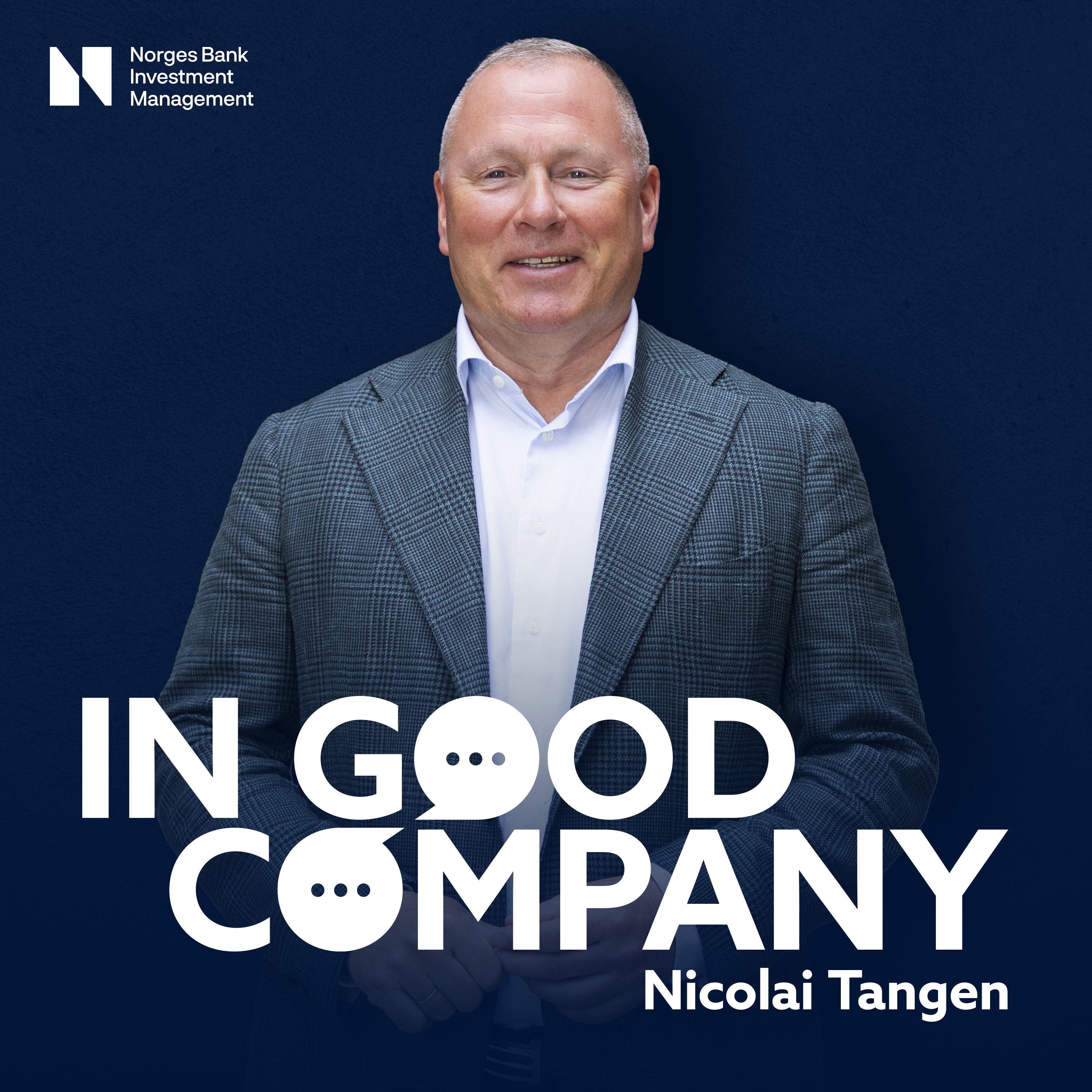
In Good Company with Nicolai Tangen
24 Sep 2025 · 43m · Dilhan Pillay, Nicolai Tangen · 21 quoted facts
Dilhan Pillay, CEO of Temasek, argues that Temasek is best understood as an investment holding company rather than a typical sovereign wealth fund. It owns assets, recycles capital and holds for the long term, and it depends on trust, partnerships and good people.
The main tension is between unpredictability and discipline. Pillay says nobody can forecast tariffs, geopolitics or AI. Temasek's answer is to engage widely, plan scenarios, build in-house capabilities such as an office in Washington D.C., and keep its values fixed while its investment themes and geographic mix change.
Pillay contrasts Temasek with GIC, which manages the government's reserves. Temasek owns operating companies and a global portfolio, so it must sell some holdings to fund new investments.
Pillay says there is no government nominee on the board, and the chairman, a former minister, acts independently. Management decides deals up to $1 billion, and larger or strategic ones go to the board.
Exposure to the US and Europe rose from 11% in 2011 to 33% by the end of that decade, while the portfolio doubled in value. Pillay says this was driven by themes and company quality, not macro calls.
Pillay says the old 'China plus one' resilience model is now uncertain, because the 'plus one' country may also face tariffs. He argues the answer is scenario planning rather than prediction.
Pillay says Temasek seeks partners to add skills, not to spread risk, and calls itself relational rather than transactional. He cites handshake deals in which both sides declined to put terms in writing.
Pillay says people outside Singapore see it that way because the government owns it. He describes it as an investment holding company that owns operating businesses, a global portfolio of mostly minority stakes, and a platform for building asset managers.
Pillay says GIC manages the government's reserves across many asset types, like a fund manager. Temasek owns its assets, mostly equities, so it has to weigh holding longer against selling to fund better opportunities.
Pillay says the government has left Temasek alone since it was set up and has no nominee on the board. Temasek's returns feed into a framework the government uses to plan its budget, including social programs.
Pillay describes four areas. These are helping staff work more efficiently, improving investment returns, protecting portfolio companies from AI disruption, and spreading AI use across Singapore. He says AI can gather the base information for investment proposals, so junior staff must perform at a higher level.
Pillay says energy security and affordability matter as well as going green. He says Singapore gets about 95-96% of its energy from LNG (liquefied natural gas) because it cannot produce enough renewable energy.
Stated by the speakers. Each quote matches the transcript, which shows what was said, not that it is true.
Pillay says Temasek's operating companies together generate about $150 billion US in revenues.
“We have operating companies, which together have something like about $150 billion US in revenues.”
Pillay says GIC manages Singapore's government reserves and is essentially a multi-asset fund manager like Norges Bank Investment Management.
“So GIC manages the government's reserves. And so it is really a fund manager, no different from NBIM, I would say.”
Pillay says Temasek was set up from the start as an owner of equities.
“For Temasek, we have been set up from day one as an equities owner.”
Pillay says credit is only about 2% of Temasek's portfolio value and the rest is equities.
“We have a very small credit portfolio, something like about 2-odd percent of our portfolio value, but the rest of it is equities.”
The Monetary Authority of Singapore, GIC and Temasek are covered by the Net Investment Returns Contribution Framework, which helps the government plan its budget.
“MAS, GIC and Temasek are part of what we call the Net Investment Returns Contribution Framework, which the government put in place some years ago”
Pillay says Temasek's board has no government nominee and its chairman, a former minister, operates independently of the government.
“We do not have a government nominee on our board. Our chairman was a former government minister, but he operates independently of the government.”
Pillay says an investment must exceed $1 billion US before it goes beyond Temasek's management team for approval.
“It has to be over $1 billion US for it to go beyond the management team.”
Pillay says Temasek's exposure to the US and Europe rose from 11% in 2011 to 33% by the end of the following decade.
“So our exposure to the US and Europe in 2011, before we embarked on our 2020 roadmap, was by 11 % in aggregate. By the end of the decade, it was 33%.”
Pillay says supply chain resilience used to mean 'China plus one', with the extra country being Mexico or a Southeast Asian nation.
“Because before, supply chain resilience would have meant China plus one, and the plus one could be Mexico, could be Southeast Asia.”
Pillay says nobody can predict the real impact of the tariffs announced on Liberation Day.
“the impact of Liberation Day and the tariffs, I don't think anybody can predict what the real impact would be.”
Pillay argues India's growth story is mainly about consumption, shaped by the effect of industrialization on Indian consumers.
“If you ask me, the India story is a story of consumption. It's not so much a story of industrialization.”
Pillay says about 95-96% of Singapore's energy comes from LNG because the country lacks the land and cloud-free conditions for renewables.
“We are still investing in LNG. 96 % or 95%, 96 % of Singapore's energy source is LNG because we can't produce renewable energy.”
Pillay says that when Temasek began its 2020 strategy in April 2011, 80% of its portfolio was publicly quoted and 20% private.
“when we started our 2020 strategy in April of 2011, 80 % of our portfolio was publicly quoted, 20 % was private.”
Pillay says moving into private assets made sense in the low-interest-rate 2010s.
“I would say in a low interest environment and in a rather benign 2010s decade, going into private made a lot of sense.”
Pillay says Temasek has 13 offices, 12 of them outside Singapore, and about 650 of its roughly 950 staff are in Singapore.
“like you mentioned, we have 13 offices, 12 outside of Singapore. We have 650 people in Singapore.”
Pillay says Temasek historically hired investment staff from investment banks, and more recently from private equity.
“Historically, we looked at people from investment banking, because we found that they came well trained, especially if you hire them from the best banks.”
Pillay says Temasek's value system has six components, including excellence, meritocracy, respect, integrity, teamwork and trust.
“We have six components of what we call a merit-value system.”
Pillay credits Lee Kuan Yew and the first generation of leaders and civil servants for Singapore's success after independence.
“Lee Kuan Yew and his first generation of leaders, and not just the political leaders, but also the civil servants who supported them.”
Pillay says Singapore is building Terminal 5 at Changi Airport ahead of demand, as an example of government infrastructure planning.
“We're building Terminal 5 at Changi right now. We're not up to full capacity in Terminals 1 to 4, but we're building it in anticipation”
Pillay says Singapore's government-linked large companies account for only about 5% of the country's GDP.
“The massive companies account for maybe just 5 % of GDP in Singapore.”
Pillay says Temasek thinks about AI in four ways: enabling itself, future-proofing its portfolio, scaling AI exposure, and spreading AI across Singapore.
“We have four things that we think about in terms of AI.”
Pillay explains Temasek's identity as an owner of companies and why that differs from a reserve manager.
“But we're really an investment holding company.”
Covers how Temasek stays at arm's length from the government and where investment authority sits.
“We do not have a government nominee on our board.”
Traces how global events and investment themes shaped where Temasek put its capital over two decades.
“And so when we looked at it, we realized that we couldn't be Singapore-centric.”
Pillay explains why prediction is impossible and how tariffs are changing what supply chain resilience means.
“tariffs makes you reclassify or recalibrate what it means to have supply chain resilience”
Pillay reworks Temasek's themes, from AI to ageing populations, and argues the energy transition is gradual.
“It's not just about going from brown to green.”
Describes Temasek's shift into private assets and the risks of each market type.
“the problem with private markets is you have more opacity”
Explains why Temasek seeks partners for skills rather than for risk diversification.
“we are seen to be more relational and less transactional”
Covers hiring, Temasek's values, and why Pillay credits Singapore's civil service and long-term planning.
“That's why I say, Temasek's not really primarily in the investment game.”
Pillay discusses how he leads, where AI fits in the workflow, and closes with advice to be optimistic.
“the world history has shown that we go through times of difficulties”
Hi everybody, I'm Nicolai Tangen, the CEO of the Norwegian Soren Wealth Fund, and today I'm really delighted because I am here in Singapore with Dilhan Pillay, the CEO of Temasek. And Temasek is Singapore's Soren Wealth Fund managing roughly 300 billion US dollars. Now Dilhan, he has been in charge of Temasek since 2021, and after a remarkable journey building up the leading law firm in the country. And so, big thank you for taking the time. Thank you, Nicolai.
Pleasure to be here. Lots of things to talk about, but let's just kick off first. I wish I'd given you better weather. I think it's pretty good. What is Temasek?
Well, I think that people define us in two different ways.
I think most people will see us as a sovereign wealth fund if you're based outside of Singapore because we're owned by the government. But we're really an investment holding company. We own three different portfolios. We have operating companies, which together have something like about $150 billion US in revenues. We have a global portfolio of investments around the world, mostly minority investments. And we also have a business that builds asset management platforms
and also invests in private refunds and alternative investment managers. What's the main difference between you and GIC, which is the other fund?
So GIC manages the government's reserves. And so it is really a fund manager, no different from NBIM, I would say. And so they're also multi-asset, multi-strategy. For Temasek, we have been set up from day one as an equities owner.
So whether it is in relation to the companies that we control or whether it's in relation to our global investment portfolio, we're primarily equities. We have a very small credit portfolio, something like about 2-odd percent of our portfolio value, but the rest of it is equities.
And so if you look at it from that perspective, the big difference is GIC manages money and we own our assets. And so therefore, for us, it's very important that we recycle our capital because that's how we get capital to invest.
And so we have to make the trade-offs between sometimes owning it for longer or secondly, trying to recycle some of the capital into better opportunities for long-term.
And if you look at the two of you combined, how important are you for Singapore?
So MAS, GIC and Temasek are part of what we call the Net Investment Returns Contribution Framework, which the government put in place some years ago in order for the government to have a view of the expected returns of all three financial agencies. And that will help the government plan its own budgetary requirements, especially in terms of the operating budget of the government. So in a sense, we are very important from the perspective of having to deliver those long-term returns
for the government to be able to have that funding available for its own programs. And quite a bit of it goes towards funding the social programs of Singapore.
Do they leave you alone or do they interfere in your business? So from a domestic perspective, they have from the first, from get-go,
from the day that we were set up, left us alone. Because the government set us up because they wanted to make sure that the policy frameworks governing companies that they had set up a decade earlier, would be seen from a regulatory perspective, and they would leave Temasek to oversee the commercial operations of those
businesses. And that has been the case from the very beginning. We do not have a government nominee on our board. Our chairman was a former government minister, but he operates independently of the government. And so that is a bit unique, I would say, in terms of what people will classify as a sovereign wealth fund.
Now, in countries like Norway, the government owns stakes in the businesses individually whilst there you put it into a holding company. What are the kind of pros and cons of operating like this?
Well, I think that if you own them separately, I think you have to figure out whether you get the benefit of synergies between those companies, whether the insights you get from one, you can put it across to the others as well. Take sustainability, for example. because we have it under one umbrella. We have something called the Temase Portfolio Company Sustainability Council. We are a member of it as well.
And we bring in the CTOs and CEOs of all our companies together with ourselves so that we can exchange ideas, get insights and so on. If you think about adaptation, resilience, some of our companies are far more ahead of the curve than even we are.
And so the learnings that we can have from that is actually quite critical for us. And having all the companies under one umbrella allows us to convene these companies and share their insights with each other.
It's a bit like the function of the Wallenbergs in Sweden, I guess. It is that way. Now, we don't set up these companies under an umbrella
for us to be able to do things together. If there are opportunities to do things together, it must come bottoms up, a willingness by them to collaborate together. Or if we have a point of view, then we will sort of put it across to them. But really, the getting together of our companies is really up to those boards. because ultimately we hold them accountable for their performance.
What would you say is the investment philosophy of Temasek? How do you think? What's your time frame and how do you think?
So the idea for us to do is to deliver sustainable, good sustainable returns over the long term. So the first thing is the long-term orientation of our portfolio.
And by the way, it's a necessity given that we own these operating businesses and many of which we would continue to hold for a long time.
So in that respect, you have to think about things like climate change and AI, because these are going to be drivers of value or they're going to help displace you in some form or another. So for us, it's about delivering financial returns, but being able to deliver other outcomes associated with the kind of companies that we own and operate. From the perspective of global portfolio, there are, I would say, two things that we look for. Number one is clearly financial returns.
That's the first and foremost requirement. The second is insights that we get that we could then use across the portfolio in order to enhance value.
And that would include not just the Singapore-based companies, but other companies who invest around the world. So this network effect is quite important for us.
So we say that we have to be a networked organization going into this decade and beyond. And when we look at a networked organization, we have an internal focus on that between ourselves and our offices around the world. But we also want to make sure our portfolio companies are networked where it makes sense as well.
How do you make investment decisions?
What does the structure look like?
Well, much of it is devolved to the management team of Temasek.
And we have a certain threshold value where anything up to that level is determined only by the management team through our investment committee, which actually is technically a committee of the holding company but devolved to management to make decisions. And beyond that level goes to the executive committee of the board of which I'm a member. And then beyond that, if it's very large, it goes to the board.
Now, that's for investment. And so how big does it need for it to be before you get involved?
It has to be over $1 billion US for it to go beyond the management team.
Yeah, and per transaction. And that includes if you structure in a way where the amounts may be invested over a period of time. But I would say that the most important thing is that institutional issues where it concerns a shift of the organization or shift in strategy, that has to go to the board. Because the board ultimately is responsible to the shareholder for how we operate.
So, for instance, you have the geographical split of your assets. And I think it's quite cool. You have it down in the reception area. So it's actually out on the street. We're very transparent. So when you approach your building, you can see where you have the money. How is that decision made?
That's made by management and proposed to the board,
for the board to understand where we are headed towards in terms of portfolio construction.
And that goes towards the capital allocation that we put in place year by year. That capital allocation is also shared with the board for them to endorse.
So tell me about the split now, the current split. Just how, what does that reflect in terms of your, I guess, geopolitical thinking?
So much of how we have constructed a portfolio over the last 20 odd years, since we started to become a global investor, has really been determined by the external environment. So if you look at the 2000s, really it's about the opening up of Asia following WTO,
the extension of India and China in particular, and the ability of these two economies of becoming not just plugged into a global economy, but becoming leading economies for the world, which has largely happened.
India a little bit later than China, obviously. And so when we looked at it, we realized that we couldn't be Singapore-centric. We had to step out. and therefore going out to Asia first made sense since Asia is our sort of backyard, if I can call it that. But in the 2010s, following the GFC, we recognized that you need to have a balanced portfolio and you couldn't just have a merging market focus, which is really where we were for the previous decade outside of Singapore.
And so that's when we started to invest significantly in the US and Europe. So our exposure to the US and Europe in 2011, before we embarked on our 2020 roadmap, was by 11 % in aggregate. By the end of the decade, it was 33%. So three times.
And the portfolio doubled in value. So that's a significant uplift. That meant that the capital... What drove that? What was the thinking behind that? Well, because the one thing that the GFC thought is is that actually you have to look at,
first of all, macro factors and look at strength of economies. As you think about your thematic investing, you've got to go where there is capital flows, but also where you see the best of innovation. And quite apart from what we saw in China, We thought that the US would be clearly their leader in innovation. For Europe, we always felt that they had globally competitive companies that were extremely good, despite whatever people may think of in the macro of Europe.
We still have that view that we're not a macro investor, so we're not saying avoid Europe because of the macro. But we are investing companies. So what was driven by was this whole issue of globalization and which are the likely winners, depending on the sectors that we were in. Now, in the last decade, when we started to really push out, in actual fact, we were driven by themes. You know, we were looking at things like urbanization, rising middle-income populations, you know, the comparative advantages of companies which would be like linked to IP, for example, for example, biotech.
And then we're looking at domestic champions who will go beyond their geographies into the world. Later on, we looked at trends.
And trends are things like, you know, four broad trends we have are digitalization, future consumption, longer lifespans, sustainable living, which embodies within it, obviously things like sustainability.
And so as we looked into that, you know, you could find, you could actually determine which geographies are more likely to give you those opportunities. And so allocation of capital went to some extent according to trends, geographies according to where we thought there would be flows and where we could get the alpha, and then finally into sectors.
And so, yeah. You sourced some of the increased allocation here by reducing your exposure to China. Actually, I will not say that we reduced exposure.
Exposure kept on going up, but we could monetize on China because China is giving us true alpha and take that capital and invest in the US and Europe.
Do you think you can predict the future? No, no. The reason I'm saying that, last weekend, I sat together with seven of the cleverest people I know. And we did the same a year ago, and we tape record what we thought was going to happen over the next 12 months. And we talked about financial markets, geopolitics, you know, just all the variables. And we didn't predict any of the things. I think we were like 80 % wrong.
I think we've taken a view we can never predict.
It's incredible.
Now, you can't predict. So how do you operate in that world then? That's the tricky thing, right, for all of us. You know, I think the first thing you have to do is to make sure that you engage.
Engage broadly, globally. You can't sit in Singapore and feel that you will only get information when reading things, doing Zoom calls or team calls and things like that. You have to go out there and meet people, meet them regularly, exchange views. They see things from a different angle, different perspective from where they are seated, and you see things from a different angle. And I think that helps the learnings for all of us. And I think that's the first thing.
The second thing, you have to be very clear-eyed about what are your objectives at the end of the day. Financial returns and other outcomes you need to do. And you have to then be disciplined about how you allocate your capital for those outcomes, but also how you build muscle in the organization for that. So one of the things that we have learned over the last, I would say, 15 years is that investment capabilities by themselves will not be enough for you to get around the shifts that you see out there.
So we've been building our geopolitical capabilities since 2017. You know, we set up an office in D.C. in 2017. People asking us, why do you feel you need to set up an office in 2017? And we felt that what was happening back then, not just US, China, but even with the United States, required us to be on top of shifts that were happening there that could have global ramifications.
And so we've been building that. We've been building up more portfolio strategy, risk management capabilities and tools, AI, digitalization.
So, without talking about politics, just from your point of view, what are the main geopolitical trends you're seeing just now, which have implications for you?
Well, I think the first thing we have to bear in mind is that the impact of Liberation Day and the tariffs, I don't think anybody can predict what the real impact would be. You know, today you're increasingly hearing that it's a one-time effect on inflation, perhaps, but over time it just becomes part of cost structure and won't see accelerating inflation. that means you have to take the view that the costs involved in production will continue to be stable.
So what do you think are the long-term implications of the tariffs?
So tariffs, first of all, I think that you will see, I think, some inflationary impact,
but it will be different depending on countries and geographies and sectors and products and services. You cannot negate the effect of China as the leading manufacturing hub of the world, but you can then talk about resilience.
So tariffs makes you reclassify or recalibrate what it means to have supply chain resilience.
Because before, supply chain resilience would have meant China plus one, and the plus one could be Mexico, could be Southeast Asia. Today, that question of plus one is also up in the air because of tariffs. So then the question comes about is, okay, if you want to have supply chain resilience, how do you then operate in markets where you have something that gets yourself out of the realm of the highest impact of tariffs? in particular, especially going to the major markets.
And that's really the United States where tariffs are relevant. The second thing is you've got to think about what it means for global trade because all of us are trading countries, every one of us. And so our lifeblood is trade and investment, and they go together. And so as you look at what's been happening with tariffs, then the question comes as to what happens not just with point-to-point trade but intermediate trade, which is so much part of the supply chain that we've been relying on, in effect, to get a disinflationary world, you know, from a cost basis when you look at production.
And then you've got to think about where, you know, what do you have to, you have to think about things like, you know, the US-China competition. How does it affect you in terms of where you invest in the US and where you invest in China? And for that matter,
where you invest in other countries as well. So increasingly, if you think about the world today,
hey, it's not a bipolar world, it's a multipolar world, but the definition of multipolarity depends on the person who thinks about it.
But you do have a strengthening of the block of India, Russia, China, which you didn't have before, as exemplified in the recent meeting.
Yeah, I don't think that would have been foreseen by the United States up to about four weeks ago, for example. But you do have cause and effect. So when something happens, then you know that other things may well happen. You can't predict all those things, but some things you could say as a scenario could possibly happen, which is why we believe that scenario planning is so critical for us today, to know what could possibly happen. And so if we look at the China, India, Russia meeting that happened at the SEO, So clearly, I think that's also a question of ensuring resilience against vulnerabilities for all of them, for each one of them.
But it means different things to each one of them. It means a different thing for China, for Russia, and for India. And that's sort of one example, you know.
But I think that when we look at geopolitics, you also have to think about, for example, how is Europe going to react to all of this? It's sort of caught in the middle. And how will Europe react? I mean, I'm hoping that they react in a way that focuses on growth. Because when you focus on growth, you're creating economic opportunity. Are you seeing signs of this? You know, I think that there is a willingness to look that way,
but the actions have not yet come out at a pace that we would like. Look at the US. It's moving so quickly. Other countries are reacting. Europe seems like it's still moving at a glacial pace. it needs to up itself, because we want to put more capital in Europe. But Brussels has to figure out how to be an enabler for business. And you can't be putting yourself in a situation where you're pressing the brake if there's nobody pressing the accelerator.
And we need a capital markets union and so many other things that goes.
Talking about accelerator, you briefly mentioned the themes that you are looking at in the world now? Can we just unpack that a bit? So the four themes that you're talking about. Yeah. So, you know, I think, quite frankly,
I think we have to re-look at our themes because a lot of things have changed. But the four themes are still relevant. You know, the issue of digitalization includes, therefore, digital, data, AI. Okay, so now it's much more broad than just a generic definition of digitalization. What does AI mean for countries, for businesses, and for societies? The second thing is, of course, if we took a longer lifespan, the developed world is aging. And therefore, what does that mean in terms of sectors which are relevant?
Could be healthcare, could be retirement savings, and therefore asset management, insurance, and the like. And that also goes to future consumption. Because future consumption is different for emerging markets versus developed markets. For demographics as well. If you ask me, the India story is a story of consumption. It's not so much a story of industrialization. It's actually the effect of industrialization on the Indian consumer, quite apart from whatever else is going on now.
India has been a services sector for the longest time. And so the benefits of that in the context of rising consumerism is high.
If you think about things with sustainable living, it used to be associated with just moving into green energy. But let's face it, today, it's energy itself. Because when you talk about energy, you have to talk about energy security, energy affordability. It's not just about going from brown to green. You've got to go from brown to light brown to greenish brown to light green to green. And so for us, the question is, what's the mix that's going to be relevant to get the net zero?
So for example, we started to invest in nuclear energy a few years ago. And we not just invest in nuclear fission, we also invest in nuclear fusion. We are still investing in LNG. 96 % or 95%, 96 % of Singapore's energy source is LNG because we can't produce renewable energy. First of all, landmass. Secondly, cloud cover. And with climate change, that's becoming even more difficult. But when you look at LNG, how can you have low carbon energy?
Blending is one element of it. Making sure there's no leakage of methane is the second. Otherwise, it's just as bad as coal. The third thing is if you're thinking about coal, there's managed phase out of coal. Then how do you help accelerate that? How do you contribute towards that issue? Do you also get involved in blended finance for that so that there is, in fact, a just transition? Before you can even think about renewable energy and infrastructure that needed to go into that between battery storage, upgrading the grid, and the renewable energy infrastructure with solar panels and wind farms and what have you.
So therefore, we look at sustainable living, and living is for humanity. You know, you have to be, I would say, quite considered about the things which you can do in the near term, in the medium term, and the long term. But you must be clear-eyed about the fact that the world needs to get greener, because without that, we have a bigger problem.
How do you think about private versus public markets? Well, going back almost a decade... So private are the companies which are not listed on the stock exchange.
Going back more than a decade, when we started our 2020 strategy in April of 2011, 80 % of our portfolio was publicly quoted, 20 % was private. But fast forward a decade later, it was 50-odd percent private, 40-odd percent publicly quoted. And if you include in a publicly quoted Singapore companies that we control from 20 % to 50%, 60%, that means a very small part of our portfolio is actually really publicly quoted. And by the way, I would say in a low interest environment and in a rather benign 2010s decade, going into private made a lot of sense.
Because first of all, you didn't have the market.
And where are we now? I think now you have to be a little bit more circumspect. I think private still gives you a lot of value.
Because I think it's wrong to conflate a generic model into where you should invest in the private markets. So there's still value in private equity, but you have to be very good at manager selection. There's still good value in private credit, despite what people think, because if you are very clear-minded about how you invest in private credit and you're looking at actually cash yield rather than just pure pick and so on, you might have a good opportunity set even as you go through cycles.
The third, of course, is in the private markets is call-plus infrastructure. And Core Plus infrastructure is not a public market product. It's a private market product, but it gives you a yield and a decent low double-digit return.
What's more risky now, private or public? Both are risky for different reasons.
I would say that the problem with private markets is you have more opacity. As an investor in the private markets, you don't have the same access to information to know what to do. If you're in the private market, because it's illiquid, you can't pivot easily. So you have to be clear that when you put money in the private markets, you're in there for a long haul. Well, in today's terms, five years could be long haul.
And you are in there with long-term partnerships. Yeah. How do you think about your partners? And who are they? Yeah.
By the way, before I forget, the danger of public markets is that if you're measured from year to year, the volatility hits you. So it has to be managed. So long-term partners. So I believe that really, and I've said this internally with everybody, I said, look, we have to look at ourselves as a network organization as one focus on partnerships. So in everything we do now, we should find ourselves thinking, first and foremost, who could partner with us on this?
Unless it's an investment opportunity where it doesn't allow us to look for partners. But I think that's important because we need to realize that at Temasek, we do not have all the skill sets needed for all the opportunities to come through our door. And so we have to augment it with others who have it. And therefore, partnership is more important from that perspective. It's not about risk diversification. We don't look for partners of risk diversification.
We look at them as partners to augment what we already have. How do you work with them?
well i think that we are seen to be more relational and less transactional i think that's generally what most people will say about us we take time to build the relationships and we are you know we have a very good to and fro discussion so we feel we should also bring something to the table and not just get ideas from them as well what does it mean what does it mean to be relational in your i think that's where your first when you want to form a partnership you've got to bear in mind that there must be this level of trust with each other.
Trust not just in terms of something you want to get into, but even about sharing your information, knowledge, perspectives, and things like that. The higher the level of trust, the higher the quality of the relationship. And then if it translates into something tangible in terms of doing something together,
it's more likely to succeed than not because of that.
Do you think there's some Asian thinking into your relationship thinking?
I don't want to say that relational is only Asian because I have so many friends in the US and Europe and elsewhere where they have the same way of thinking. So I would say that it's very much up to the individuals and how they look at things in life. I do think that the world has become more transactional. And I think that, you know, since countries have become transactional or countries could become more transactional and multilateralism gives rise to transactionalism, the world may start to change a bit.
and then finding those people who think the same way as you do may not be as easy as before, other than the relationships you already have. But I would say in Asia, trust comes from spending time building relationships.
That's for sure.
It takes longer. It takes longer. Well, we have things to learn here, I think. Moving on to the organization. So you are a bit more than 900 people, 13 offices. what do the people do? So apart from working hard.
My colleagues may say that we work sometimes too hard, but I'll put that aside, everybody works hard, especially in this world. We have about 950 people in Temasek. And that's sort of like a stable number for the time being. And like you mentioned, we have 13 offices, 12 outside of Singapore. We have 650 people in Singapore. So the other 300 are, so two thirds in Singapore, one third outside. And in Singapore, we have a multinational cohort here.
We have some of the 35 nationalities working in Temasek globally. In the markets, the majority of people there are investment folks. In Singapore, the majority are people who support the investment engines, you know, because we've actually put more people out into the markets directly. lead. So currently, in terms of headcount in the markets, the US is the largest, followed by China, then Europe, then India. And in the US, the vast majority, I think, I would say 80 % of people we
have there are investment folks. The same thing with China, the same thing with Europe and India. What type of people do you hire? What do you look for?
Historically, we looked at people from investment banking, because we found that they came well trained, especially if you hire them from the best banks. And they would know how to access the right information flows, because that's what they would do as a normal thing. And they come with some domain capability in terms of understanding the sectors that we hire them into. And I'm talking about investment folks only. More recently, we've been trying to get people who come from private equity.
And when we look at the public markets part of the house, We get people from long asset managers as well as from hedge funds. But we also will lose them, as you know, back to where they came from over time.
But is it really still like a term of way of doing things? I mean, is it like a Bible or like a holy script? It's like this is the term of way of doing things and this is how we train you and this is how we do things. I think every organization has something like that.
I mean, we are very focused on our values.
We have six components of what we call a merit-value system. And so we're very focused on this whole issue about excellence, meritocracy, respect, integrity, teamwork, trust. That won't change. So that's actually culture. I think in any organization, values, cultures, behaviors, sense of purpose is critical. But that forms the foundation that people can then leverage off for how they do their work in Tamasic.
So that's the first part of our script. We look for the values in people, not just expertise. increasingly, we are toggling between people who can be generalists and people who are specialists. And I say that because of the complexity of portfolio. And so if we look at the three different components of portfolio, each one of them has different characteristics. If you are going to be at the apex of organization, you have to be flexible in your thinking.
And therefore, even if you're a specialist, having some level of understanding about things like geopolitics,
global shifts, for example, makes you a better leader. So therefore, we have to train people to do that. Is there such a thing as a Singaporean value? We like to say that's a Singapore DNA.
What is that?
Well, first of all, I think, okay, so if you look at our value system, I would say Singapore stands for similar things, meritocracy, excellence, respect for each other. Integrity is the most important value. When we say something, you want people to take us at our word. I have done so many things, Nicolai, with my counterparts in the US elsewhere, where it's done on a handshake, where the lawyers and the colleagues on both sides say, no, no, we have to put in writing.
And the two of us say, nope, we've promised each other we will keep to our word. That's important. And if you don't have that sense of integrity and therefore trust in each other on the basis of that, you know, there will be a limit to what you can do. So I think in Singapore, that has always been something of value. We do things on a principled way.
That's how we look at things. Why has Singapore been so incredibly successful?
Much of it, I think, is due to our founding fathers,
Lee Kuan Yew and his first generation of leaders, and not just the political leaders, but also the civil servants who supported them. It was a whole team that took, I would say, took over a Singapore that became self-governing away from colonial running of our country to one that became part of Malaysia for two years to become independent without natural resources,
where your only resource are your people. That's why I say, Temasek's not really primarily in the investment game. We're in the people game,
because the only way for us to advance is to make sure the quality of our people, how we train them is critical.
But if you look at the civil servants, they are much more highly paid than in most countries, relative to... So are the politicians. Absolutely. Civil servants, politicians, really highly paid, very highly educated, they work very hard too extremely hard what's the consequence of having such like a caterer of civil servants and politicians who are so what should we say outstanding
that's good for the country
I would say if you are a young Singaporean you'd want that to be the case because if you have your life ahead of you if you're 30 years old and you're going to work to the age of 80
because you can live to the age of 100, you know, you want to make sure that your leadership, your political leadership and your civil service have top-notch people. And they have to be there to formulate policies where business can thrive. Okay, that's the main thing. So you need good people there who are able to engage with industry, both within Singapore and outside, to be able to think of the policies we need
in the short term, in the medium, and definitely the long term for Singapore to succeed. The one thing good about government is that they do a lot of long-term planning. So infrastructure build-out is always ahead of demand. We're building Terminal 5 at Changi right now. We're not up to full capacity in Terminals 1 to 4, but we're building it in anticipation of the world of travel, of Singapore as a hub, and we know that we need it.
We'll need it in about 10 years' time, but we're building it now. So when you do those things, the government plays a very important role
as an enabler. First, they're a policy originator, but they're also an enabler. And they have the fiscal balance sheet to do the infrastructure spending ahead of demand.
And that helps industry plan as well. So we own an airline. So when we see that, we can also do that and dovetail it with our route network planning, as well as our fleet planning. And that allows us to think about what kind of aircraft we need to procure and things like that. You know, it's very useful. And I think that multinational corporations have understood how to leverage the government's policy thinking for what they do in Singapore, either for export or for regionalization as well.
And if you look at Singapore's economy, it's really driven primarily by the fact that we have these multinationals, mainly from the US, Europe, from Japan, and so on here. And we have a bunch of SMEs to support them as part of an ecosystem. The massive companies account for maybe just 5 % of GDP in Singapore. But yet, of course, we are important in the ecosystems in which we operate, whether it's financial services or utilities or whatever.
But we're leveraging an ecosystem that has also been built because of the other contributors to our economy, especially the multinational corporations. And so we have to be an open economy. We have to be open to all of them that come in because that's the only way for us to remain competitive. The worst thing is for us to protect our own companies. To do that, I think we're setting ourselves up for a very different future for Singapore.
Dilhan moving on to you as a leader how would people characterize you as a leader oh
I don't know you have to ask them actually I'm not sure that I want to think too much about it because I have a job to do I've got to do it the best way I can and what I do is for the organization and what I do for the organizers is for the people in the company
I won't be right in everything I do by the way What's the key to be an efficient leader? I think you have to really think about the future all the time.
But you have to also prioritize things because the organization has to keep up with you. You have to have followership and bring people along. And that means you have to engage. And I would say that I've gotten better at engaging, but not quite there yet because I'm also a bit impatient by nature.
So how have you developed with age, you think? in some respects I'm mellowed,
in other respects I may not have mellowed. You know, when you get older, Nicolai, you realize your runway is getting narrower, so you want to do more things more quickly. But when you get older, you also realize sometimes when to pull back, and you know that you might be going too far, too fast.
How old are you? 62. That's a great age.
I think so. I prefer to be 62 than 25, as of this moment. You said engaging with people. How do you do that?
Well, I talk widely, you know, if I can say that. Even internally within the company, you know, I try to make sure I'm accessible to people. And if you want to have a chat with me, they can have a chat with me. I make sure that our internal comms are focused on making sure our people are aware of what we're doing.
and then of course I try to engage widely outside with our portfolio companies but also with our investing companies around the world and people I know around the world
and I try to bring those insights back to the organization where I find them. How do you make sure that you prioritize the right things? You can only know you're doing the right things
if your colleagues are in it with you and sometimes it takes time to persuade them because they may not see the world the same way you see the world. You know, CEOs tend to see a lot more than others. And it's not, it's quite natural because we have to broaden the aperture and go out there and we have to think about many, many different things. And we have to think based on horizons. Whereas people who have jobs where they're given a function to do, they will tend to want to make sure that is done really, really well.
You know, and you need both, right? So in a sense, you have to do a lot more persuading these days than before. and so you know you're on the right track where everybody finally sees what you're seeing and they're on track and they're moving faster than you.
So on that note, how do you absorb technology and AI into Temasek in the way you work?
Yeah, so I would say that we're still a work in progress.
We have four things that we think about in terms of AI.
First is how AI is an enabler for ourselves. Second is how do we use AI to future-proof our portfolio?
And for that matter, how do we ensure our portfolio is future-proofed on the effects of AI? For example, operating companies. The third is how do we scale our AI exposure as a firm? And the fourth is the diffusion of AI within Singapore as a whole, because we have so many companies which are involved in ecosystems here, which make the country work the way it works or contributes towards that. And so the first thing, of course, is that within Temasek, we are now rolling out AI at a much faster pace than before into all our workflows to become more efficient.
So that's the one level. And that goes towards productivity. And that's critical because one of the complaints that we've been getting over the years from younger people especially is that there's too much stuff that they have to do, especially if they do administrative stuff in addition to what they're doing on investments and things like that. And so we're trying to make sure that we ameliorate that effect of it and AI can actually
help quite a bit there. I would say AI can definitely help them in terms of getting the base information that we need for any investment proposal. One could possibly see that ChatGPT could replace your associate and senior associate, in which case you have to train your associate
and senior associate to be performing at two levels above them. That's the only way to do it. And therefore, the brightest minds will have to be given the tools to succeed. So that's the first thing, all our workflows, I would say, have to be AI-enabled. The second thing is, AI has to help us get better returns on our portfolio. That's what we should be trying to achieve. And that means AI is a tool for us for sourcing of investments.
It's a tool for us for doing performance monitoring, or performance analysis. I would say investment analysis first, and then performance monitoring, and finally, portfolio management. That's critical. And so if we have AI embodied within our investment flows and the way in which we are approaching the sourcing, the evaluation,
the making, and then the managing of our investment opportunities, that I think will enhance the returns we get and also allow us to be more productive. What we want to do is to make
Make sure we do fewer things and get a narrow range of outcomes so that we can get really
long-term predictable returns for the purposes of our net investment return contribution.
Some personal questions at the end. How do you relax?
I run.
Every day? I try to do it every day.
I didn't do it this morning because I had to wake up early for a 7.30 breakfast meeting
and I finished late last night but generally I run every week What do you read? I read a lot of stuff Well, everybody reads news feeds so you read your local papers you read the Financial Times you read Wall Street Journal etc
and then obviously things like The Economist so that's given, that's basic but I read a lot of books
Now, we're having dinner tonight Pepper crab or chilli crab? I prefer pepper crab only because it's less messy than chili crab.
But the chili crab may actually taste better. And I told you when I was in Oslo in September of 2023, I went to a restaurant in Oslo that served chili crab.
That's good. I have to figure that one out. What is your advice to young people? Life is a journey.
Life is a journey. It's got many phases. You have to be open to learning. So when we talk about lifelong learning, be open to experiences. think broadly, read widely, however you want to read, whether it's through the internet or chat GPT or books, you have to read widely because the world now is going into a very different phase going forward. And things like AI, things like climate change and so on, and they all converge at some point in time, requires you to really think ahead because you're going to be living the next 60, 70, 80 years.
That future belongs to you. All of us of our age group have to make sure that there is a bright future for them. But they are also responsible for that. So I feel that in your life, you will have to be open to new opportunities. New opportunities within your organization or even outside. You can no longer join a company and say, I'm going to be a lifer. The company has got to make it worth your while for you to be a lifer.
I'll put it the other way around. Okay, so as much as an employee has to justify themselves as an employer, The employer has got to be forward thinking and moving forward to be justifiable to the employee. So I would say that in life, you will find that doors will close, but new doors will open. And so look at it that way. And be optimistic. Be optimistic because the world history has shown that we go through times of difficulties and we always come out better than the previous generation.
so when there's darkness you know the dark clouds will give way to light that's how I believe absolutely
well optimists are more happy and make more money and I think on that on that happy note Dilhan it's been a pleasure thank you Nicolai thank you thank you very much